Friday, January 10, 2025
THE BEATLES' HELP @ 60
Wednesday, January 4, 2023
PLEASE PLEASE ME @ 60
(This one was written when McCartney was only just twenty and had a seventeen year old girlfriend. Don't beat that up to be anything predatory or age inappropriate because it isn't.)
Misery was intended for Helen Shapiro who would have done it more than justice. A big embracing vocal opening featuring the toolbox: melisma, tight sub-screaming Lennon voice and a charming transition from minor to major in the chorus keep it in the recollection.
Anna (Go With Him), Chains, Boys. Beatles cover versions are generally more interesting for what they reveal about their influences than as interpretations. It's almost true that the originals on this album are like homework after learning the covers. That's about the same as any band that starts writing its own material. Playing industrially long sets and keeping your job on stage is persuasive; learn it or die. Add astute, observation and high musicality (and not a little internal competition) and you get this band. All of these are competent rock cover versions of songs from the soul and Motown realms but any post-Beatles ears are going to be hankering for originals, however derivative. The addition of wailing blues harp o'er head does, however make a difference and gives the songs a Merseybeat touch.
Ask Me Why is one such and it's almost entirely forgettable. There are dynamics, scansion changes and a well wrought middle eight but it just doesn't lift above apprentice level.
Please Please Me is a triumph for the nascent relationship that the band struck up with their producer George Martin. Conceived as a Roy Orbison thumper like Running Scared or In Dreams, Martin suggested they speed it up. They did and made it their own thing. A harmonica riff adds a bright wail to the guitar figure. The vocal harmonies are classic Lennon McCartney with John singing the descending line while Paul stays on the high note, each line ending with a surprise ascension in the rhythm guitar. A tight call and response chorus that blooms into a falsetto title line. All present and correct. This is why people not only caught on but made it the band's first number one.
Love Me Do was their first single and is a great illustration on the difference between influence and copying. If they'd stuck to the plan of writing an Everly Brothers number they would have incorporated more of those country harmonies and thought more about the separation of the verse and chorus. Instead, they sang and played it until it sounded like themselves. It's stripped back. Harmonica riff, glistening harmonies, cool middle eight that works both sung and done on harmonica and a stop start chorus that drives it into memory. All acoustic, too. Not bad.
PS I Love You is a pleasant wafting song of romantic longing with Paul singing in his grownup voice (until the end where he sings fill lines in his rock voice). The arrangement and choruses with the vocal harmonies come off as more staid than the songs of the first side but the gamechanger chords and the strange hushed solemnity make it a quiet kind of standout.
Baby it's You starts with the sha la la la las of the previous era and for all the energy keeping it aloft it sounds and feels like filler.
Do You Want to Know a Secret begins with George's vocal in cod flamenco mode with a showbiz slow mo introduction in a minor key. This quickly turns into a slow trotting sweet address to a girlfriend. The chorus (which is not the title line) ends with an off pitch falsetto which marks the fade out, producing winces.
A Taste of Honey a big showbiz reverb slow intro with big harmonies continues through the modal folky waltz with Paul being a grownup again. This is a gem from the days of the Hamburg lifestyle gigs. The middle eight changes time signature before launching into the call and response ending. It's the most effectively melancholy song (cover or not) on the record. Even if overdrenched in reverb and erring on the off-broadway side of things it does foreshadow McCartney's future penchant for quiet sadness. Three years later it would be the genuinely affecting For No One and the ice cold wrench of Eleanor Rigby. Three years.
There's a Place is one of the least celebrated early Beatles songs and that's a pity as it's a gem and it's interesting. After a brief harmonica riff the mid paced rocker features almost exclusively John and Paul harmonies until the middle eight. While there are lines about an assumed object of affection the main point is that the narrator of the song seems happiest when withdrawn into his own mind. The lines about no sad tomorrows and there being no sorrow in his mind sound like over-protestation when that's the place he goes when he wants to escape things just like that. No chorus as such but the ending insistent on the title phrase repeats to the fade with more melancholy harmonica tells us there's always one place to run.
Twist and Shout proves that while most of the covers were a mix of tribute, songcraft recognition and filler, they could make some of their choices their own. While I knew as a much younger fan that this was not their song, I still cannot hear the Top Notes or the Isley Brothers versions because this one is in the way. A big clunking riff circles around C F G like a steam era machine starting up. Lennon's throat tearing berserker vocal rips holes in the wallpaper as the others repeat his lines in gleaming harmony. After a little guitar harmonising the next hook appears with the harmonies forming a chord and get so high they start screaming the last verse gets stuck on the instantly sexual "well shake it shake it shake i, baby, now!" before the triad once again builds up to a climax and then comes to a sighing rest.
If the opening track promised good times we've just heard where they lead. This is Lennon's response to McCartney's workout in Standing There and the two contain what only have to be some songs. The fact that it is better than that makes this a debut to remember. Except that people don't.
This and the next one released in the first year of Beatlemania are eclipsed by the monster singles the band released as a priority and still form the main touchpoint of revisits to the first era of the band. It's true that the two earliest singles are on the record (including their first number one) and they're good pop songs, they don't have quite the force or invention of a She Love's You or I Want to Hold Your Hand.
This album sounds like the albums of any band of the time, almost an afterthought between the singles rather than the other way around. The band that would, more than any other demonstrate the value of albums to make larger statements began like all the others because who could know? But if you go through from this to mid point at Rubber Soul you will know from the simpler more rushed affair that this is that the seeds will sprout into a dazzling garden. Then embark on the rest of the trek with the callback on Revolver, the sinister, druggy count in to the opening track, and you'll know that, while their own past never dragged them, they were thankful of it.
Listening notes: I chose the CD from the Beatles in Mono box from 2009 as it remains the best way to hear this.
Saturday, October 16, 2021
LET IT BE SUPER DELUXE (5 CD + 1 Blu-Ray)
Saturday, May 2, 2020
1970@50: LET IT BE - THE BEATLES
The first song, Two of Us, is a bouncy acoustic number with close harmonies and a whimsical lyric. A middle eight, stronger than the rest of the song, comes out of nowhere and then they head back down the sunny country road. Dig a Pony begins with a false start before launching into one of Lennon's time signature shifting specials, nonsense lyrics before a heartfelt declaration of love in the chorus which only seems to fit.
Across the Universe begins a gentle strum before floating into one of Lennon's finest softer songs. More timeshifting and a smooth vocal. This is the track that introduces the extras provided by rescue producer Phil Spector. He puts a choir into the chorus and it works beautifully. George's I Me Mine blasts into an expansive waltz with a high warbling vocal for the minor key verse and a boogieing chorus in 4/4. Dig it rises from the silence as John yells impromptu names over a chugging beat before it fades back out with a little joke about the track to come in a joking falsetto: "Now we'd like to do Hark, the Angels Come."
Let it Be announces its gravitas from its opening piano chords, broad and stately. McCartney's vocal has lost its cute and he's sounding self-conscious and important. The track's a good one, though. Spector's choir and brass section add needed texture and the album version of Harrison's solo is killer. Then, because this is all about goofiness as well as serious Beatle music, the side ends with an old Scouse street ballad that falls apart in seconds.
Side two begins with a big sounding guitar arpeggio and McCartney's strong vocal on I've Got a Feeling which swings in big angles, breaks into a deliciously screamed middle eight, mixes a Lennon throwaway chant with McCartney's closing verse. More goofing about afterwards. One After 909 comes from the band's prehistory and slams in as a kind of smooth rocker, aided by Billy Preston's electric piano. Then it stops. More goofy cries and asides.
The Long and Winding Road expands almost immediately from a gentle opening with vocal and piano to a Vegas style extravaganza with brass, strings and choir. McCartney famously disliked Spector's arrangement but the truth is that it fits this big ballad with its big gaps and big starts. It's actually difficult to imagine McCartney leaving it as a plain band performance when he seems to be building space for orchestral interjections into the basic track. Strikes me that his distaste had more to do with the arrangement simply being someone else's. I've never enjoyed the song. Even listening as an increasingly wowed second generation Beatles fan at 13 I thought this sounded like Glen Campbell.
For You Blue is a tinkly blues with a happy vocal and a light love song lyric. Harrison consciously wanted it to be a jolly use of a genre given to fate and personal doom. Well, he did just that but I'll still skip the track.
The album's sole moment of greatness from those sessions comes at the end when a smattering of chat suddenly starts in on the thumping intro to Get Back, a rocker that moves forward like a lorrie and is blessed with good soloing and vocals, managing some deft stops and starts and ending with a good joke about passing an audition.
However contrived, the record sounds like the last statement of a band who chose to go out on a humble note, as bare as they'd begun, rather than a mammoth epic of virtuosity. Well, but for timing that is the thing that did happen. Abbey Road was recorded and released as the final Beatles album and it was a peak of their writing, arrangement and production. And then this thing came back from an abandoned project, released along with a film about a band collapsing in on itself.
Well, Peter Jackson is in the process of rewriting that history in a reconstruction from the footage in the vaults and will make that available for the film's anniversary later this year. The LP might well also get the kind of deluxe treatment that the three previous releases got. I'll see the movie and I'll buy the super gaduper release of the album. But I'll also kick myself to doing so.
I heard this record in the holidays between 1975 and 1976. It was one of the mass of discs my brother Michael brought with him for his holidays and I was able to give myself a swift education in the Beatles in reverse order from this one back to Sgt Pepper. I did like the engaged feel of Let it Be but didn't care about half of the songs so always played it as a skipper record. Moving backwards through Abbey Road, White Album, Magical Mystery Tour and Pepper I quickly gathered an appreciation for what I liked about music in general, having only that year broadened from a classical only taste. This record, though, lent a kind of worldliness to the listener, an invitation to a session rather than an audience with the lords of music.
I saw the movie at a cinema and found it dull and formless. That tainted the record even more. When I learned about the editing needed to make it appear spontaneous I shrugged as it didn't surprise me. I soon grew to see it as an aftermath document rather than an album in its own right and when Let it Be Naked was released in the 90s I didn't shell out for it and wasn't impressed when I did hear it. The way I heard it just before when preparing to write this was lifted by the quality of the 2009 remaster in hi res and it passed pleasantly without taxing or annoying me.
But when you look at it in the context of its time, with the varying quality of the solo members' output and the easier reach to the efforts of artists ready to emerge into a new decade with what I always find an unpleasant resort to the blues scales and moaning vocals of boomer rock, Let it Be fits perfectly, slotting into a kind of music that if the Beatles had pursued it might have rendered them as toneless, dressed down and rote as their very best had all but destroyed. That's there in some of the records with their happy saxes and '70s radio friendliness. The Beatles got dull. They joined the '70s when not being dull required the kind of drive that seemed beneath them. And that it what drove me back to discovering the '60s and its freshness. Let it Be had to happen and there was never a more potent example of a device to extract fans from the old days and turf them into the new ones. It's not a bad album but it the was the first in years that wasn't great.
Saturday, October 5, 2019
1969@50: ABBEY ROAD - THE BEATLES
First, I'll loosely describe it for someone un- or less familiar with it than I am. Then I'll look at the Super Deluxe version that I, of course, bought, and talk about the new mixes and the sessions material. Finally, I'll trace its history with my ears as it went from a kind of nursery singalong record to a trove of undercurrents, some quite dark, that suggest the substance beneath the polish.
The Album.
Abbey Road is the last album to be recorded as a project by The Beatles. They were still fresh from the Get Back project that was later released as Let it Be. That back to basics exercise was a failure and when the suggestion that the next one should be a return to form it was taken up and this is the result.
Come Together slinks to life as a moody bass riff with an ominous drum pattern. Low key rhythm guitar pulses under Lennon's sharp vocals that sing of a character adorned in a blend of nonsense phrases and ugliness. The chorus breaks out of this with a shout of the title which could be sexual or a call to other action, political, perhaps (it had started as a campaign jingle for Timothy Leary), the guitar breaking out in loud bar chords before surrendering back to the swampy bass. A solo emerges from a bed of electric piano and wails clean and distant above. It returns after another verse and chorus as the refrain is repeated with falsetto extensions to the fade. This song has always creeped me out. The line, "hold you in his armchair you can feel his disease," made me wince as some horrible images came forth. But it is a great groove with a piercing vocal and guitars so subdued they can be indistinguishable from the piano and a rhythm section performance that's both sexy and disturbing.
After a big run on the tom toms Something settles into the lushest ballad the band ever did as George Harrison celebrates the love of his life in a descending progression through the major with a B section in the minor rounded off in a gorgeous guitar figure ending in an affirming major chord, supported by a string section and organ. The middle eight soars with McCartney providing some light-bearing harmony. Harrison's vocal is delicate until the bridge but this effectively prevents the richness of the arrangement from spilling into cloying overstatement. The solo on a clean Les Paul is smooth and tasteful, completing the air of worship in the track.
Maxwell's Silver Hammer is one of the McCartney gateway drugs for young listeners to get into the Beatles. Its thumping progress and wry vocal (he even breaks into laughter at one point) belie that it is a tale of serial murder. The jaunty verses give way to a big yelling chorus that anyone can sing. I never feel like enjoying this song and wince a little as it starts straight into the verse but I'll leave it on as the arrangement does have riches like the between verse bass figure, splendid harmonies and momentum. It marks the first appearance on a Fabs album of the Moog synthesizer that George had bought the year before and the passages that feature it here are properly orchestral and even novel (like the wailing whistling tone towards the end) so that it sounds like a n instrument, not a gimmick.
Oh Darling begins with a tense electric augmented chord before launching into a big torchy love song from Paul with sublime backing harmonies and a fiery vocal (including a deliciously screamed bridge). A big doowop figure on the bass, hot but clean Gibson playing (especially in the bridge) and some expert drumming make it a welcome one each time.
Octopus's Garden is not just the Ringo song but, as with the previous album, one he wrote himself. After George's sprightly guitar intro a knockabout whimsy proceeds as Ringo dreams of living under the sea. An instrumental section features a bright solo from George, studio effects of bubbling water and a Four Seasons style falsetto backing vocal. I shouldn't like this but it's just so amiable that I get caught up in it.
I Want You (She's So Heavy) starts with a ringing electric guitar arpeggio in the minor but spiky and difficult with sevenths, sixths and an augmented. Harrison descants on the Les Paul, taking to the top of the fretboard for that difficult last chord. And then it's like a different song, a dark blues groove with fluid bass, muted electric guitars and some emotive organ work from Billy Preston as Lennon sings the plain phrases: "I want you, I want you so bad, I want you so bad it's drivin' me mad, it's drivin' me mad." In the chorus he speaks of the third character thus:"She's so heavy" as the dark opening arpeggio figure returns. Same again and then an instrumental verse which feels looser and bluesier than we're used to from this band, a third verse (same as the first) and then a coda section made of the arpeggio figure and an increasingly heavy bass figure playing almost as long as the rest of the song. This just keeps going and seems destined for a slow fade as the synthesised wind noise rises and starts to overwhelm everything. And then it just stops. It's sudden, not a slow wind down like The Ventures, an abrupt whiplash crashing halt that makes the silence at the end of the old side one deafening.
Flip the record and the sweetness of Here Comes the Sun tinkles into being with acoustic guitar, capo-ed high on the fretboard, a bright but light George vocal, some gleaming organ and swirly synthesizer. The sun's out and it's a lovely day. A mid section with Beach Boys style harmonies and some cleverly rising synth from beneath feels like the first gulp of a cold drink on a hot day. The Buddy Holly like melody yields to some very Beatley surprise chords that extend the harmonic motion. It ends on a gentle acoustic arpeggio and we just want to hear it again or jump in a pool. And hear it again.
An electric harpsichord plays an arpeggio of a strange progression that goes from standard minor to out of key major chords and seventh chords. There is no resolution as the shifting harmony will not allow a conclusion. This is joined by an electric guitar playing more or less in unison. And then after a wordless harmony descent that sends shivers the song Because sets in with a series of phrases of a plainness that, in this eerie luminous setting sound strange. Complex three part harmony drive this for two more times. A synth with a melancholy ringing tone plays the central melody under lush vocals that, still wordless, lead us to the final chord which feels like it's been abandoned in the middle of things. A beautiful but spooky song.
Which brings us to the element of the album that gets the most attention: the medley. For my purposes here I'm going to count everything from here to the end of the record as the medley, even though there is a gap between Bathroom Window and Golden Slumbers. This is because everything between that song and the last chord are linked and there is a reprise of the opening song of the medley during Carry That Weight.
After a gentle minor key piano intro Paul sings You Never Give Me Your Money as elements of the rest of the band come in around him. A bass flourish here and a guitar line there and the second of his double tracked vocals broaden the image of his voice during the lament section. The boogie version rolls with tack piano, a phone-thin vocal, undtil a beautiful circular arpeggio and harmony section until the final stage with the climbing 7ths and augmented chords and rocking vocals, more arpeggio guitar, some lovely distorted guitar soloing and a falsetto chant of 1,2,3,4,5,6,7, all goo children go to heaven that fades into a nocturnal setting complete with whistling cicadas. From this comes a sleepy guitar duo of Leslied chords and low string phrases through amp tremolo. Lush harmonies announce the Sun King as organ, guitar wash let us float on a bright, warm day to the smooth harmonised croon of nonsense Spanish. Then Mean Mr Mustard barges in with fuzz bass and a snotty rude vocal from Lennon about a ghastly little man. This is all but interrupted by the high speed splash of Polythene Pam with its shattering acoustic chords, Beach Boy harmonies and nasal Scouse vocal. Because it can go nowhere good it develops into a clean and high guitar solo on a minor theme before a momentum brings it to (Oh, look out!) Paul starting something new: She Came in Through the Bathroom Window, a sub-nonsense pop poem with minor key chorus and more of the surf guitar from the transition.
After a clean break Paul's piano gently vamps a minor chord. The strings come in with his vocal, a lullaby about going home which gives way to a big torchy chorus. This gives way to the whole band singing Carry That Weight which transforms back into an orchestral version of You Never Give Me Your Money which, itself, returns to Carry That Weight. The arpeggio from the end of Money is interrupted by the rocking intro to The End with McCartney screaming a single line before a brief drum workout on the tom toms built with a tough guitar chord rhythm. Then the three guitar playing members trade licks, Paul's scratchy I-really-can-rock line is taken up by George's but-I-can-play-this-thing-better melodic line into which John's heavily distorted chords come in punching. Twice.
Suddenly over a gentle piano chord vamp, Paul comes in with his cosmic line: "and in the end the love you take is equal to the love you make" as the orchestra swells to the same rising chord progression as in Something with George winding a beautiful concluding guitar vine around it.
Silence. Over. But-
Bam! Paul sings a silly little tune about Her Majesty which ends on a dorp, thumb picked acoustic note. That's the end.
This was one of the first rock records I sat down and listened to from beginning to end, probably when I was about twelve. Until that time my first musical fandom was classical. I was a record buying fan of Bach and Mozart and dug into book bound sets of great composers and some old 78 rpm shellacs of Beethoven and Elgar. My sisters were always trying to draw me out to listen to rock music and the two points that got me were Anita's embrace of medieval-based folk or Pentangle's jazzy revival of it, and a great cast recording of Jesus Christ Superstar, a work that, unlike Hair, behaved like a real opera. Marina was more search and destroy in her approach but forewent the Zappa or Sabbath and instead sat me in front of Abbey Road.
Because she happened to put side two on first I for years considered that the first side. The rich prettiness of Here Comes the Sun still makes me think of the flowers in the nursery dripping from the sprinkler. Because still looks like an endless blue North Queensland sky. The medley didn't faze me at all because the melodic riches, reprises and rapid changes in character, style and tone sounded natural to anyone who considered classical music natural. I was impressed with the orchestration, not just the orchestra but the way the arrangements added such a wide-ranging pallet to the sound. Because there are moments of harder rock I finally heard how it could be used. Notice that: I wasn't thinking oh it's rock but there are real strings, but that's what happens when you compose a song cycle with a rock band.
The other point about accepting the cultural dominance of rock music was getting to high school and steadily understanding that that was crucial to social survival. I still had a lot to learn. When I tried to impress a girl called Caroline with my new fandom of The Beatles she scoffed, saying that they were "as old as the hills". Who did she like, then? The Bay City Rollers. Several Countdowns and afternoons of seeking out The Bay City Rollers later I worked out how to tell her why The Beatles were better. That lasted.
The other side was made easier by hearing side two first. Come Together sounded like a hex, Something was beautiful, Maxwell was fun, Oh Darling was both goofy and intense, Octopus's Garden was a kids' song and the epic doom-blues I Want You seemed to live in a hellish wasteland where desires could never be fulfilled. That was the side that showed me that it could just be song after song. What happened with me seemed to have happened to the rest of the listening world: a new pop music record would need to sound like this one. Rock music loosened its stylistic belt in the decade to come with scenes like metal, glam and prog creating a massive pile of possibility, self-congratulation and bigger and bigger crowds until punk slapped the snowy cap off it. But when all that crawled back and found its own way into what pop became, the expectation of compositional prowess and variety had gone, swept under whatever sound a band affected. Just think of a band from the early '80s onward and see for yourself how little they changed. There are always exceptions but the ones who got to the top in time to secure their positions post-napster like U2, REM, Madonna, Michael Jackson, you name it, all chose to deliver more of the same. That means that when anyone like Sufian Stevens or Polyphonic Spree comes along there's a big appreciative swell. And still, when expressing the virtues of harnessing disparity for a stronger wholeness, The Beatles in the late '60s are invoked. And Abbey Road is the apotheosis.
Super Deluxe
So if it was so damn good, why bring it out yet again with a mix that might as well be twiddling a few knobs? To make more money out of the brand. Of course, that's there. But in this case the treatment that was given to Pepper(and the White Album after it) works. You don't have to buy it. The original mix is and will remain, perfectly good. But if you want what fresher ears and expertise can do to bring it into the times then at least have a listen.
The new stereo mix applies a sophistication that was not available to the team of George Martin and the Fabs in 1969 with an eight track console. Giles Martin and Sam Okell had access to the various stages of tracking and didn't have to bounce anything down. Once it was reassembled they recreated the original mix with the enhanced clarity and made decisions from there. The result is different. If it were only about clarity then this would be the least relevant of any attempt at rejuvenation as the 2009 stereo remaster stands as a great audio work.
Most of the changes have to do with equalisation and panning that work to create a little more air around the tracks and allow a deeper audio image. Some of the wide panning typical of the era of the original mix is retained but better balanced. Overall balance is improved with the more contemporary centring of vocals, bass and kick drum which will appeal to the younger ear as more "natural" sounding.
The other effect of this extra clarity is the enhancement of another aspect of the album that can tip the balance of opinion away from other perceived peaks like Pepper or Revolver. That is that the standard of performance is elevated beyond anything the band recorded previously. Harrison's lead playing is fluid and freer, McCartney's bass is utterly stellar throughout whether it's keeping to the slinky groove of Come Together or adding dramatic virtuosity to I Want You, Ringo's drumming manages to be both conventional and highly individualistic and tricksy without drawing undue attention to itself. Everyone is in good voice and the vocal harmonies are perennially breathtaking throughout. It simply sounds like the best the band would ever sing and play. That's a problem for anyone who likes the rough edges to the slickness audible on the White Album and Revolver but a blessing to any who laud the sophistication of it for becoming the standard in record production.
The Sessions discs are more of a mixed bag. As with the Anthology albums in the '90s there are tracks you'll happily revisit and others you probably will never bother listening to again. The extended I Want You with the dialogue about a noise complaint and the enlightening answer to it. The take has a lot of Billy Preston organ jamming in it and suggests what it potentially might have sounded like live. Paul sings Goodbye to an acoustic and it's pretty. The demo of Something is so close to the arrangement of the final version it just sounds like a lesser version. The Ballad of John and Yoko with just John and Paul (acoustic guitar and drums respectively) sounds gleaming and new and provides a very listenable early stage. Lennon singing the closing guitar licks shows him planning his electric part. Old Brown Shoe is the same kind of case as Something. An early take of Oh Darling shows McCartney trying a more restrained approach to the vocal than the original. It's fine once. An early stage of Octopus's Garden just barrels around before the bits you want to hear are there. That applies to Maxwell's Silver Hammer and the medley tracks. Standouts from the remainder of the discs are the Come and Get It demo (same one on Anthology 3 but with beefier mastering) the medley with Her Majesty restored between Mean Mr Mustard and Polythene Pam. It's fun for fans of the album to go through this and there are plenty of hints as to how the band worked and, to some degree, thought, as this masterwork was being constructed.
Me, I put it at the end of The Beatles' catalogue both chronologically and stylistically, as it should be. If anything the slickness can tip me against a replay in favour of something rougher around the edge. That said, I'd sooner listen to Please Please Me with its tight cardigan of British showbiz than the forced rawness of Let it Be. The White Album consistently wins for its variety, great songs and range of quality from slickness to plainness. There is nothing plain on Abbey Road. Even Lennon's screaming on I Want You feels perfect. So, why go ahead and shell out for the big super deluxe? The book and the Blu-Ray audio with its 5.1 mix.
The 5.1 mix is stellar. If the individual parts are already clearer and airier in the 2019 stereo than the original mix here they have added intimacy. The throb and grunt of Come Together punches out. George Harrison's delicate vibrato vocal is suspended in the air before you in Something. The harmonies on the second side in Because or Sun King (but really all through) lift and breathe around you like visible summer breezes. The guitar trio stings and fires across the front of the image in The End and the final orchestral chords, garnished with a sneaky reprise of Harrison's guitar closer on Something spread like the warmth of a hot tea on a cold morning. In short, the experience is magnificent.
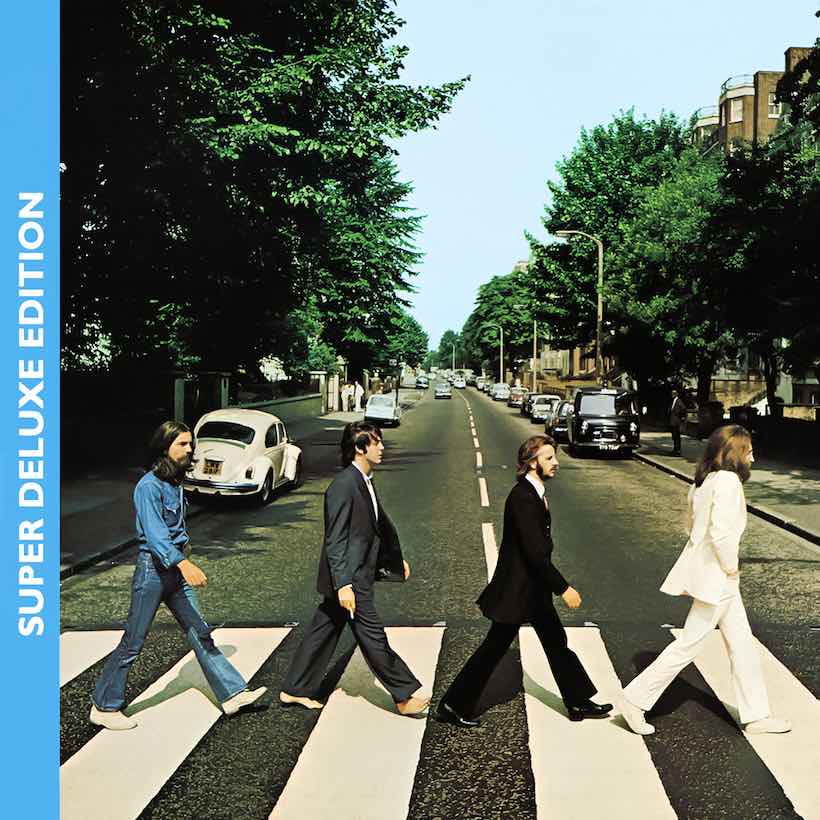
The Super Deluxe set is a book in a slipcase that reproduces the original artwork but with an extended track listing on the back. The book is a hardcover of roughly LP 12 x 12 inches. Opening it reveals the CD with the original album and the Blu-Ray in pockets with miniature original album covers. The two Sessions CDs are housed the same way inside the back cover and have alternative photos from the same shoot. A quick flip through reveals a lot of articles and photography of the band in the studio, shooting the iconic cover image of them walking across the zebra crossing on the titular road. There are articles about the lead up to the album in the band's timeline, a track by tack account of the genesis of each song followed by a detail of its recording including who played what, articles on the cover, the release and reception and the album's legacy involving personal memoirs and a more historical approach. What you get is context and the context is an extension of the celebration of a great record that feels like its own celebration whenever its played: a celebration of sunshine, nature, a busy and productive life, silliness and gravity, the plain wonder of a blue sky and the journey to the equation: in the end the love you take is equal to the love you make.
Sunday, December 30, 2018
1968 at 50: THE WHITE ALBUM REDUX
I've already written about this one here. It's a record that means a lot to me and had a big enough impact for me to judge every other album I've heard since by its standard. What I'll be talking about here is the 50th anniversary re-release in its Super Deluxe form: book in slip cover with 6 CDs and a Blu-Ray with hi-res stereo and mono mixes as well as two formats of 5.1 surround mixes.
New Stereo Mix
As with Pepper the bass, drums and lead vocals are in the centre with left/right panning done to other elements as well as in some effects like reverb. What results is a freshened experience. Partly this is because the mix has been created from elements early in the process, yet un-compromised by the track bouncing process, partly by some deft EQ, effects and panning, and partly, simply, because it sounds new. Space has been increased which comes into play in tracks like Long Long Long which no longer sounds like an afterthought following the storm of Helter Skelter, the air around the almost choral vocal harmonies in Revolution #1 are like rays of light. There is some loss in the modernisation: Helter Skelter's bass has lost its obnoxious punch which it needs (it does sound more now but I miss the violence of it). The clean and shiny 2009 remasters are still available, however, and if these displease we can always go back to them.
Surround Mixes
A far more immersive experience that the Pepper 5.1 as the main soundstage is kept solidly in the front with ambience and some stray elements coming in from behind your ears. Helter Skelter's reduced bass is a worry here as the point of making a 5.1 is that the .1 part is a subwoofer that can take all the subsonic joy it can eat. On the good side tracks like Warm Gun with its swirling guitars and dreamy vocals or Back in the USSR with its big guitar crunch and Beach Boy doowops. Of particular note is Julia. I never cared that much for it as it seemed to just murmur in the background before the side ended (and my original has a sticky scratch in it). Here Lennon's fragile aching vocal seems to drift to the centre of the room and make its case like a plaintive ghost. It sends shivers.
Esher Demos
Some of these appeared on Anthology 3 in the '90s but here they are given full length and pristine audio quality. It's an unplugged White Album! Songs that didn't make the album will cause the most stir and you can hear why. Paul's Junk and George's Circles offer high melancholy that could have easily lifted the record or a later Beatles LP. But there isn't enough for a third disc. And you have to wonder why George had to give Sour Milk Sea away. These are demos but they are multitrack (George had a 4-track reel to reel setup) and began with good sound. Now they are available and I couldn't be happier. Put the discs on as a summer unplugged session and luxuriate.
Sessions
Revolution - The full initial recording without the later concrete musique moments or mama dadda chanting that make sense of the claim that Revolution #9 was made from it. You can find that on Youtube. There are plenty of moments that you'll know from the big soundscape, quite surprisingly in some cases.
Honey Pie - The version of this with just the instrumental track is far more beautiful that I would have expected. The clarinet group arrangement really soars. Without the cute vocal it's just a lovely piece of music.
Good Night with guitar and three part harmonies is more beautiful than I've ever considered it. John's finger style on the Casino really sparkles.
Helter Skelter version 1 is the full take of the one that was on Anthology 3. It has a kind of creepiness to it and works ok but it's important to remember that the fabled 27 minute version is just a longer version of this slow thumping thing with breakdowns and cover versions. I'd like to hear that once. I don't care that much that it isn't on here.
The later faster version with MacCartney playing around with live echo and the full thrash version sounds bigger and angrier. The way is clear to the album version but this is a great near miss.
Can You Take Me Back has been available in muddy dubs for a while. Hearing it here is shiny fresh condition. The way it comes in on the album between Cry Baby Cry and Revolution #9 is big and spooky. This full context isn't. It's great to hear but I still prefer that eensy eerie fragment between two strange tracks.
The Book
Honestly, I would have just bought the book if that's all there had been. Essays and articles on the album, it's context, design, packaging and songs and recording are pithy and informative and enriched with a lot of evocative photography. There are enlarged copies of the colour portraits and poster from the gatefold LP. The articles about the context and work are enlightening. It's fun, it's beautiful.
This is just a skim and I'm sorry if it has sounded like more advertising at times but I am that much its fan. And skimming is really the best you can hope for from one pass on such a gigantic monolith. But I do have a few thoughts in closing.
Even the toughest of fans have argued for an ideal single disc version of this album. I wince to hear what they leave out. There are strong and weak tracks but I've never made one of these "improved" lists. One of the points of this album's appeal is its excess, there's just too much of it but it's the best surfeit in rock music history. From musique concrete to cute pop to stark and scary dreamscapes and horror rides and spooky lullabies, this one has it. I first heard it before I was told I should think about it as a band breaking up so to me it was the apex of their output. I though Abbey Road was lovely but too slick. This felt more purposed regardless what the truth was. The obvious camaraderie evident here in the sessions and demo recordings belie the official story so that now we not only have the best extension we could have wished for. What is often my favourite album feels fresher than it did when it was the least dated LP they produced (yes, including Abbey Road). It feels like a new release. I can't say better than that.
And a Happy New Year to ye!
Sunday, January 1, 2017
1966 turns 50: Revolver, The Beatles
Paul's count-in on the first album was all lust pop, the four a scream of ignition for the clanging guitar engine that burst to life. George's close-mic mutter has a sinister feel to it and isn't the real count in anyway. It's 1966, three years of Beatlemania have pushed these twenty somethings into a very strange adulthood and now the Quiet One sounds like he's discretely spruiking a burlesque plus show. That gives way to a hard rock song about tax.
Some context is called for here. I didn't hear this album in 1966 but the late 70s. There was a tide of Beatles reissues in the mid 70s which made it as a trickle to Townsville in 76. Revolver wasn't among them. I knew it was an album that had appeared before Sgt Pepper (which had never gone out of print) but like Rubber Soul it was impossible to find. This made it mysterious and to my BBC thriller mind this made it irresistable. What was on it? Sight of a mail order record club ad in an old copy of Playboy or Esquire listed Eleanor Rigby and Yellow Submarine. That, I knew had been a single and concluded that it would also have Paperback Writer and Rain, too. This was shaping up. The magazine thumbnail of the cover featured a negative image of what I would later learn was the cover. This meant that the faces of the Beatles looked like something from a sci-fi movie. Wow, more to this than teases the eye, I thought. Soon, it was the great forgotten masterpiece of dark energy that the colour and commerciality of Pepper had conveniently eclipsed. I took my favourite bands very seriously as a 13 year old.
While I did get a copy in 1977 as part of the 70s reissues the first time I heard the whole thing was when my sister borrowed a copy from one of her friends. It was an original pressing. It was mono. This almost put me off as all I knew of stereo or mono was that mono was old. Beggars and choosers. I ran down to the rumpus room, picked out a radio cassette of hits and future memories, set up the dub and let it happen.
As Taxman slashed to life I explored the cover. Four heads rendered in pen and ink, crammed together, looking in different directions. The eyes weren't drawn but cut and pasted from photographs. This gave off a strange air as though they'd let a fan design the cover. The same sister who accessed the record for me (thanks to Penny Johnson, btw) used to lead us in collage sessions with Clag, scissors and Mum's old She magazines. Under her guidance a kind of contained psychosis took form as we mixed 'n' matched anything we could cut neatly, and filled pages of scrapbooks with monsters made of lobsters and Prince Charles, pinstriped bankers and microwave meals etc.
This record cover was like that only more controlled the real eyes looking out of the pen and ink heads bore an odd hostility which I felt but couldn't name. Smaller photo Beatles were pasted around the heads, popping out of spaghettish hair or spewing out of the ink lines in lumpy photographic boluses. In the centre of all four heads small drawn figures of the four seemed to be walking through this strange scene looking variously lost, arch, aloof or ... well George's eyes were blacked out. While most of the 12 X 12 square was filled with this un-flower-powered black and white confrontation the left side between the heads of Paul and Ringo was almost entirely white. Had it not been finished? I would come to know the value of negative space in art but when I saw it there it looked like it was meant to puzzle or disturb. I returned to it repeatedly as the album played.
The Taxman backing vocals started sounding like the same 7th chord as in the Batman theme song and then the weird guitar solo snaked out of the speakers, sharp and wriggling and almost over before it began before the chorus came back in with bright harmonies sung through a frown. Paul's tight bass riff funked in exact step with the drumming and was joined an octave above by that Gibson playing the same figure. "And my advice for those who die. Declare the pennies on your eyes." "I'm the taxman and you're working for no one but me." What? Bloody hell.
I didn't hear the Beatles albums in sequence but a decade after their release in something like reverse order. We had a copy of Abbey Road in the record stack and I'd bought my own Pepper and Magical Mystery Tour and then the White Album. The same sister's boyfriend later that year would lend me his original copy of Rubber Soul. So, the notion of the Beatles singing about dark or nasty things wasn't new to me but, working out the timeline, what was new was how early it had started. I'd never owned the popular Red and Green compilations but I did have a couple of 60s era ones with the singles from 62 to 65. Taken as a whole, you could trace the development in those from Love me Do to Day Tripper but this stuff coming out of the stereo was almost absurdly advanced.
After Taxman slithered into its fade out with another guitar solo (later learned it was the same one just collaged on to the end, and that it was Paul not George who played it) the light rain sound of the groove between songs gave way to harsh staccato strings and urgent harmonies. "Aaaaaah look at all the lonely people!" Eleanor Rigby sounds like endlessly rainy streets and cold winter afternoons as the highly compact tales of loneliness are sung in a tone of a court reporter, unaffected, matter of fact. That's not often pointed out when this song comes up. Normally, there is mention of the strident Bernard Hermann string arrangement, no rock instruments and the theme of the song but no one ever seems to talk about how coldly McCartney sings the verses. Like the anti-vibrato stance he took with the strings in yesterday he strips the emotion out of this song and cools it down to a kind of horror tale. As a kid, only very barely aware of all the lyrics I was disturbed that Eleanor wore a face that she kept in a jar by the door. I also got one sequence wrong and mixed up the wedding with the phrase "no one was saved". That froze me if I thought about the song. This is before you get to the Psycho-soundtrack string section and the strident pace of a song that might easily have been a sentimental ballad. Hearing it afresh in 1977 felt like finding the grail on an archeological dig. I didn't wonder how the first listeners heard this back in '66 I was hearing it like that now.
I'm Only Sleeping begins with a six string strum and Lennon digs in with a monotone over changing chords played on slow acoustics. It's not a double bass but sounds like it. Then snaking through the ooh-ooh-ooh backing harmonies and John's softened snarl come coils of backwards guitar sounding eastern but also like nothing else. There's even a backwards solo that suggests the sensory warping of the dream state. The narrator of the song just wants to stay in bed and walk through the great open cosmos he finds behind his eyes. The song ends with a whole snake pit of slithering backwards guitar lines.
So, that's a sharp edged rock song about tax, a baroque severity about loneliness and a trippy song about dreaming. Not a She Loves You in earshot. This was already happening in previous albums but not to the same commitment as here. These are the opening tracks meant to grab the screaming hordes. They do grab but there's something eerie about each one. This does sit well enough in its times with things like The Kinks' Dead End Street, The Who's Substitute, The Stones' Paint it Black or 19th Nervous Breakdown all hits. But these were the Fabs, the moptops, the teenybopper's delight and here they were opening an album with subject matter that looked the other way as though trying to ignore the human jet engine behind them. Dylan reportedly looked up after hearing it and said: I get it, they don't want to be cute anymore. It was the music, as well. None of this sounded even like the steps forward on the previous album, it sounded like exploration. There was more.
Love You To begins with sitar glissandi far more authentic than the twanged echo of the vocal melody in Norwegian Wood. The rag is played through, the percussion (including tablas) roars into gear with a mix of tambura and distorted electric barre chords and a volume pedal. George's song is a series of couplets that don't always seem to belong. Sometimes it's about love and lust when you want it with whomever is nearby and sometimes it's about false hearted people. Whether it was George just throwing lines together or building up a picture I always hear this as a sinister memory. Maybe it's the force of the backing against his laconic vocal.
Five songs in and we finally get a love song. Paul's Here, There and Everywhere is a gorgeous jazz chord progression on shining electric guitars. Paul's vocal is the opposite of Eleanor Rigby, delicate and emotive, sung on the bridge between head voice and falsetto. Lush harmonies form a bed on the floor as sunlight floods in through the skylight. And then in the middle eight there's a strange chromatic figure Harrison plays on the electric. It fits but it's also quite sharp like a surf rock or spy movie riff. When it passes we return to that sunlit floor and finally to a circular repeat of the title and a couple of rich gleaming chords from the jazz ballad encyclopedia.
Yes, now it's Yellow Submarine with Ringo singing what became a kids' party song with more than a few flat notes with only a strummed acoustic to act as a safety net. It's naff and feels too long. But then I'll still take it over the kind of rock classique covers they were still playing live. And, really, there's a lot of fun happening in the studio that makes it through the speakers. This first hearing of it in context with all the heavier songs around it lent it a kind of in joke darkness. I don't hear that anymore but it was good to imagine at the time.
She Said She Said slides to life with a pair of electrics just at amp breakup for that extra jangle and sustain. A cool Lennon vocal relates a weird conversation the kind of which he would have had in the predawn world of swinging London club land. It was, in fact, derived from a conversation he's had with Peter Fonda about the latter's childhood near death experience. Lennon adapted it with a Lewis Carroll whimsy. The harmonies soar, a tiny organ note pierces the mix like tinnitus and the bass booms ahead (Harrison playing after McCartney had stormed out of the session) all of it twists together into colour and texture. It sounded like a perfect '60s rock song which is to say it sounded better than anything I was hearing on the radio at the time. I still love this song and will happily play it as the only track from the album.
Side 2 starts with a chunky piano plodding along like a cartoon bear. A snare roll and the bright harmonies of Good Day Sunshine burst in. Paul sings an easy mooded number of being in love on a sunny day with the heat of the road burning his feet while he and his girl head for the shade of the park. Little to see here but it's so nice and, like everything else so far, sounds like nothing they had done before.
And Your Bird Can Sing matches a complex guitar duet with dynamic harmonies on the lush side of Beach Boy and a song about being there for someone who's still in thrall to her riches and privileges.
For No One is McCartney again extending the kind of narrative song he was revelling in at the time (the single around the album but not on it was his Paperback Writer). In this case he sings about a couple whose relationship has dissolved, they are adrift, go about their routines, empty of all thought beyond a series of self delusions about the other, crying tears for no one. The instrumental descent is played on a clavichord. Slight electric bass and drumming and some chordal extensions on a piano fill this out but everything is kept minimal. And then one verse is only half as long as the others and into the space comes a figure on the French horn that is both light and because of that quite grave giving the whole song the feel of a film score. All in two minutes and two seconds!
Dr Robert starts with George's SG at amp breakup playing a sharp syncopated two chord rhythm. Lennon comes in low with the opening lines about ringing his friend. The harmonies come in after that and the song mixes imagery of public health and very private and privileged health as the Doctor of the title will pick up you if you're feeling down before a blissed-out middle eight where the guitars ring like bells over a shimmering organ chord and heavenly harmonies: Well, well, well, you're feeling fine. Well, well, well he'll make you..." The main song bashes in again and then another medicated section before the shuffle to the end. The song fades but you can hear the full end without listening too hard. Many fans of the band and this album dismiss this one as filler but I like the way it bridges the beat band sound that made them famous and the coming expansion of the sound and the exploration that was already taking place on the same album. It's two and a quarter minutes long, leave it on.
George's unprecedented third song, I Want to Tell You, begins with a fade in of an arpeggio chord on the Stratocaster he got during Rubber Soul. The timing of the riff is strange and only kind of fits the snare beat tha comes in under it. Once the band kicks in with a four on the floor shuffle centred around Paul on an out of tune piano we only hear it at the end of the chorus. George sings about the difficulties of communication in a state of confusion. Could be lysergic but just as easily could be social as the daily life of the swinging Londoners around them was getting tougher to unpack. A jolly rhythm belies this but the close harmonies accentuate it, finding their apex in the line at the end of the chorus: I've got time. At the end of the song the phrase is repeated until it unravels into the three vocalists trying out some Indian style scales as the strange arpeggio from the intro plays below it to the fade.
Got to Get You Into My Life blasts to life with a brass section straight out of the soul train, supplied by touring mates Sounds Incorporated. McCartney's tune climbs by thirds until the last words of the verse lines which go a full octave over that as the bass thumps on the ONE, a G which he keeps even though the brass ends on an F. The chorus waits until the end of the second verse and is entirely composed of the title phrase. Then it's back into it. but it's not just a three verse two veg. After the chorus there's a single chord break when the guitars finally appear. Instead of them reclaiming it as a standard rock song they are there to add texture and jangle on the lower strings, almost droning like a tambura. The last verse is all shouted in the upper octave as the brass section follows in the same range. Everything lifts as Paul screams some ad libs and the brass screams along with him to the fade. The band had long been associated with black artists from the US but if they covered them there was always a shortfall. Here they used the influence, the thing that got them about the soul records in the first place, and followed that. Is it echt funk? Doesn't need to be, it's the Fabs finding a new road and that's always good. McCartney, decades after he might have, confessed that it was not a song to a girl but to the cannabis that he'd come to use as others used wine, every single day of his life.
And then after that there is the track that everyone points to for being the raddest. They have just heard a whole album of innovative rock music from a band who didn't have to do anything more complicated than repeat their last successes until the well dried up. Nevertheless, Tomorrow Never Knows took pride of place as the closing track, forcing attention away from the rest. When I played the mono vinyl on that morning in early '77 this was the one that put every other backward tape or sitar or music concrete suggested in the rest of the album into context. They all seemed to head to this one.
The snarling drone of a tambura if lifted by Ringo's strange back to front rhythm and Paul's bass insisting on a C high on the fretboard. Then something like seagulls rise in the mix and then John comes in with the opener. If taxmen and lonely people seemed strange subjects for the world's greatest boy band then try this: "Turn off your mind, relax and float downstream. It is not dying. It is not dying." The tune plays the notes of a major chord like a bugle call, adding to the confusion. It doesn't sound remotely as Indian as the drone at the start. Then there's a break as something which still sounds unearthly happens. A kind of folk dance made out of scraps of orchestral music, woodwinds and brass uncoiling from under some almost screaming chords. It fits but it sticks out. But it fits. When John comes back in his voice is squeezed by a Leslie speaker and sounds like he's at the end of a long tunnel with more of the same in the lyrics. "Ignorance and hate may mourn the dead." And the seagulls screech overhead, again and again. A loud backwards guitar solo. More seagulls. "So play the game existence to the end of the beginning, of the beginning, of the beginning..." sings John at the other end of the void, fading into the chaos of sound, the orchestral stabs playing like fills. At the very end of the fade, ever more weirdly, a bar room piano plays some honky tonk chords into the silence at the end of the groove.
If there had been anything as boldly unapologetic yet also still recognisable and enjoyable pop music from the distance I first heard this I didn't know of it. Punk was already breaking through but this almost forgotten album by the biggest band in history was telling me that I shouldn't just be chasing the three chord distortion and slogan choruses from the desolate London of 1977. That felt the best but what if there could be more exploration after the reset finished? This was the record that told not only me that it was possible but necessary. It didn't mean that post punk bands needed to sound like the Beatles from a decade before but that they should race past the new standard before it blanded into a genre like any other (which it did and quickly).
Listening notes: This is mostly based on my first full hearing of the album as an original 1966 vinyl LP. That's a memory. The more immediate source was the 2009 remastered mono box set copy on cd in accordance with the original's mono mix. This, the closest you'll get to hearing what the band wanted has a lot of detail left off the stereo mix (which was considered a kind of luxury item as far as their fanbase went).
This was the album made as the band were acting on their instincts to stop touring and start exploring. That's important as, more than anything else until Let it Be it was a full band recording, the treasure at the end of months of intense idea sharing and playing. After it there were albums with more sophisticated arrangements and daring moves but they were also the work of a band that was less a creative unit than a series of recombined backings for individual members. Revolver is what a creative and collaborative peak sounds like. The single before it was Paperback Writer/Rain a powerful paring of daring with plain rock songs given unprecedented treatment (extra bass on one and backwards recording on the other) and the one after was Penny Lane/Strawberry Fields Forever, the sound of a new era.
The album was eclipsed by its successor, Sgt. Pepper for decades and while that basked in the light until mention of it became a cliche it wasn't until the US market got the '80s CD release with the original track list intact (it had originally been released there minus some key tracks) that the relation of the two albums was reversed and Revolver began to top the lists. This is good and bad.
It's good because it means that the album takes it's well earned place at the top (at least of thinking about the Beatles) but it's bad because this makes it a target of every contrarian bore who thinks it signals the need to champion Please Please Me or Freddie and the Dreamers. For my part I heard something made in 1966 which made me go looking around for anything else I could find from the year. What I learned was that Revolver hadn't been made in a vacuum of unguided genius but was very much a part of the scene it seemed to lead. There was so much I found from the mid '60s that inspired with its daring and style and so much I longed for a smidgen of that to appear in my own time. If it didn't happen it would be up to me or anyone else who wanted their lives enhanced by culture as rich.
That week of holiday wasn't just that album. I was also going through the Queen back catalogue. One morning I was blissing out to Sheer Heart Attack, second last track, side two, She Makes Me with its giant drums and acoustic chords and celestial harmonies. My sister who had organised the loan of Revolver from her friend heard it and called down from the kitchen that the Beatles album had to go back to Penny soon. She'd mistaken Queen for the Fabs.
So, there it is, a pop music monolith like the one in Space Odyssey, come down among mortals to lead them to the next development. Well, it did a lot of inspiring and well beyond its time but, take that on board or not, care about it or not, it's still a good record, not just an important one, an engaging one, an intensely musical one, a fun one.