Showing posts with label Anniversary. Show all posts

Tuesday, November 19, 2024

SIOUXSIE AND THE BANSHEES' JOIN HANDS @ 45

The difficult in the term difficult second album usually refers to the problem of coming up with the quality of material in weeks that had taken a lifetime to make the first batch. I know too many counter examples of that to consider it anything but subjective. Closer, This Year's Model, Plastic Letters, Reckoning, A Quick One all shape up as impressive platters bursting with creative energy. The Banshees second go was difficult in other ways. First, it's a lot spikier and less user-friendly than The Scream. Second, it is the abrupt end of Banshees Mark 1. Whatever they went on to, they would never sound like this again.

Poppy Day starts a loud bright bell. Then a guitar rasps high on the fretboard from a cloud of distortion. The drums enter, sounding like a Joy Division song. When Siouxsie enters, she's low in the mix and wailing at the top of her voice.  The lyric is a call from the graves of soldiers who fell at Flanders. Buying a poppy is meant to remind us of heroism but this is more like a cry from a zombie movie. At two minutes, it won't test your attention span and its brevity through the harshness of the execution brings an extra layer of eeriness. It's an indication that the darker sides of The Scream are about to crawl up out of the earth an dominate this one. And that's what happens.

Regal Zone carries the war history theme, the title referring to the unaffected state of warmongering monarchs who can gaze out upon the carnage with impunity. Even the site of a sculpted soldier depicted in mid writhe before death leaves their bright portraits untouched. The guitar, again distorted through effects, punches at the air while the band plough through an unusual beat and a rasping saxophone plays above. Siouxsie's wail is mixed higher but is making melodic shapes as much as singing lyrics. A cry of outraged description as much as vindication.

Placebo Effect could have been written much more recently with its references to alternative medicine and characterising it as a mass of bullshit. A strange guitar effect similar to the one in Wire's I am the Fly starts with an insistent chord riff. Siouxsie begins closer to her speaking voice about dodgy alt.medicine procedures as McKay's guitar settles into the slashing style of the first album with more conventional reinforcement in lower octaves. Siouxsie wails above the grind and swirl to the repetition of the title until the guitar returns to its abrasive opening figure. A proto stab at a voodoo doll of future mass conjobs. Pretty impressive for a band later considered the mothership of goth.

After the triple bash of the opening songs Icon slows things down for its introduction of quietly menacing muted chords playing under sighing ride cymbals. Siouxsie comes in with a confessional tone and the surreal observation of her eyes lifting or falling in the sky, religious lies or diversions. And then there is the initial calm refrain of the chorus: "Icons feed the fires, icons falling from the spires." And then the pace picks up as McKay's pealing guitar plays the chord progression in a dirty jingle as Siouxsie raises her voice to a wail for the first full verse: "Those words hang like vicious spittle dribbling from the tongue. Close your eyes to your lies force feed more pious meat." The language turns abstract but the voice beseeches. Steve Severin, author of this one, has said it was inspired by middle eastern religious figures that danced themselves into frenzies that allowed them to withstand pain and proved it with physical tests (the lines about skewers apply here) but he took it further to ponder religious fervour and its motivations. The song is a marvel of suspension, stretching a bright, modal harmonic pattern beneath a vocal that travels and then soars. When the middle eight arrives, calling ecstatically for the guilt to be golden, and Siouxsie's lung-testing elongated notes, the celebration of the music and the horrors of the words, creepily, weave instead of disrupting each other. The closing din of Siouxsie's wail and McKay's slicing chord frenzy bring things to an abrupt end. I always feel like putting it on again but I always know better.

Premature Burial begins with volume swells on the guitar, a series of two chords repeating, until the band comes in with a thudding grind. Siouxsie's voice comes in at full strength, describing the condition of the title (lifted from an Edgar Allen Poe story) as her character tries to claw her way out of her coffin and back into the world, aided by chanting that might as easily be voodoo or Christian. She supplies her own backing vocals in the form of wordless rises and falls beneath her lead lines. The song grumbles forward like a tank, aggravated until the lines about sisters and brothers are augmented by a hellish baritone choir and the usual tom-heavy drumming until the grey skinned progression retreats back to the volume swells into the distance. In the same way that Bauhaus' later Bela Lugosi's Dead did, The Banshees push this into a pisstake ("oh what a bloody shame") but it's one that never quite erases the big doomy power of the bed track.

Side two starts with the phlanging rush of McKay's guitar sounding more machine like as it runs from the minor tonic to the fifth, supported by the bass, drums and bells in a big proto goth wash that is called Playground Twist. As the lines mix images of childhood play and grownups loping around drunk at parties there is a strange swinging vertigo to the number, aided by its 3/4 time and relentless metallic rush. A melodic but dizzy sax solo mixes it up even more. "You can drown when you're shallow, you can drown, drown droooooooowen, drooooooowen.!" 

If Playground Twist took us to kitchen sink horror movies Mother/Oh Mein Papa lures us into a dark house filled with familial severity and abuse. A musical box plays the old standard Oh Mein Papa as it winds down Siouxsie sings on one side of the stereo about how she longs to please her mother who watches over her and on the other side how oppressive her mother's disapproval and authority suffocates her.  A final visit to the English lyrics of the original, sung feckless, exhausted. The spring winds down and the energy drains with the final chime.

The Lord's Prayer is a kind of tribute to the band's origins. When Siouxsie and various Bromley Contingent cronies mounted their first stage with Sid Vicious on drums and future Ant Marco Pironi, they made a lot of barre chord din while Siouxsie wailed the words to the Lord's Prayer and anything else she could think of until it ended somehow. That's what we get here for the last half of side one; grinding punk with growling chords, thudding bass and toms with Siouxsie caterwauling overhead. The sole qualification this track has for the status of epic is it's fourteen minute plus length. While it's not as one-and-done as PiL's Fodderstompf, it does test its listeners. While it's frequently funny ("you'll never - get - to heaven ... not even if you're good!") and this lineup of the band can play its way into listenability with little effort. Here, only two years after that first performance, it does outstay its welcome like someone who repeats a joke rather than stay quiet or willingly retreat into the crowd. Well, I bet the first time was a blast.

But we come to the other meaning of the difficult second album: after this one, the band changed. Kenny Morris and John McKay fled the band in the middle of a tour after a botched gesture at an in-store promo disgusted them (the management had run out of copies of this LP and were mistakenly selling promo copies to fans). There is no coming back from desertion when a young band in that culture needed to be tight knit. Then, however mistaken the reason (which they admitted much later) there is no cleaning up sell-out corruption. At that point, the band that had formed from pub-going mates and had a bash on stage once but honed their craft to the extent that they were effortlessly the equivalent of the likes of PiL or The Clash, were never to be more.

To their credit, when Siouxsie and fellow remain-er Steve Severin decided to carry on at any cost, they did so with an eye to how this came about and a path of committed exploration. They found a whizbang drummer in Budgie but changed their guitarists every album or so and recooked their sound around its persistent marks (mainly Siouxsie's voice) and gave the world of goth to come an origin story. So, yes, for two solid records, a band with a sabre like approach to forging forward with great integrity accepted a challenge to a reinvention by necessity that gave them a far longer life than their titanic contemporaries. Me, I like almost all of it (and The Creatures afterwards) but if I didn't, I'd still have the first brace of discs that ends with the yell, "this prayer goes on and on!" and a final dissipating stutter of guitar distortion. That's how it happens. 

Sunday, November 17, 2024

UNKNOWN PLEASURES @ 45

I didn't have this LP in 1979. The only Joy Division record I owned until 1984 was the Love Will Tear Us Apart seven inch. As for the band, I laughed at them but this was really about their fans, the people who would tell you at parties after midnight that you could hear Ian Curtis' epilepsy in his vocals. They seemed like a hobbyist death cult. Still, the name and the album title and the black leather look cardstock of the cover and the white inner sleeve blended strangely with the gloom and force of the music and I pushed them away because I feared what would happen if I didn't.

If I recall this album rather than play it, I think of it as samey, track after track of gloomy slow guitar rock. It takes a listen to remind me of the varying textures and moods and that the songs are quite distinct from each other. I think that's the artwork. Black, leathery cardstock with a small spiky diagram and a white inner sleeve with a creepy negative photo of a hand at a door on one side. Even the label was enigmatic: both sides repeat the cover image but one is white on black and the other is black on white and they aren't just sides one and two but outside and inside. If there is something being communicated it isn't being open about it. It was as though it had beamed in from another dimension.

In 1979, when cover art was still a matter of brash punky images against the airbrushed mainstream, this was edgy. A band that had emerged from the punk scene and considered itself a punk outfit was hitting the record shops with mystique. Had we not fought in the punk wars to rid the world of such Hipgnosis blare? If you're going to go around in a T-shirt that says I hate Pink Floyd, you should probably avoid the enigmatic on the old record sleeves. 

The problem is that Peter Saville's cover design for this record says everything visual about this record that you need to know before you've heard a note. The cow on Atom Heart Mother might well have been an inspiration of opportunity that worked because that's what was put there. The Unknown Pleasures cover looked like manual for something you didn't want to know about. It was forbidding. No rock album cover since Never Mind the Bollocks served the music on the disc more aptly than this one.

And the music? The band had already had a stab at some of these tracks and had produced an EP. These sides, for all their promise, were raw and recognisably punky. In a series of now famous decisions, producer Martin Hannett effectively future proofed the songs, taking them from overdrive and vocal snarl to a kind of cinema.

Disorder starts with palpitating drums and a picked loping bassline before the two-note pattern guitar comes in like a siren before the vocals begin talking about looking for a guide to help him cope with normal life. He has the spirit less the feeling but needs the feeling. This is one that can easily be imagined as an outright punk attack. Here it is more mildly paced and spacey. The voice that builds from a mumble to a cry (as it does in many of these songs) is in the centre set in warm reverb.

Day of the Lords cranks things down to glacial pacing. A guitar and bass figure rise menacingly through the minor scale before crashing deep and dark, the bass finishes the full figure with what at first sounds like major third to tonic but falls back down to the shadows around the minor. Curtis is central and darker with lines about a room and associated images of atrocities, warfare, torture and deadly competition before asking where it will end as a shrieking synthesiser calls out and floats above. The final verse is an octave up and repeats the opening verse ending with the question, "where will it end?" in a scream. This grinding atmosphere of nights of crime against humanity is what many people who have heard Joy Division think of when they hear the band name, a sound that couldn't be reasoned with and preferred skulking in the dark at the party.

Candidate comes slowly out of the shadows with a reverby drum pattern, slow and splashy. It's joine by a bass with a modal figure. Curtis comes in strongly but also heavily reverbed, the guitar making distant and barely tonal punctuation points around it, squeals, croons, metallic processes. "Forced by the pressure, the territory's marred, not longer the pleasure, I've since lost the heart..." Whatever the relationship was it is now beyond negotiation. The end, as the warped guitar wanders around in the dark like a stumbling ghost, is a repeat of the plea, "I tried to get to you."

Insight begins with what sounds like someone getting punched in the guts by a car door before a ride cymbal intro gives way to another descending bass line. Curtis' voice is phased or phlanged. A lyric of disappointment at one's own youth. A middle section sounds like a blast of video game laser effects before a calm return to the verse. This ends with the repeated claim, "I'm not afraid anymore," as the track closes with another burst of laser fighting.

New Dawn Fades is one of the band's most celebrated and covered songs. It's also one of their most forbidding being a statement of defeat. Spacey drums and a descending bass line lead to a big present guitar line that moves upward before finding its place in one of Bernard Sumner's signature two-note patterns. Curtis comes in as the guitar changes to a spooky but pretty arpeggio down the scale. He sounds full voiced but exhausted. After a brief instrumental respite playing through the progression twice the vocal returns an octave higher but more angry and desperate than anything else on the side. By the time he wails about them waiting for him in futility, Bernard is playing his own two-note figure higher on the fretboard and returns to a much higher iteration of the opening growling scale before he leaves it to the bass s it rushes to capitulation and the last few bars of the drums. End of side one.

She's Lost Control starts as a drum pattern that seems to start halfway through before one of the band's most famous bass riffs comes in with a crooning tone. Curtis' vocals are anything but crooning, describing a woman having a seizure but she's not just helplessly flailing on the floor. The source point for this song was something that Curtis saw in real life. He had epilepsy himself but the horrors he's describing here are not just about a medical condition but a general force that the woman in the song finds is wrenching her away from life into an inner chaos. She talks to the song's narrator, explains and corrects him. Whatever he witnessed on that occasion took him to further imagined states. To leave it at the seizure undercuts the lyricist's creativity (which is where those first gen JD fans used to leave me cold). The guitar doesn't appear in the arrangement until the end of the first verse when it clanks up through the minor scale. When the bass re-enters with its cooing riff there is a clear sense that for the woman in the song, this thing accosting her feels like it's taking forever, just repeating when she allows it. "And walked upon the edge of no escape and laughed I've lost control."

There's a version recorded later which ended up on the b-side of the Atmosphere single. It's cold as hell and ends with a wall of searing keyboards. I never worked out why they re-recorded it like that. It's from the same session as an instrumental that feels like it continued or emerged from the older song so it might only have been that. There's a mumbled coda that's all but unintelligible. What interests me about it is that for all its stripped back emotion, it only sounds crueller than the Unknown Pleasures version which scrubs up a lot warmer, despite the nightmare of its situation.

Shadowplay is one of the older songs on the record. The version on the Warsaw album is punkier and has a higher pitched Curtis vocal. Here, Martin Hannett has tamed the snotty edge that made it sound like too many other hopefuls and gave it gravitas. When the band kicks in from the slashing ride cymbal and bass hook it's crunching rather than thudding and Curtis' vocal has more confidence and character. Assassins, secret rooms and more despair. Bernard's guitar rises to the end of the track, insisting on single notes played high before a final chord.

Wilderness begins with a gymnastic bass lope before settling into a guitar grind. The singer has travelled far and wide and reports what sound like religious atrocities. A high two-note guitar figure sounds white against a black background. The second verse calls out more misery.

Interzone. A snarling chord riff and a distant scream start this rocker with its call and response vocal. Peter Hook takes the first vocal and Curtis responds, often repeating the initial line. This is another of the songs that sounds like it would be at home as a punk number. Images of violence that might well exist in the title's source, William Burroughs setting for some of Naked Lunch. This was one of the songs the band wrote in the studio when some of the tracks were dropped form the album (another was Candidate) and was very vaguely based on Keith Hudson's Turn the Heater On. 

I Remember Nothing swells up as a formless electronic drone, blostered by a spacey drum pattern, big picked bass notes, more synth and a clicking muted guitar. Suddenly a shattering of glass. Curtis comes in already at ten with the main refrain: "Weeeeeeeee were strangers ... for way too long." Alienation, violence, gaps between people filled with frozen air. The outro continues the drone, spiking, thudding and clanking with more noises of slamming and crashing in a spacious reverb. A few final moments of violence as metal collides with walls and floors. End.

My 1984 had been enjoyable, the complete antithesis of homelife from my undergraduate years with my brother's bad marriage. While that circumstance was good for driving me into my studies and music it wasn't good to come home to. Then that ended and all but myself and another brother were left the next year. I was still able to spend a little money every dole cheque on records and books and Joy Division were among those catch up bands whose records I bought. 

I found this at Skinny's for about $2 and spent the next week living in it. Closer came soon after and then Still. I didn't become one of the uberfans that I'd ridiculed until a few years on and I still can't quite work out why that happened. But back in '85 when the fragments of the previous year's enjoyable lifestyle eventually blew away, I was left feeling flat and the big gloomy notion that that was all my life would be. After three years of ecstatic cultural blitzkrieg it was the path to the mainstream and colourless conformity. I was still writing short fiction and had some ambitions there but no one makes money out of that. In the gap between hanging on to the fun of the early eighties as the mid point was about to click over and absorbing into the Brisbane streetscapes and the revitalising move to Melbourne, Unknown Pleasures made a kind of sense to me. Not a self pitying wallow but a kind of recognisable cultural filter, something that told me I wasn't like the rank and file and could still get something expressive done. 

You give up on such things when you understand how your best efforts cannot match your ambitions. There's no shame in that but unless you have something to break your fall you're going to have a harder time of it. Unknown Pleasures was one of a number of records that gave me that break. Now, if I see the cover image on a T-shirt worn by someone too young to know what it means, I let it pass. And however absurd and self-embarrassing the more extreme fandom redrew them I forgive it all, knowing I once had the judgement to allow a couple of sides of music, a guide to take me by the hand, to keep me from a quiet surrender.

Listening notes: I took the bold and clean hi-res downloads from either Pro Studio Masters or HD-Tracks to guide this post. Utter bliss and not loudness-warred.

Friday, October 18, 2024

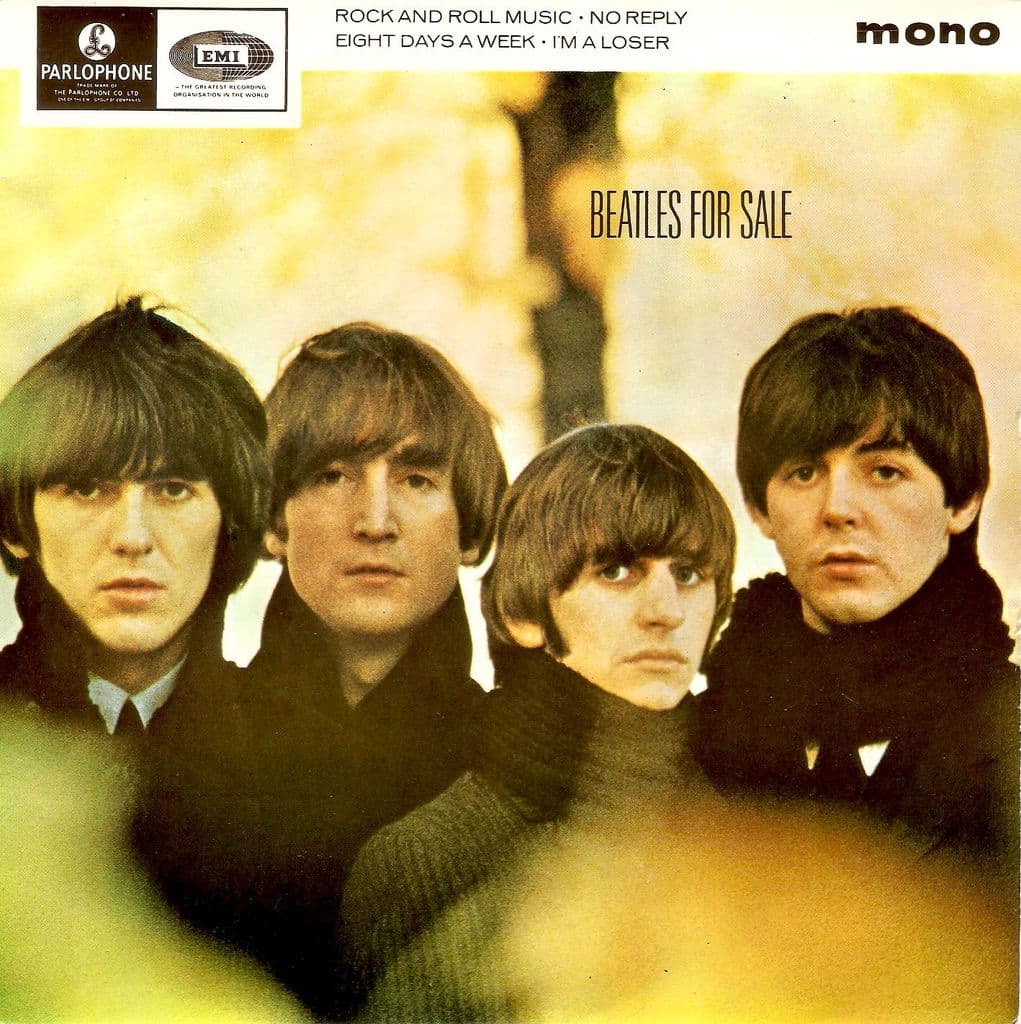
BEATLES FOR SALE @ 60

Ok, so you're in the biggest band in the known Milky Way and you began the year getting bigger by cracking America, getting a future-proof movie done and the first all original LP. Time for a break. Sorry, gotta keep it up because tomorrow all that news will be wrapping fish and chips. Right, so in the middle of interminable world tours, loss of sleep, finding out if you can actually have too much sex, playing the same set day after day to crowds who scream too loudly to hear a note and your record company wants another worldwide hit single and an album. Easy. Just cancel some of the dates and make some room on the timeline for songcraft and more learning studio magic.

Sorry, the tours are top priority. Ok, we'll tour. Sorry, the records are top priority. So, they write in hotel rooms and record when they get back to the U.K. and at some point there's enough for an LP. The Australian release of this record was reissued in 1977 along with all the pre-Pepper albums and the cover art was a repeat of the local original: a photo of each member at a concert, playing their instruments against a canary yellow background. They look like they're having a blast. The original UK Parlophone release, however, is more like reality. Against a cold season woodland backdrop, the four lads are rugged up against the chill and they look like they haven't slept in years. Even Paul looks ordinary. On the back, it's the same but from a high angle. There's a gatefold with the characteristically daggy blurb and some touring photos, one live and one posed. All of it says one thing: we're famous but we're tired.

The thing is, that's not what you hear. Lennon's voice starts No Reply and it's in full definition. There's a rasp but it's style rather than exhaustion. "This happened once before..." On the last syllable the band come in with John's acoustic strumming out the front. The narrator knows that his object is home and that when he calls, her flatmates lie about her being out. He's seen her. The verses are descending melodies which vary from angry to weary but end with solid harmony flashes of passion before calming to an adaptation of the opening tune. The middle eight carries on the tradition taken very high on Hard Day's Night in that they are melodic and harmonic showcases that could only be at that part of the song. In this one ("If I were him...") the Lennon McCartney interplay is stunning. It only happens once and feels more dramatic for that. The son ends on the anguished repeat of the title in harmony blasts. We could be unkind and call this an ode to stalking but, more genuinely, it's a perfect understanding of the sense of powerlessness felt by the rejected one and the fade of his futility is touching.

I'm a Loser begins with those words sung in bright harmony through three different intervals before the line, " and I'm not what I appear to be," leads into the Dylanesque masochism of the song. The lines tying it to losing a love to someone more adept at it seem there to seal the Beatles deal on it but the body of the number is self accusation and pain. The melody is sweet but Lennon's vocal is raw. Paul's high harmony soften the piece a little but it's mind is made up. Harrison is appealing in this one with a range of country licks bending out of his big clean Gretsch. 

Baby's in Black changes the time signature to a waltz. A twanging figure from George and they're straight into the harmonies. An acoustic rustle underneath and electric bends above a fairly busy tom tom-led performance from Ringo. The melody is quite playful and sweet for a song about a woman who is either in mourning or dressing like a black card and forbidding communication. The middle eight of this song is so delicious that it has to come back after the solo where Paul's soaring descant drives the lyrics: "Oh how long will it take, till she sees the mistake..." The final verse features an opening of the bed track with deft work on ride cymbals as Harrison plays the lowest notes he can and putting the Bigsby whammy bar to great effect. Short and utterly delectable.

And that's it, almost. The rest is covers done with varying skill and effect as well as some fine originals that feel dropped in at random. Rock and Roll Music is an energetic Chuck Berry number that's fine but outstays its welcome. Mr. Moonlight starts with a magnificent introductory scream from Lennon before it descends into the kind of guff that home organ salesmen would trot out to nail the sale. Kansas City is big and perky and feels like McCartney's replacement for the bellowing scream of Long Tall Sally only in another song. Buddy Holly's Words of Love does benefit from some cooling harmonies. Ringo gets to go all Carl Perkins with Honey Don't which George garnishes with some plunky rockabilly twangs. He gets the last word with a second Perkins standard featuring some vocal delay that was dated even for then but some fine chiming guitar licks.

This is all Hamburg and Cavern fare. Six out of fourteen songs on a fourth album that followed one of only originals. It smacks of desperation. While the rest of the originals are not up to the standard of that mighty opening hat trick, they're still pretty good. I'll Follow the Sun is a gentle whimsical Paul. Eight Days a Week is big Beatles jangle and harmony (another fine middle eight). Every Little Thing has real charm (love the tympanum in the chorus) but it runs out quickly. I Don't Want to Spoil the Party is a good stab at a kind of commercial Nashville toe tapper with another story of being on the outer (did ever such creatively and socially rich kids cry so poor?) What You're Doing is ok but feels last minute and undercooked. Eight originals but only three break through. These sessions were when the band also recorded the single I Feel Fine with its opening feedback and heavily doctored blues riff (well beyond what some people report as plagiarism), latin drumming, and business-meaning vocals. But they didn't like putting singles on albums. Why? The U.S, record company Capitol not only doubled up on the singles, they shortened the running time of each record so they could release more with the same price tag. I like the U.K. better, too, but if any Beatles album could have done with the concurrent singles on the LP it's this one.

Then again, neither I Feel Fine nor the b-side She's a Woman make a good fit on Beatles for Sale, even if you scrap Mr. Moonlight and, maybe, Everybody's Trying to be my Baby, it would sound as force-meat as the American albums (Meet the Beatles is a solid exception to this, just to say). What we got was almost the end of the early stage show. The next album, Help, added two more but these were well part of the stadium Beatles set, however goofy they sounded beside the other songs on that album.

Beatles for Sale does one thing well, though, it advances the scope of the bands recorded sound. There is a lot more space around the core of each of these songs. They are also more dynamic in the arrangements, allowing for a relief from the big shouty choruses and bluster so that John's lines about trying to telephone in No Reply after the huge middle eight sound like he's exhausted. This aids the song immeasurably: if it had just been played at the same intensity all through and Lennon had sung the lines like that it would have sounded like a bad take. As it is, it draws us in to the centre of the character's crushing sadness ... in a light and boppy Beatles song.

I used to skip a lot when listening to this one when I first got it. The covers felt old and stodgy and seemed to rub themselves off against the frailer of the originals. The sleeve art with its loud yellow field and old style photos of the band also felt a little senior. Where A Hard Day's Night pounds confidence and creativity, jingling with twelve strings and sophisticated vocal harmony, Beatles for Sale feels like a step over a cliff edge. The best songs here point to the next step which, at the end of the following year would sound as joyous as Rubber Soul and leave the old band back in the beer-stinking bar where the covers should have stayed. Could a couple of strong EPs been put out instead? Not when the album cost more per unit and the monster single compelled its purchase. Whatever other qualities that might now allow us to prise this disc from its commercial purposes, there is one thing it does tell us: it says, "we're shagged out but still moving. Keep listening."