Saturday, November 5, 2022

1972@50: DAVID BOWIE - THE RISE AND FALL OF ZIGGY STARDUST AND THE SPIDERS FROM MARS

The procession arrives slowly, crisp footfalls on the snare drum and, as it gets closer, the kick playing a pulse between it and the snare. When it reaches us, a huge, bright acoustic chord rings across all six strings as Bowie enters to tell his tale. The news is out: Earth has five years of life left before its destruction from an unidentified force. Chaos fuels desperation in the city and a groundswell of violence begins to simmer as the narrator falls in love at first sight with someone he sees in an ice cream parlour. He declares his love as the chorus follows the same '50s progression, bursting into life with a call and response between backing vocals and Bowie's impassioned lead. A bolt of sci-fi horror has become a teen anthem and, for a moment at least, things seem beautiful again. Well, they would if we weren't being continually reminded by droning voices that we're on a clock. The strings light up like fireworks and the whole city is singing it until they can no longer whereby the drums softly pull their retreat.

Soul Love begins as a more sprightly acoustic number with a vaguely latin beat. Until you read the lyric it sounds like an innocuous filler there to put the word love into an LP side. But it does go to strange places. A mother grieves over her son the soldier, the intensity of young love to the complicated love that religion preaches without always practicing. And the chorus, a tugging electric barre chord fest and higher vocal, sings of love as a mass of contradictions. It's bizarre until you consider that it's the observations of a starman, Ziggy, who understands romantic love and a kind of universal variant but understands the limits. Love is not loving the same way that a painting of a pipe is not, itself, a pipe. These are the observations of a stranger noting what the doomed earthlings might only know as mundane. The song fades on a lazy swinging playthough of the verse as instrumental.

Moonage Daydream bashes to life as a pair of industrial strength power chords. "I'm an alligator," Bowie wails and keeps up the imagery of dreams and fantasies as the tone changes from the love of the last track to big grinding sex. A near contemporary review I remember from the late '70s looked back to this song as being cobbled by a bag of cliches from the bubblegum sci-fi tradition: space face, 'lectric eye, ray gun etc. But what Bowie is doing here has much more to do with Ziggy coping with sex. And not just sex, but big, explosive carnality that might as easily eviscerate as transport its players to ecstasy. Two verses and many choruses take us there, at least to watch and listen as Mick Ronson's screaming solo soars and his orchestral arrangements spread out in glittering splendour. The song was good enough to serve as a capsule for Bowie's decades of fame and invention in one of the most powerful documents of his life. Not bad for cheesy imagery.

The gentle strum and airy vocal of Starman takes wing with drums, close voice and arresting chord progression, going from shared teenaged intrigue to a soaring rocket of a chorus in which Bowie leaps an octave between the syllables star and man. The guitar riff that leads from the chorus is like a fanfare of joy. Ziggy has come down and only the kids know about it, keeping their treasurable knowledge to themselves as they end on the same fanfare as before but now it's sung across the teens of the world as they join the party.

It Ain't Easy was taken from the bin of Hunky Dory but you wouldn't know it. From the strident, protest march, strum of the acoustic and harpsichord and the bluesy vocal that give way to the giant chorus this piece is made of a lot of work. It's a cover, so while it might feel like a good side closer musically, its lyric has no purpose built through line. Then again, as a tale of grinding work to get to the top of the fame mountain it fits fine and works in the sequence. It's the end of side one and Ziggy is a real rock star glorying in his celebrity but not without a knowing wince of the temptations of corruption.

Flip to the old side two and we finally get to see Ziggy on stage. A gentle lilting piano figure gives way to a sweeping chord like a parting theatre curtain. It's being told in the third person. It's being told by a fan. Ziggy transfixes his small first audience into a collective swoon with songs of darkness and disgrace and dismay and disgrace again. There is a rushing climax before the final chorus where Bowie swoops down through a falsetto arc and sings: "how I sighed when they asked if I knew his name." Like other songs on this set, this one is repurposed from a grab bag of songs either unrecorded or unreleased (at least under his own name). Lady Stardust originally bore the title He was Alright (for Marc) and was Bowie's hymn to the pioneering star. Adding "lady" to the title and the character was Bowie's cheek but it is also central to the self-othering of the Ziggy persona. Is he a she a he or what? Do we care now? It's better that we don't care and instead celebrate the range and diversity. But fifty years ago under the overcast sky of the high street the ambiguity bore real power, power to disgust, certainly, to a culture that had turned fab pop into cock rock, but also power to defy every newsreader, columnist, mum, dad, and steel capped bovver boy outside the glittering walls of the venue. Once inside, the great ugly shrivels to invisibility.

Star begins with growling power chords and percussive piano that's less trad rock than Velvet Undergbround. It sounds like one of the Spiders rather than Ziggy as he lists earthly friends and their fates variously as joining the army, starving at home (as an artist, a junkie, both?), turning the the world or going into politics. But the narrator of the song knows that he wants to become a rock star. He could make a transformation or play a wild mutation, could do with the money and everything else a teenager in the '70s might dream is an achievable end. The urgent music of the stripped back rock band is cleanly lined and solid before the wistful finale where a big slide guitar figure comes back down on him. It might be the the bummer of reality or how seriously he's taking it as he ends with two bluesy repeats of the words "rock and roll star" and then as the post song fade he speaks: "just watch me now." At the end of an extremely busy '60s and the beginning of the stadium rock world of the '70s, the dream would have felt gigantic.

A fuel injected version of the Eddie Cochrane riff (bending from the fret below for one and half bars followed by two lashing chords, repeat). Things are getting fast. The band is playing and touring and reaping the wild booty o' the road. The stage whisper chorus is comes in close after the echoing tin of the verses and urges the band to hang on to themselves despite the sensual blitzkreig charging at them. This was another song Bowie wrote before the Ziggy project. Google Arnold Corns (there's stuff on YouTube, as well). The guitar figure's insistence creates drama from contemporary listeners who were also hearing the retooling of classic rock by glammers like Marc Bolan or The Sweet. It also unwittingly presages the barnstorming style of the punks four or so years later.

And then after the rise comes the fall. Ziggy Stardust begins with a fanfare figure played by Mick Ronson on his overdriven Gibson as it falls from a blod G chord to a trill on D and a loping downward motion back to G. It stops all the urgency of the last two tracks as Bowie takes the mic for the story of the star. "Ziggy played guitar, jamming good with Weird and Gilly and the Spiders from Mars...." After all that jamming he was the one bagging all the attention, the press, the groupies, the eyes and ears of the planet. Everyone else just got jealous. The grandeur is cut by a slashing descent as the others plot and grumble. Ziggy plays for time and jibes, knowing he's the star. But in the second darker passage it says "when the kids had killed the man they had to break up the band" while the chord descent thunders. Are the kids the rest of the band or the fans? To my mind the mass adoration kills the star's uniqueness, his glamour and mystique, so that he just becomes another strumming junkie sold on the packaging of pimple cream. The killing is told in the sour section of the song and always sounds dark and severe. We go out on the fanfare again, at least there was that, before it ends with an aching repeat of the first line: "Ziggy plaaaaaayed guitar." Whatever was great about it has gone.

After the elegy, if we are still following the story, the next one wrenches us from our silence with the same kind of rock as the early songs on this side except that now it's bigger, much bigger, stadium sized. Life as a superstar is a blur of the big three which are coming in floods (in more ways than one). "Hey man..." the nagging vocal won't leave him alone as the big guitar riff goes from A to a very cool F which is never where you expect before opening wide on a classic bluesrock chorus "don't lean on me, man..." Bowie's own quote about Suffragette City has to do with the opening apocalyptic prediction, the kids are post rock and roll and go on the rampage for everything they want. To me, it's the aftermath of the post-glamour star touring city after city, getting zonked on anything on offer, playing again, drowning in sex and attention, day after day after day, like the closing minutes of the song as the A-F progression goes on and on, joined by an insistent sax riff, comes to a false ending before gearing up again and rushing to big slipped stop with one last screech: "suffragette!"

The silence hasn't quite set in before the gentle strumming of Rock and Roll Suicide begins. "Time takes a cigarette. Puts it in your mouth." Bowie's voice has aged the way anyone does when they've lived a whole life in a year. As the song builds and Ziggy's thousand kilometre stare burns holes in the hotel wall, a jangling arpeggio on a clean guitar joined by a sax, the urgency of the pathos takes solid form until he can't even stand the thought of daylight (those lines about the day breaking and hurrying home always made me think of a movie vampire). As we build and rise the narrator who has been describing Ziggy's fragility starts talking straight to him, screaming for him to stand, hold his hands, and walk because he's (and a dark chorus appears behind him for it) he's won-der-ful. A string section we've hardly noticed appearing swells with the pleading voice until, after a thunderous climax, it has the last word in a quiet and short major chord. Has Ziggy made it? The brevity and suddenness of that last sound might mean either. Don't know? Well, you'll just have to go back to the start and listen to all of it again.

Which is what I did. August holidays 1977, hogging Dad's recliner in the family room, playing that tape over and over again. Sometimes I played along, with the nylon string piece of junk my sister had offloaded on to me when she got a better one, and learned the easier songs but mostly I just stretched back and took it in. Between about six of us at school we had the major records by Bowie and completed the list with some home taping. Ziggy was an oldie by this time, Bowie was already on to Station to Station and about to get weirder still. I didn't know much about that, yet, and in the meantime there was this mix of familiar, even homely, rock music and ideas and characters that felt yummy and dangerous.

From the grime and dust of the city streets of Five Years to the frail vampire of Suicide I followed Ziggy the Starman down to an earth that swallowed him up like dessert ... then crapped him out. The dread and the wonder weave an intriguing picture: rock stars get everything their fans want for themselves, the sex and the drugs and the rock and the roll. In the tropical winter of 1977, with punk already making it seem easier, anyone of us could get there. Bowie even looked punky on the cover when I finally got the LP; not bin bag and safety pins punky but of his own tribe and ready for whatever he could get.

Would there have been a punk rock without Ziggy Stardust? I think so. So much of it had to do with what happened when the boil of Britain's grinding fortunes in the '70s was popped and the rockstar dream looked fake. But I can say that the search and destroy of Ziggy paved the way for whatever we were calling (I'm) Stranded or Anarchy in the UK. It prepared me so that when punk turned up on the pages and the waves I knew it was where I was and I embraced it. And as I closed my eyes, held my breath and felt the world changing around me, even in this little, personal way, at that small and sluggish pace, the secrets that darted around in the sounds of a great record, the grinning whispers that grownups could never pick up, spoke to me directly and they said: welcome.

Then again, this is a record we're talking about. Yes, it's one of the greats from one of the greatest's extraordinary decade-long roll, but just a record. After that holiday fortnight, I had played it so often, rubbed its neuronal receptor so raw, that it takes conscious thought, even now, to play again. When I do it is with pleasure but the sense of thrill I still get from my very favourite records is not part of that. We all grow up and find our own special ways of being boring. It doesn't have to be anything imposing or even irritating to others but it always, when noticed, strikes anyone who has known any of us for years, as a choice towards comfort and safety. I can still hear the glide of the wink in these sounds today but I think I've chosen against the wink.


Listening notes: I strolled around with the flacs of the legit download of the Five Years set from early last decade and sat myself before the wide and beautiful surrounds of the multi-channel SACD from the decade before. I really will never regress to vinyl.

Saturday, September 3, 2022

1982@40: LUST IN THE DUST - XERO

1982. Xero had a record out. A real vinyl disc. So what? Time and place. If Brisbane had a record industry it produced a very few artefacts of painfully hard won self-financed singles among the mess of truck driver custom pressings and the David Jones Staff Choir Xmas albums. Brisbane bands back then released anything longer than two songs on cassette and dressed it up in single-sized artwork in lunch bags so they wouldn't turn invisible in the shops' cassette racks. They might have coughed up all the money themselves but it was out through a real label (Sydney's M Squared) and was filed among its kind in the grown up LP stacks. Xero (sometimes Xiro or Zero) had done the cassette thing a couple of times the previous year but here was their posterity-ready playable on all good turntables (and plenty of shot ones, just quietly). A real record!

Also understand that this was from a dark hour in the live music timeline. Things were starting to turn but what I found when I came to live in Brisbane (from Townsville) in 1980 the pubs rang with the fresh young  sounds of jukeboxes or racing stations. The traditional home of bands without industry management (who had that then?) and accessible to anyone who could pay the two buck cover and at least convincingly lie about their age, were giving bands the black card. It felt like there was a ban on them. So what bands I saw (and was in) did was hire halls or vacant shopfronts and these were all shut down by cops (see also, parties with bands except bands that played Khe San).

While I did get to see Xero live it was difficult to do regularly. What I and everyone else in the margin of the mainstream in Brisbane did was hear them and other locals on 4ZZZ. One of the pleasing effects this had on the flow of music from the FM band was that all of it sounded like it could have come from anywhere. The Go-Betweens record a single in Scotland and it sounded like them down the road. Big dub grooves rubbed shoulders with cassette compilations from anywhere. And that is how I came to hear at least two of the tracks on this record and they sounded sensational.

So I bussed into Adelaide St and came back with the record in a plastic Rockinghorse bag, and looked at the cover. My Silver three-in-one was nestled in my old room's wardrobe back up in Townsville and wouldn't be coming down south for another year. I could take it to a friend's and tape, of course, but for now I decided to leave it until the Uni holidays and play it among the cane toads and coconut palms o'er the Tropic of Capricorn. Until then, there was the cover.

I took it out of the plastic sheath and discovered that it was a long sheet of cardboard, glossy on one side, folded in half to look like an LP cover. I figured getting a tabbed and glued cover was one expense too far. That aside, it looked great, from the distressed Egyptian tomb statues on the front, the handwritten band name and title and the industrial looking bed of tiny squares on the rear, the high contrast band mugshots, handwritten track titles and fonted statements like "This record contains no hit singles" it felt perfect. "Technical stupidity and Big Ideas: XERO. Technical assistance and Big Mouth: Colin Bloxsom." A thank you to Xero shareholders told of begging and borrowing between the conception and the release. This cover art by band member John E. testified not only to the cheeky modernism of it but the trouble it took to create. These are things that major label cover art conceals to give the impression that superstar bands' records are magically produced acts of charity with recommended retail donation stickers. This cover felt like it was from a community.

Then, after handing in my last assignment for the year which had been disrupted by the Commonwealth Games (Griffith's student housing served as Games staff and athlete units) I booked a sitter berth on the Sunlander and headed north. Then, once the shambly shuffle of Christmas holiday organisation and all the phone calls to herald my return to the tropics were done with, I was able to pour myself a cheeky rum 'n' coke and put the record on.

The Girls starts with a stuttered beat on kick and tom toms. Heavily treated guitar comes in with squeals and whines and a bass plays a descending slap progression. A woman's voice also steps downward, singing of stying in the safety of your own home, watching tv. Then it's "watching what's happening to yourself on tv." And then the feminist chant against male violence calls to reclaim the night.

Crazy Eddie turns what feels like a noodling acoustic chord progression but, after a big compressed crash launches into a droning drive as the male vocal tells of travel or escape with a middle eastern flavour in the melody. The chorus cryptically intones (female voice): "Crazy Eddie what did you do? Poor Delores, she never knew." Repeat, except it doesn't quite repeat as the arrangement and playing intensify. It's a trip. Good to listen to but maybe not to live.

The Misfits starts with a belching slap bass figure and proceeds to a funk groove thickened by organ chords. The woman's voice (I should start using the names, as they're on the cover art and I know them, anyway), Irena's voice reads out lists of imagery which don't quite flow but that seems deliberate: "Dead tiger in the kitchen. There's an Arab in the bath reading Goldilocks." "Facts, facts, relevant facts." And again but again it doesn't repeat so much as run the same thing through which changes it.

Flip!

Love and Anarchy starts with a wordless vocal in a minor mode over a nervous speedy tango. The vocal melody takes up the Latin feel in  a warbling minor key. A bright synth riff breaks the verses and then ends the song with a pronounced deceleration to a clean stop. No lyric sheet but the title is taken from Lilliana Cavani's dark comedy of desperation politics and romance. 

Every Kiddy Gets a Prize begins with a galloping snare and a dislodged James Bond chromatic figure. Two male voices trade lines, take up the Bond figure but are rhythmically across it. The lines end in a  falsetto descant over the keyboard, giving it a kind of vintage sci-fi feel. On cue we then get a quote from Telstar, just enough to let us recognise it before it vanishes. An unintelligible declamation sounds beneath the falsetto figure before the track ends with a kind of self disintegration.

The Surrendering opens with an expansive drum pattern which seems to pour down slowly in sheets. A big murky minor key riff on guitar bass and keyboards crawls out from the dark. Irena follows the melody with an operatic vibrato mixed low through a wall of reverb. The chorus is in two parts, a high major third pattern that ends in a monotone on the final word: "The tempest is calling him away." Then over a lamenting progression the chant: "Living with the very fear of change." It's played and sung first twice in minor then twice again in minor. The whole sequence of verse to chorus repeats ending with a spoken outro and a lumbering stop. 

I opened my eyes and took another sip and smiled.

Broken beats, droning keyboards, vocals that either wailed or murmured, observations and stories; none of it sounded like anything around it but it sounded like 1982. This leads me to a point I've ranted on too much but is worth repeating here. It is not just important to sound like your times but preferable than to affect timelessness. Timelessness in rock music really only refers to a set of production standards struck in the late '60s and early '70s that have been maintained since by the mainstream. But instead of being timeless, the parade of mainstream rock since then and up to today and beyond really only evokes the era of stadium rock. It implies that this normal setting sound carries with it the desire to attain stadium status. Bands in Brisbane at this time did not think this way. True they knew their squeaky, honky and spiky music would never be heard at Madison Square Garden (or even Lang Park) but it's also that they didn't aspire to it. Saying that there are no hit singles on your record is a joke but it's also a plain statement.

Also, sounding like something was recorded in 1982 is different from saying that it's meant to sound like 1982. As synthy or slap bassy as this record gets it never brings to mind bands in dayglo lurex, blacklight bow ties or fringes gelled up in hair tsunamis, it just sounds like music made then and for as long as it would be listened to for pleasure. That goes for other releases from the time like The Reels' Quasimodo's Dream or the Go-Betweens' Send Me a Lullaby. Also, this music didn't come from nowhere and was definitely not made in imitation of anyone. However their name was spelled, Xero had formed over half a decade before and had changed over the years, in personnel and musicality, developing along their own timeline. They have a hefty history before this which I won't go into because I don't know it very well. They didn't form in 1982 to sound like Flock of Seagulls. Lust in the Dust is neither the apex of their output nor just something they knocked together, it was the statement they made in 1982.

And that leads me to something you won't hear on this platter: rock music. No guitar solos or even a ringing barre chord anywhere. Some of the keyboards sound expensive but a lot of them could just be played on cheap Casios. Some of the songs have clear and definite structures but others seem to be patched together or allowed to wander. The point is that each track is a moment to be visited, occupied and left for the next, from the fevered flight of Crazy Eddie to the twilight jungles sprawling around The Surrendering.

To be anti-rock in Brisbane at that time was not a pose, it was a stance. In a city that so ferociously guarded its monoculture, the choice to stand outside of that was a lifestyle decision meant the difference between walking freely through your streets and getting decked by smart casual yobbos who thought your pants needed more flare. I and a group of friends were thrown out of a pub the following year because our hair was too short! The music on this disc didn't have to use any sloganeering about any of this as the fact of it, there forever on black vinyl, with the suggestion of the campaign to get it recorded, pressed and in shops told on the back cover a clear if implicit statement of defiance. 

I remember one night crossing King George Square on my way to the bus home and hearing a twangy caw from behind: "Yuz had a fight with a Lawnmower, mate?"  I kept going, tightening internally. He repeated the taunt in reference to my haircut, a George Orwell special that I used to get every two weeks at a barber behind a newsagent in Edward Street. He caught up with me and I saw him. At least twice my size with the kind of leering grin I knew too well. "Are ya a punk rocker?" he asked. For a second I was in a vortex of indecision (and laughter because calling anyone punk in 1982 was like calling them a rapscallion or a mastodon)  but I righted myself, flashed him a grin and said, "er, yeah." Satisfied with his insight he cranked himself into third and cantered up the steps to the Ann Street footpath. I'm painting that with a light brush but for a moment I really was terrified. Brisbane was not a place to advertise being at odds with its beer commercial culture. In some way, to some degree, you could feel that every day. 

More pleasantly, back in Townsville for the holidays, I put this record on as the big overcast sweltering night pressed down and the smell of dead fronds and alcohol rose to meet it. And I wafted with the incoming tide of the drums and bassy swell of The Surrendering and, for a few minutes that felt like the best half-dreaming states I felt warm, and not from the humidity.


Saturday, May 7, 2022

1982@40: PORNOGRAPHY - THE CURE

So, what is it about Pornography, The Cure's fourth platter? Sounds like classic early Cure with a string of good songs but seems impossible to remember after you've played it?

Bands develop through mutation. They start with something signature that, in exhausting it, changes as each phase gives way to the next and the process, looked at over time later, constant morphing, a twisted monstrosity. Joy Division seemed to metamorphose from Unknown Pleasures to Closer but the lineage still looks misshapen and ugly, the transformation has taken work and feels like it.

The Cure are strange here. From Three Imaginary Boys to Seventeen Seconds to Faith to Pornography I hear less the constant difficult birth of other bands than a steady intensification of one approach over time. You can easily trace the melodic patterns just of the vocal parts from Fire in Cairo to 100 Years but where the first is studiously spare, almost arid, the latter is dense and swollen. It's almost as though someone steadily poured a vat of cornflour into the music. Pornography is the monster version of Three Imaginary Boys. Afterwards, things changed: more light, more variety, more air, more success. Until then there was this.

I've put myself to a test here. I'm writing this one from memory. A little cheating has happened in that I've listened to it about five times in full over the last week. While I can recall the insistent whirling riff of the opening track and the aural break by the slower paced Siamese Twins to the backwards voice on the final and title track the rest just sounds like what an A.I. would create if programmed to make a Cure album.

The modal, minor tonality, the non rock drumming (is there a single snare hit in the whole record?) and the anguished vocals all fit the profile. There's even a single, Hanging Garden, but in context, it retreats into the texture. Compare and contrast the other single from this time that didn't make the album: Charlotte Sometimes. It feels like a classic, bigger than anything before with both space and intensity and a haunting refrain ("sometimes I dream"). I wonder if I'd notice it if it had been on the LP.

So far, all this sounds like a hatchet job. However, what is emerging as I write this is that, in being a kind of distillation of the band's music from the beginning to this point, it serves as a kind of intentional no-brainer. If you hear it you cannot argue that there's less craft on show. The production feels nothing but deliberate, vocals are variously out front or buried, the guitars and keyboards continue their rockless exploration, and so on. It just doesn't reward a close listen.

At the time it was released I'd heard a few tracks on 4ZZZ and was happy to hear another Cure record was in the offing. I was over someone's place for tea and biscuits one afternoon and noted the Curey music under our voices and gaffed, "can't wait to hear their new one." Um. "This is the new one," said mine host. While that was a decent joke on me he wasn't smirking in the slightest. And then he said something stranger still, for a Cure fan: "It's a bit Cure-ish, isn't it?"

And that's it, it's less Cure than Cure-ish. 

The other side of this is that when you put it on and go about your dailies it really sinks in. It's an album of album music the same way that Exile on Main Street or the White Album. You don't put Pornography on to hear The Figurehead, you put it on when you're in a Cure mood. This is apt and actually pretty useful, when you think about it. Apart from anything else it fits the history, the band were getting exhausted, physically and creatively and this record was meant to punish. It was meant to be Phil Spector in Hell, an angry note to themselves and all their fans: you want more? Take this!

The thing is that when you do listen over your shoulder while your doing your dishes or taking an urban hike, it comes to life as a living film score. It's the gloom of the early '80s for the ages. In comparison, you can get to name every track on Closer or Travelogue but Pornography is like the drunkest black light party you ever went to; there's no song by song, it's just an interminable corridor of bodies, noise and screams. But that's why it's good.

Sunday, April 10, 2022

VALE, CHRIS BAILEY

At school, we didn't know what to make of it. It was thick, hard rock but they didn't have rockstar looks at all. They looked like the kind of kids who sat outside milk bars drinking family size bottles of Coke, bumming durries from people going past. The song had no guitar solo at all, just that driving push forward. As soon as we saw the clip on Countdown or Flashez all the other hard rock bands looked old and tired. I loved the way the singer walked up to the mic at the beginning and flicked his cigarette away before singing like he didn't care if the carpet caught fire.The song was called (I'm) Stranded and was impossible to turn off or down. Just when you thought all the verses had run out another one came up and it just kept going and you didn't care because you wanted to listen to it forever.

I had no point of comparison. We were fourteen and had no idea about The Stooges or The MC5 or even The Kinks. And it was too early that year (1976) to think of calling it punk. The closest I could get was some of the harder  '60s stuff I was getting into like 19th Nervous Breakdown, Get Off of My Cloud, or My Generation. It seemed to have just been born there and then. And they were from Brisbane, in our state. No one was from Brisbane, no one we wanted to be.

I needed to get my guitar to sound like that. My guitar at the time was a nylon string given me by my sister. I tuned it to E minor to allow for a quick change between major and minor on the G string. I got the chords ok (with that tuning the easiest way with that riff was to barre the fifth and seventh frets) but it never sounded right. I put a piece of folded paper under the strings at the bridge and it buzzed feebly but along the right path. I didn't know how you got distortion with pedals or amps. And what was layering? That would change by the end of the year, as well.

That left the voice. No harmonies though I could imagine them on the chorus. It was just that solid snarl and growl, nothing like Shirley Stachan or Robert Plant whose soaring screams were at the apex of my musical firmament. But this was making that difficult to hear. You could imagine him talking that way, mumbling sneering, not caring if you got every or any of the words, and hard to please. The closest I could think of was Mick Jagger in things like Satisfaction or Have You Seen Your Mother, Baby... But even that mix of noise and fight didn't make it to this vocal. That's what I wanted to sound like. I wanted to walk around like that, snarling with a piledriving rock band behind me.

I couldn't find the song in any of the Townsville record shops and didn't know about ordering records. I have never had a copy of the 45. They didn't have an album and wouldn't until the following year. The only way to find out about them was in local magazines like RAM or Juke. I started buying both. Nada. It was sometimes on the radio and on ABC tv music shows. If they played outside of Brisbane it surely wouldn't be in Townsville. Before the globe was buzzing with its digital neurones that would be that.

But the stories and interviews did come through and the LP did appear. It was everything it should have been. Brash, tough and melodic. Snarling man could carry a tune forging the notes into a kind of solid tar. And the stories started appearing. His name was Chris Bailey and he was five years older than me which might as well have been fifty from my teen perspective. He was articulate and wry and, however less famous than many others in the pages of Juke, seemed to be in charge of every interview he gave. 

The band moved to Sydney and then to London. By then people who heard them were calling them punk. They took over the studio in what had to be a real live performance on the mime and clip show Countdown to the extent that no one who saw it remembered anything else about the show. The London crowd rejected them for not adopting the look. That dropped the penny for me. By then, the uniform appeared: spiky hair, safety pins in  nostrils and leather jackets. The only concession I ever made was the jacket (which Mum bought me for my birthday!) but, looking at Chris with his shaggy mop and op shop suits, and complete ownership of himself, drove me away from the punque aesthetic. Wear what you want as long as it's you. Sound the way you want as long as it means something to you. 

In '78, Know Your Product came out with a posterised clip on Flashez. It gripped harder than Stranded and had a horn section that suddenly sounded like the perfect extension of Ed's buzzsaw guitar. Who'd have thought? Was it punk? By that stage I didn't care and wasn't even using the term punk much anymore. It had been adopted by its detractors and had long faded from relevance. All the best culture at the time seemed to be thriving in the margins, outside the big oversweetened blancmange that was the mainstream. Whether it was hard rock, the big mysterious spaces of dub, electronic exploration, proto-sampling or anything someone tried that worked, the mood was dark and curious and suited me.

I got to Brisbane far too late to see The Saints live but their legacy was strong and audible. The post-punk of 1980 onwards there made going out exciting because you didn't know what you were going to get. I'll never forget turning up to the Griffith Uni refec during O-week and seeing Ed Kuepper's new band The Laughing Clowns for FREE!  And then there was The Monkey Puzzle which was supposedly by The Saints but didn't sound much like even the more sophisticated Prehistoric Sounds album before the original line-up crumbled. The voice was still there, centre stage, I found out that he'd just taken the name, wrote new songs and hired the band members. It took me a long while to reconcile with this, weren't The Saints inviolate? Weren't they the big driving force that survived their own widening musical pallet? This just sounded soft to me. Actually, I think I'd forgotten that the main reason for the magnetism I felt toward them was the persistence of that voice, the growl that called through the buzsaw maelstrom and then the brass and the jazzier moments of the second and third albums and now reached out from music that sounded a lot friendlier. Well, everyone has to change, me included. When Ghost Ships appeared I was back on board.

And then this morning, trying to ignore the pain of a direct hit on my knee on concrete, I rolled over, checked my phone, and saw the news. April 9, 2022, Chris Bailey had died. News like this is always a few days late for various reasons. The very famous or the heads of state are declared the same day but singers and songwriters who influenced other singers and songwriters whose famed eclipsed their inspirations can go unnoticed for days. Chris Bailey, the voice at the birth of punk that didn't care but wanted you to know it didn't care, was part of that set. Did he care that he never got as famous as those others? I don't know. I didn't know him outside of his records and never even saw the band in any of their iterations. I will guess that if his ears were good he would have known the reach of his endeavour. Check that photo above. Chris has hit the floor during one of The Saints' high velocity sets. The boy in the denim jacket, directly above Bailey's head is taking some serious mental notes. It's Nick Cave.

He was special to me for all those things, for deconstructing punk by throwing away its uniform in a Brisbane dominated by uniformed violence and a London given to a consumerist uniformity. He stood in a frilled shirt for a photo shoot attached to an interview where he said he'd rather be aristrocratic than bourgeoise, a curly lock falling into one dark brown Irish eye above a well-earned smirk. He could've wielded a cutlass in that shirt and you'd still have to agree that he was an aristocrat. When Ed brought him a Ramones record and was worried they might be accused to ripping their sound off (same buzzsaw guitar) Chris sniffed and said he thought they sounded more like The Archies. That still makes me smile (and I was welling up, earlier), and I'd rather smile than mope at the passing of this titan as his matter decays and redistributes and the man is long gone. What to do now? Listen.


Wait until tomorrow and then we'll see.

You know, I don't know about tomorrow.....


Sunday, February 13, 2022

1982@40: AMBIENT 4 - ON LAND - BRIAN ENO

A booming drone. It might be a synthesiser or something found and processed. The high pitched whining rhythm over it sounds like mosquitoes. There is a slow moving melodic figure on a keyboard that seems to deteriorate. Sounds are hard to differentiate. There is no guiding light of central harmony or tone. As a listener you are lost and by the time the squirmy figures emerge to take a look at you before retreating back into the cave and dripping pools you are in a darkness that holds mystery but no real danger. Ghosts, perhaps, but your only harm would come from yourself. Just don't, at any cost, turn it off before the whole record finishes.

The first three Ambient albums, whether collaborative or solo made suggestions for the music of mood and atmosphere and all kept, however strangely, to notions like musical motif and definition of voice (e.g. piano or synthesiser). This final outing all but abandons this, only very occasionally providing a line of tone shifting in time that might otherwise be called a melody. But the point of these is to add further texture and mood. The record is about exploration, slow exploration, the kind of sortie done in the dark on your back with his recommended three speaker system. 

Bubbling mud fields here, the echoes of beaches long swallowed by the sea there, lantern marshes and unfamiliar winds. There is development on recognisable musical grounds but it takes the whole album to hear it. No songs, no vocals (the little girl's voice in Shadow is a processed muted trumpet) but so very much personal vision and genuine composition. If you think of spiky dance tracks when you hear the term electronic music locate a copy of this and live with it without pausing until the end.

I expected to have some fun describing what I see when I listen but it's different every time and wouldn't be what you see. Find it and listen to it while doing the dishes or go all in and lie on the floor with the lights off. You might not agree that this is some of the finest music made since electric recording began but you will have to admit it has something you don't get from other music, something fascinating and compelling.

If you wonder why you think you've heard all of it before you might cast you mind over some of the more strangely scored films you've seen since the '90s from which time this kind of goulash of natural sounds and big twisting subterranean drones made it into almost every horror movie that didn't have an orchestral score. It works beautifully as an ingredient in cinematic creepiness but more generally, weirdness, the confronting experience of nature itself. Seee, I'm doing it again, I'm recalling distant lights and purple grey skies and desert canyons. But no, if you want to go on this journey you need your own mind to guide you.

Some of the finest music made since electric recording began.

Friday, February 4, 2022

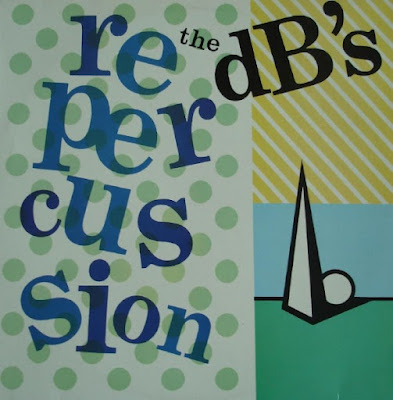
1982@40: REPERCUSSION - THE dB'S

Two chords on a guitar so chorused it sounds like a temple bell. Straight into the vocal about the girl whose mother can't let go. The melody of the first few syllables of each verse line is one note held stubbornly against steadily changing chords which adds a cinematic urgency. The song eases out a little: "Run back to your mother..." but then squeezes back in for another verse and then the chorus, a call and response done through delay. "Think (think) for yourself, don't let her live for you." Instead of a fourth verse there's a quietly sung scene of her sneaking back into her room as her mother in silent judgement prepares her for bed. An extended chorus takes us out and under the last chords a whisper, something like, "forget your maaaaa."
Three minutes of epic powerpop, harmonies, complex but tight band parts and songcraft that borrows not only from the great mid-60s phases of The Stones, Beatles and Kinks but current arthouse cinema that shows the sicker side of teen. Three minutes of knock me down sound and the dB's go from an arid debut album to their peak. I still can't listen to Stands for Decibels but I still listen to Repercussion.

Oh, before going on I should point out that I'm going to be talking about the Australian release with the different track order that starts with the above-described Happenstance and ends with I Feel Good (Today). I do not know what made the record company change the song order but with it this album approaches perfection. For the record (nyuck nyuck) I did listen to the original order but wasn't convinced by it. So, the Australian sequence it shall be.

After Happenstance toured the entire cosmos of this record in one song it's time to relax and follow some colours by themselves. We Were Happy There begins with a giant thumping vamp tanged by a plaintive vocal. The chorus rides low until it rises to a big title scream. Living a Lie bashes in with brass and strident beat. Another clear voiced melody line borne of ethereal aaaahs as the serious minor key strut parades on. It's hard to bring a thing like this off without falling into cliche but it's done so straight that it works.

The joke titled From a Window to a Screen gives us a latin feel with exotic percussion, vibes and distant reverbed harmonies that roll in like waves. A White Album style picked bass prevents it from floating away on its own lightness and, by providing a centre, lets us listen to the core rather than have it wash to either side. Ask for Jill breaks the spell with a jazz tinged rhythm and busy vocal line. Light harmonies and bouncy arrangement kept this side of cute and lyrics about dealing with record companies ending with a spoken 1/2 phone conversation that ends in, "yeah, I'll hold." Amplifier ends the old side one and is an sustained joke using a developed Bo Diddley beat in a story of a breakup that ends with a tragicomic suicide after his ex took his prized amplifier. That this amiable but unremarkable number was chosen as the lead single from a record that is bursting with compelling songs. Was it the cool of perversity by a young band? Not a bad song, just why a single?

Side two opens with the rushing bright guitar riff of Neverland. Each line of the verse ends with an intricate drum figure that seems to change time signature but is just syncopation. It adds a kind of show tune complexity to an arrangement that starts by promising to be a four on the floor '60s pop moment. A call and response chorus also changes things up by having the response in falsetto. Storm Warning is a tango done garageband style with a clear vocal warning the second person about giving in to things that make them a loser. A clever middle eight rolls out dismissive ideas of heaven and hell before a harmonised verse and chorus take us to an outro on a synth or Latin flute-like voice and ends on a cha cha cha. The wit of this one is never allowed to exceed the music.

Ups and Downs is three minutes of pop pleasure describing a manipulative relationship sinking under cuteness. Nothing is Wrong is one of those euphoric sounding stoned shimmers that bands that formed because of The Velvet Underground added to their repetoire to include some old-before-their-time world weariness. There's also a breezy Pink Floyd ambience but more than past influences this song is exactly like a strain of future rock bands. American bands of the '90s and beyond have built entire careers on this kind of languid lament. Here, it brings a welcome change of pace and feel, having a broader emotional horizon than all the intrigue and petulance that has gone before it on the album. In fact, it's difference from all the other tracks is the very thing that makes it feel like an album, a song cycle where all the tracks are in the right place (even if the version I'm hearing is a revision). In Spain starts with a whining guitar figure high on the E string and moves into a rapid '60s bad mood song about a girl's manipulation. As the closest thing to any song here sounding like it came from the first album it's also the closest this record gets to having a filler track.

And the best is last. I Feel Good (Today) starts with a few crisp cymbals and an modal acoustic figure with a backwards guitar snaking through. A quiet vocal sings a short melodic phrase that will persist over chord changes. It is soon joined by glorious harmonies. A jaunty middle eight ends in a shining harmony descent. The song resumes after a brief acoustic arpeggio and then just keeps developing and changing around the same short melodic phrase. Stops, starts, adding textures here more backwards guitars there and what sounds like a tribute to the pyschedelic explorations on albums like Revolver, Smiley Smile, The Who Sellout or The Electric Prunes ends back in the lap of this band that continued to bring the best of that lost spirit back on to the turntable. When the album is played with the Australian sequence it has come full circle from the aggressively mid-60s in the '80s Happenstance to the big floating cloud that is its closing number. Ending on a slowly descending guitar figure to mirror the folky introduction and a final whimper not a bang acoustic chord and we're there.

The reason why I find this band's debut unlistenable and this one a glory for the ages is not because the songs are prettier and more conventional, it's because the contrarian brashness has been discarded in favour of the band's strengths. Stands for Decibels is the record of a band that want to sound contemporary but won't actually go to Birthday Party lengths to prove it. Repercussion is by a band that admits its songwriting is strong and can support that with arrangements that prevent the '60s influences from overpowering the statements. This was at a time when younger bands that had spent their teen years investigating the more interesting sounds of the previous generation until punk came along to save them from being retro-nerds. Having both those forces active allowed the punch of one to trim the whimsy of the other. This didn't always work. The worst of these outfits grew their hair and wore paisley on their album art and sounded like the Blues Magoos. The best sounded like themselves, using what they liked from the old stuff their own way. As '60s as they could come off, The dB's always sounded mostly just like themselves. This record is a triumph of that endeavour.

Sunday, January 2, 2022

1982@40: SEND ME A LULLABY - THE GO-BETWEENS

Your first meeting with this album will be an unpleasant one. You've heard good things and met the band as singles but when you approach them in public like this with everyone around you don't get as far as, "hi" before the snub. You really got on with those songs but now you're getting their back as they fabricate conversation with anyone as long as it isn't you. But then the more you see them out and about you realise they just have a way and, really, a lot of what they have to share is pretty good. They were always like that. You just didn't see it.

I'd come back from the usual months of living free between first and second year Uni to two records that caught me. One was the Hunters and Collectors EP and the other was this, The Go-Betweens' first full record. There was a hefty build up for an indy band. Interviews on 4ZZZ and in the local press. They were high enough profile for RAM or Juke but for little more than five hundred words at the most. Not yet two page interviews.

And there was that title. One friend hated it as it sounded soft and mushy but I thought that was the point. Mass market labels like K-Tel would regularly bring out discs with titles like this, brimming with thin masters of oldies gathered in a theme. The Reels would release a whole album of soft core covers very deliberately on K-Tel this same year and it outsold their stone cold classic Quasimodo's Dream to an embarrassing degree. I remember hearing the ZZZ interview where The Go-Betweens said they had wanted an Australian sound to it (might have been when the "striped sunlight" phrase emerged) and they wanted a K-Tel-like title. No one was gabbing on about irony or juxtaposition but things were changing rapidly from the outright one-to-one correspondance of punk to the contrary motion of the early '80s. So, Send me a Lullaby it was.

And, yes, at first listening it was spiky, contrary and hard to love. But what did I or any of us expect. The GoBs were royalty by default. By default as, in the marked absence of The Saints there was no one left among the many bands gigging or trying to gig who could or wanted to lead anything. The Go-Betweens were the sole outfit that had consistently released real records on actual vinyl. They'd even recorded overseas with cool people like Orange Juice. But the timeline of style didn't seem to make much sense: boppy Lee Remick, rich pop of People Say, sparser than a baby's moustache I Need Two Heads, richer sparser on Your Turn My Turn. The gigs sounded the same as ever, a three piece at an acoustically unfriendly venue. No one had any idea of what the first album would be like. So, it was a surprise. What do you call a birthday present that's useful for something you're not into yet?

The release day came up and the interview for it was the sound of Robert and Grant (don't remember Lindy getting much of a word in though her contribution is essential) and then the sound of the spiky, petulant non-rock tracks from the record. The one thing they could claim is that they were working on their own terms at a time when that mattered more than sounding like the big parade. You could, if you were shallow, seek similarities in this record and those of other artists from the time and before but, really, any of them will be a stretch or so superficial you might as well say, "well both use chords". Really, the importance of this record to the band but also to a city quietly proud of them was that it was done without dressing up like the zeitgeist. It meant that they were more likely to influence than repeat influences and influence they did. And they did it in Melbourne, culturally as far away from Brisbane as could be got, with the Birthday Party's producer and James Freud on sax. And they didn't sound like anyone associated with those figures nor even anyone from Melbourne. They just sounded like themselves.

But we don't start spiky. One Thing Can Hold Us emerges from the black of the vinyl with a gentle wafting two chord figure. A languid vocal from Grant McLennan until the more sprightly full band sections where he's singing an octave higher. The drums come in rudely and stay that way until the return to the lazy current of the verse. Ghostly guitar figures come and go. Reverb here but not there. A couple or an individual and a quality are at odds but they are of one piece. Despite the moments of near-miss intensity, this is a spooky opening.

People Know begins with a blast of squeaky sax that could have been on a Laughing Clowns track. It's jazz but not smokey cocktail, 3 a.m. jazz, but blaring impish and discordant jazz. And then it's a guitar trio playing a rock song ... of sorts. Robert Forster's introduction to the mic on the album is cool urgency. Meetings and places and age on faces in a town without trains. A busy shuffling rhythm with guitars so clean and well interlinked that they seem like a single guitar track. Images. We get enough to complete our own picture and no more.

Midnight to Neon sounds like a typical basic guitar song from the time but Forster sounds paranoid and the drumming is at odds with the rest of the band. Still can't work out why it works. Careless stars with a bright chord fanfare and a relaxed vocal. An appealing guitar break goes from a lyrical figure to an odd funk workout and ends in a sparse verse which itself gives way to a fractured arrangement. "Clumsy me and you broke something and we don't know what to do."

All About Strength is all about strength and has the same kind of stop/start approach to the magnificent Stop Before You Say It (b-side of I Need Two Heads) but  ends on the kind of chanted vocal repeat that almost brings the song into conventionality but then a staggered detail brings it to an abrupt end. Ride is another where a normal sounding song gets some spiky dissonance released into its channels, going from smooth and cruisy to open and soaring to strident and funky. Reverb and distance go on a fairground ride. "Dragged down on a reef. Your inner self shall leave you for someone else." This is not a pub singalong, it's busy and flitting, and it is intriguing.

Grant McLennan's Hold Your Horses rises brightly with jangling guitar breaks that are supported or follow quirky drumming. Same writer and singer's It Could Be Anyone finishes the original record. Grant's accusing description of a heavily vulnerable figure whose irresolution makes him both easily shattered and impossible to break. It develops from a chinging chord progression and earnest vocal to a much broadened guitar field and, finally, because that's a little too nice, a chant with a chicken squawk guitar figure beneath it.

And just where have we all been after this? A bratty and difficult set of recordings that now lull now slap in the face, none of them quite settling on either effect. Even the track listing gets in on it. The recently established mini album form had just consolidated as a six song 12 inch 45rpm showcase that would never outstay its welcome. This record is 33 1/3 and is only eight songs long but most of them are only about two mintues each which keeps the overall running time well short of the usual forty-five minutes.

And the soundscape of constant change, reverb that shows up and gets turned off as suddenly, all guitars recorded clean; and the drums often panned so extremely they lose their rhythmic function. Is this the most contrarian record since Public Image Ltd's debut? No, it's more contrarian. Nothing in the many textures that a rock trio can achieve is allowed to settle for longer than it takes to register them. They are playing within their means but there is no suggestion that they'd play any other way. Apart from admitting defeat and declaring that this record just sounds like The Go-Betweens there is one thing ensuring integrity, here: the songs.

As I said earlier, this band and this record had an influence. No, there wasn't a sudden outbreak of sparsely arranged songs with complex rhythmic schemes but, for a while there,  because the GoBs were from our neighbourhoods and were conquering real records, the bands that were playing really seemed to take this in and step back on the guitar solos and crunch. This didn't last because it never does. Give it a minute and some kid who thinks he's a teacher will come along with a four on the floor and a powerchord and watch as everyone just gets back in line. But for a moment, there ...

Forster and McLennan have kept their statements abstract but also brief, a paring of approaches that allows more than a second look. There are crises of trust and identity, cinematic scenes from contemporary rural Australia that veer between Westerns and horror movies and all set in a restless bed. The sleeplessness of Brisbane nights to a creative mind sounds like this. That's why it takes a few listens; you need to relax and stop thinking too literally about what you should be hearing and listen to what you are hearing. Until you do that you can't get this record, it will just sound like a mess. It just takes a good committed few encounters, just like those people you get to know just enough to want to know more but never meet again. Well, you can here.


Listening notes: Be aware that different releases of this album have different track listings. The most likely version you'll find available on CD adds four tracks including the single Your Turn My Turn. For this article I rearranged the order to match the original for accuracy but the expanded album is listenable to the same effect. My copy was part of the six album set released as a box of micro-LP discs with reduced original cover art. If you find this set the audio quality is very good and this first one is the only album with a different track order than the original (if that's wrong I'll edit this). 

I'd recommend listening a few times to the original track listing. If you have it on CD you can program it (but who does?) or similarly, rearrange the songs, putting the extras last and stop at It Could Be Anyone.

The Missing Link LP had the following track listing:

1 One Thng Can Hold Us
2 People Know
3 Midnight to Neon
4 Careless
5 All About Strength
6 Ride
7 Hold Your Horses
8 It Could Be Anyone