Monday, February 24, 2020

1970@50: BLACK SABBATH

Rain falls. Distant thunder. A church bell. Then Baam Baaam Baaaaaaaam! A tide of solid metal guitar tone blares from a G to the tritone C#. This erases the thunder you were just hearing. It's better than thunder. It's a horror movie scene. Ozzy Osbourne enters with a cry of terror, describing an unearthly scene of death and the devil. The reason this works so well across the decades for all its hokey imagery is that the band is taking its time to let the atmosphere sink in. They are happy to let a chord ring until you get it, happy to linger on a syllable until you know it comes from the pain of fear.  You are there in the clearing in the woods with something unbelievably malevolent around you and there's no escape. Towards the end, when they're confident you're in, does the gallop begin and the song reach for its dynamics. And then, amid the riffing, snakey bends and feedback howls you start thinking of Jeff Beck and then the band finishes on a tight slicing beat that drove Beck's Bolero. Welcome to the world, Heavy Metal.

A note here. Why say this here rather than for Led Zeppelin or any of a handful of other candidates? Zep were two albums in by the release of this one and rang with gigantic riffs and vocals from an iron foundry. However, they were also about expansion and exploration (the name itself refers to something both heavy and light) and were soon to release an album that was about half fully acoustic and folky (the next album had extensive acoustic numbers and the one after that had funky workouts, jazz rock solos and reggae). Deep Purple would continue veering towards a kind of heavy prog. While Sabbath showed they weren't just about the crunch even on this one their sheer commitment to the aesthetic of the gothic. Even a song that starts with a lute is aimed at the dark outside. I have no doubt the band thought of their music simply as rock, perhaps with a theatrical edge but rock all the same. But their remaining career has lived up to the promise of this first statement.

The Wizard starts with the kind of lonely train station blues harp figure that British Invasion bands wore like a badge of entry for the decade just gone. When the band comes in it fuses with the metal chord riff. After a lot of shuffling and bashing the vocal part of the song begins with a melody that wouldn't be out of place in an old Yardbird's cover version of a Howlin' Wolf number. Really? Isn't this against the rules? Well, they are only just being made as we listen. Chief rivals to the throne, Led Zeppelin were doing the same but never seemed bothered by how close they were to their roots. One and a half songs into Sabbath's debut and this already sounds old fashioned.

A very easy two chord groove that borders on jazz starts Behind the Wall of Sleep before a bluesy ascending riff starts the verse and is answered by an equally bluesy vocal that pans around the sound stage. The intensity of sleep states recall the H.P. Lovecraft story paraphrased in the title, including sleep paralysis and its terrors. A rocking instrumental takes us through to morning where all returns to sunlight and ease.

A meandering bass walk with a wah-wah pedal fades up, strolls around, realises it's in the wrong room and leaves again. The iconic modal riff of N.I.B. growls until the band kicks in behind it in full power. Ozzy sings with a stinging wail that though many doubt his love it is genuine and hers must also be real for this deal to work. Oh, his name is Lucifer, please take his hand. the genius of this is to present from within a dark and strident musical armour Satan is powerless without the will of the other. You don't have to believe in any of the pageantry to understand the abusive folie a deux to this. I don't know if they meant anything more than the devil meets the girl at the crossroads or how the flower children were being seduced (the Manson trials were still fresh news) but the force of the song allows much reframing. With instrumental workouts that sound like movie scores and Ozzy in great voice this will always sound ready and new.

Evil Woman struts around, proving that a cover version can be more vital than an original as long as you are willing to drag it into your own workspace and fashion it there. If it's less remarkable than the originals around it it at least doesn't beg you to skip it.

Lute and jews harp open Sleeping Village. Ozzy's vocal is dramatic but the words are pleasant. It's an intriguing juxtaposition. The band comes in after these very few lines and proceeds to a structured jam. This loses me, frankly but I'll have to give them the discipline in this rushed extended session for bringing what would have been a show stopper on stage into something at least listenable.

This moves seamlessly into Warning which is set in a swirl of Hendrix-style psychedelia. The words and vocal melody are all Britrock blues that you would have been hearing in Free, Led Zeppelin etc around you. Tony Iommi's guitar showcasing here verges into the samey territory that all those bands could. The one thing that Zeppelin had throughout their recording career was knowing the line between what they were expected to do on stage and what wouldn't be tolerable on record. Page's solos and instrumental breaks were mostly kept brief. Grand soloing was for live shows. That said, the guitar playing here is very fine. It's just that in context, in a crowd that included Page, Beck, Clapton, Hendrix and Peter Green this sounds more routine than impressive.

But what I'm missing here is that this is a kind of Please Please Me for the other end of the decade. This record was set down in less than one day and the overdubs (vocal doubling and a lot of guitar layering) not that long. The band was playing their stage show. If the recording lays bare how influenced they were by their peers, moments like the eerie guitar moaning in the dark of the end of Warning and all the original riffage and dynamics also show how well the band knew the emotional journey's of their songs and could steer them as musicians in control of their own power.

The cover art might well scream hokey now after generations of metal and goth record sleeves tried to go further but it works still for being understated. A green faced woman in black stands by a pond near an old farm house. It could be now or 1465. The problem lies in the inner gatefold with the band name in a font that looks enough like the kind of Art Deco era branding that was more fashionable on albums where the band shots are in grassy fields at magic hour. It really doesn't look like the band you'd expect. I wondered about this and Googled the font. There is one developed later that bears the band's name. I found a generator and typed in Daisy Maisy Love Bomb Band and it looked like this:


Anyway, the other thing on the inner cover is a wireframe inverted cross filled with a prose poem with imagery taken from the photograph. It's all atmospherics and Year 10 poetics about birds being silent from singing of too much terror. It was written by the photographer's assistant and comes so close to saying nothing with a lot of words that it's almost forgettable but I can't help wondering if it felt so try hard back in 1970.

This is an extraordinary debut from a band whose influence would govern what would come to be known as metal and well beyond that. I'll get to that in more detail when I write up the album that followed, Paranoid, later in the year as there's more to say from that context. But for this moment in rock music I can only dip me lid for a band who crafted their way out of endless blues workouts in pubs and school dances into self-generating folklore.


Thursday, February 20, 2020

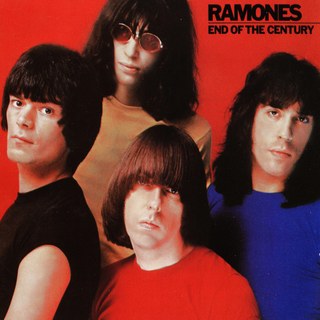
1980@40: END OF THE CENTURY - THE RAMONES

When I first heard about this one my first thought was "why did they bother?" My thinking went along these lines: if bands like The Sex Pistols and the Saints had the grace to give up when the going was still good why couldn't The Ramones. Yes, there are many fragile assumptions in there but when you filter the sentiment through the kind of fatigue anyone who was looking for newness in 1980 was feeling. If they were still just doing the ol' cartoon punk of the late '70s wouldn't that just sound ... ol'? If they were going to move on like The Clash did would they have the chops? Then the name Phil Spector came up as producer and I thought, "hmm".

After a sound effects introduction goes a little too long and ends in a DJ calling the next track for the Ramones over what sounds like the opening drums to Blitzkrieg Bop we kick into a full stereo mix of it with a chant borrowed from that song but re-purposed. Actually sound pretty good so far but then the massed saxophones of Greater Brooklyn kick in and you think, hmmm. And then in the verse the Archies' organist comes in. Yes, it's meant to evoke the auld times but the Ramones were already doing that (find out what Chris Bailey said about the supposed closeness in sounds between The Ramones and The Saints). What this actually sounds more like is the stuck-in-rut arrangement that Spector was plastering anything he worked on in the 70s. He'd already turned ex-Beatle records into muddy messes with great farting saxophone choirs and kicked them adrift on the sea of embarrassment. He's doing the same thing here. Then again, he's not cheesing up The Ramones as much as exposing what was already there (save some of the sharper lyrics of the first records that we're going to miss here). Oh, if you think I'm blaming saxophones for this compare this loud jacket approach with the aerodynamic gale that The Saints used on Know Your Product two years earlier. No bloody comparison.

Affected crashes in with steroidal tom toms under buzzsaw guitars and a sax drone. We're in a minor key and Joey is trying for some more dynamics in his vocals. He gets them but it also starts sounding like the J. Geils Band. A slide solo followed by a picked one prevent this track from sounding like anything but the standard U.S. radio fodder from the time. Well, there really were people out there turning music into gold and it's happening right here, as long as you don't mind changing your definition of gold.

Danny Says: A Beach Boys figure on acoustic guitars and dulcimers arpeggiate a chord bright and Joey comes out with more lyrics of nostalgia. The song builds pleasantly. Do I want The Ramones pleasant, though? Just enough '60s kitsch with a slight bed of more contemporary overdriven guitar. Yeah, pleasant. See, when Blondie did stuff like this (and they did a lot of it) it always had an intentionally uneasy blend of sincerity and archness that worked because you could either turn one of those understandings off and enjoy it for that or just have both course in through your ears. This gets neither of them and goes instead for the kind of Huey Lewis middle ground that would grow and facially wrinkle into yacht rock by the mid '80s.

Chinese Rock at least sounds like The Ramones but by now even that has a nostalgic feel to it. So we've got drug addiction and power chords but the sheen of the production continues to steer the band into AM radio friendliness. I think I'm missing the humour.

Same for Let's Go.

There's some humour here but it's sounding locker room rather than us-and-them, the way it used to. Ouch, does that mean I'm consumed by my own nostalgia? I guess so. Alright, why's that, then? Sigh.

Look, I'm not going to go through, track by track, and crap on the rest of this record as I think it deserves to be. I turned away from the band when I heard it and am not surprised on a re-listen to agree with my seventeen year old self.

This is something that affects all art. Keep going with your established style and your risk stagnation. Try something new and you risk your fan base. Experiment wildly you could lose everything. In each case if your brand isn't cast in iron from the hobs of hell you will lose. David Bowie got away with all of those . Closer to the street, The Clash did, too, but they had to make it a novelty (double and even triple albums sold for single LP prices). The Ramones had delivered a batch of burning singles and decent albums for over four years before this one and were better known than bought. Who knows why that was?

They looked right for their market with a lingering '70s look that was out of sorts with the spikier fashions of their UK counterparts but this worked for them. It worked because they looked normal but sounded tough and brash with a cartoony humour that could bear real fangs. Maybe that just takes too much nuance on the part of fans in the age of Eye of The Tiger. What happened here was that they went for the next level of working band with bigger gigs and wide airplay. It's easy to judge, then and now, but, really, if you want to keep the band going because anything's better than wages and maybe even have a mass audience dig your sounds then maybe you should take the king's shilling and join the others.

But here's where I think I might be wrong. I turned back to the '60s for inspiration until punk came by and delivered it by the truckload. Before that I gorged myself on bands like The Beatles who changed significantly with every release. If that becomes a value then not only would I dislike Rod Stewart or Bruce Springsteen for always sounding the same but I'd expect significant change from punk and post punk, too. I didn't know then that bands like U2 or Garbage would happily make the same album for their whole career and only get bigger. Bollocks was the final real Sex Pistols album which I had to admit a few years later was a good thing because it allowed PiL out of the cage. What did I expect of The Ramones? Well, listen to the first three Saints albums, maybe that. But maybe that was beyond them. If so, why not admit it and quit? Well, this record was a real hit. That's why.

The Ramones did bounce back and worked hard for deserved success. While I was never a massive fan I enjoyed them being there and crunching out dark jokes. Maybe the point where this was not enough was the same one for the band: joke's over, we got bills to pay. Can't argue with that but when I hear the big drunk-uncle version of an old Ronettes song with the string arrangement kept over from that one by the same arranger it doesn't sound like a joke anymore: it sounds popular. Bowie would do the same for me with Let's Dance, a few years later and (not that he noticed) we parted company until the very end.

In these days when Good Charlotte look like tough guys with studs and pancreatic studs but sound like a Vegas show who cares? Well, I think we all should. It's not obsessive fan-projection to expect the artists that inspire you to at least try to continue to be themselves. A few awkward growth spurts here and there are fine as long as we know they're ok. We should treasure a little naivete with this. If we don't then everyone does everything and just looks and sounds like everyone else. I hate this record now as I did then and see so reason to forgive it. Naive? Yes. Did it feel good to write? You bet.

Tuesday, February 18, 2020

1980@40: METAMATIC - JOHN FOXX

Tone-deaf people will compare this to Gary Numan. They're hearing the synthesiser riffs and alloyed vocals and maybe the lyrics about alienation and weird sci-fi phrases like He's a Liquid but what they are not hearing is the music. There really is little to link them apart from how they fish in the same tonal pond at glancing moments but Foxx was a veteran of cheerless post punk, having fronted the first lineup of Ultravox: he had his own groove. Also, he had his own musicality which bears little resemblance with Numan's. Gary's is a tightly focused modal palette that produces atmospheres both sweet and eerie and backs them with an ever increasing army of rock instrumentation. Foxx starts out with dissonance, twelve tone difficulty and keeps his settings in the Britain around him, the newly Thatchered deep freeze of eroding civil rights and erasure of communities. Musically, he's much closer to the Human League of the time ... but not really.

Plaza begins with a thickly textured string synth riff that is far more Bernard Hermmann than Gary Numan. Beneath it a steady ticking of a drum machine and the only trad rock instrument on the record, an electric bass. Foxx starts the verses with a wail, "In the plaaazah!" and describes a series of surrealistic visions like JG Ballard describing a De Chirico painting. A more muttered verse tells of smoked glass and meeting strangers. Like much of the rest of this album the mood is agoraphobic and paranoid.

He's a Liquid opens with a sweeping string synth riff less, chromatic and severe than Plaza's and soon settles into a gentle but cold electro funk as Foxx's harsh murmur describes a strange erotic meeting between a man and a woman which might be something culty or parasitical. The ambiguity blends well with the cinematic atmosphere.

A growling rumble begins the single Underpass. A determinedly non acoustic bass kick clunks. The mighty riff wails out like a shortcircuited siren. Fragmented images. Someone can't quite finish thoughts. Memories appear like torn notepad pages. A severely flanged scrape punctuates as a bass thumps a ground that would be reggae if it weren't so gelid. A frozen but irresistible song. Doesn't matter what it means, if you don't feel it it is about you. The video for this song is a classic of its time. Foxx moves through a fluorescent-lit underpass or transport platform where lost looking children cling to each other, emotionless musicians play hi-tek keyboards, people make secret gestures to each other in the shadows and the concrete freeways encroach on the landscape. It looks like it's set in a British sci-fi show of the time with freezing video colours. YouTube it (just make sure it's the original 1980 one, he redid it but not so well).

Metal Beat rolls out like a machine-composed Latin dance ballad but, again, it's toned down to Arctic temperatures as a series of brusque commands like mechanically misinterpreted dance calls bark out. A low but distinct more human voice sings along with the chorus. It might be the programmer or just someone recalling the directions. It goes on past the point where we get it but that might itself be the point.

No One Driving is the first track that sounds like a pop song of its time with a full throated vocal and longer melodic phrases that fit together in anticipation of the chorus which repeats the title. As with the rest of the record, this is electronic plus electric but the parts sound more like they originated in traditional rock parts like rhythm guitar, piano, drums etc. As an exercise, I imagined a dull success story band from the '70s (Toto, say) doing this with overworn synth sounds and that session musician overdrive sound on the guitar. It worked, except that Toto would never have imagined something as icky and unsettling as the subject matter of a slowly collapsing world.

The old side two begins with a number as strident as No One Driving but with the accessible melodism with the same kind of dissonant vocal harmonies as in Underpass. Big synth riffs and even a caterwauling solo. New Kind of Man is the strange tale of a film star who walks out of the screen. He traverses time and feels young but controlled. He reenters the frame forever changed with a kind of longing looping in the back of his mind.

Flanged scrapes and a siren-like glissando on a saw wave. A melancholy mezzo-synth weeps through the severe stacked vocals as they list details of what sounds like an intentional disappearance. Lieutenant 030 is on the case but can only find the most cryptic clues. There is a strong sense of the Phillip K. Dicks going on and this hard edged lament feels like a prelude to the film version of Do Androids Dream of Electric Sheep, Blade Runner, that was two years into the future.

A sequenced conga beat through a ring modulator throbs beneath a chromatic synth figure. Tidal Wave progresses through a series of sketched scenarios which might be a real tidal wave or a personal cataclysm interrupting a relationship. Communication is lost but just goes by his window.

The closer Touch and Go begins with an almost jaunty bass and drum and squonking synths. Foxx is again in full voice as he takes us through a busy jumble of images that sound like they're from a European holiday resort as seen by a long serving/suffering staffer or perhaps even the resort itself. It's the observation of fun rather than the fun itself.

This is an unfriendly record. In the air of 40 years distance it sounds like it was made to fail. There's a point to all of that and it has to do with the sense of alienation in a society shedding a shrieking metal skin of industrialisation and not quite knowing what it was expected to do then. Faceless authority was stuffing the dole queues with displaced people who were installed in debt circles like hamster wheels and a great cloud of nuclear doom moved in between the sunlight and the earth for anyone who thought to change their position. The eighties began with the ideals of the sixties grown so buckled and torn it could only look like scrap metal and the voices like the searing novelists of dystopian sci-fi were reading like social science.

Gary Numan had already taken a tincture of Kraftwerk and Berlin-era Bowie to fashion a more populist science fiction and made it his own in a very short time. John Foxx emerged from a band that itself emerged from an ailing prog rock tradition and were yet to discover how to sustain it. Foxx's solo venture was a violent push away from those conventions and offer something new enough yet just barely familiar enough to be taken by the market. But while Numan made his myxolidian synth figures so identical to each other that they became signatures Foxx's more cinematic and broader melodic pallet could only sound samey by comparison. Too often a track will start that is too reminiscent of the previous one. Does this make it bad? No, but it does suggest that the more adventurous ambition that Metamatic expresses was doomed to be harder to pull off. Even the Great Bowie himself couldn't sustain the same kind of thing as the mostly stark and alienating Heroes followed Low's great landscapes and nu-pop charm.

So, no, it's not a faux Gary Numan album and it's not a replay of Heroes but very much itself. It's of its time in a deeper way that the shallow listener might consider (well, there're those synths and electric drums, y'know...)  because it tries to dig into the skin of its own time and find the great grey freeze beneath the shouting hit songs, gleam-toothed game show hosts and hard-mouthed political leaders. See also, rather, The Human League, themselves pressing for the value of a long cold look. Foxx, in this context is another piece of the jigsaw but he's one with a decisive detail on it.

Monday, February 17, 2020

REPOST for series 1980@40: COLOSSAL YOUTH - YOUNG MARBLE GIANTS

This is one of the first posts I wrote for this blog and really has an essential place in this series: You Can find it here.


Sunday, February 9, 2020

1980@40: The PRETENDERS

A yell from the distance and the band kicks in for a few bars for really kicking in with a streamlined punk groove as a voice that's seen the worst and best sings about a tough lover. She can't or doesn't have to finish what he makes her wanna as the band bash into a figure like Holidays in the Sun. It's like the Sex Pistols with Mae West on vocals. The ecstasy collides with a kind of dread until they can no longer be separated. It's late 1979 and the album will be released in early 1980. A crucial few years between punk's self-administered demise and the reconstructed rock of the next decade and this band has both covered. Even the breakdown section with the guys sounding nervous on backing singing the title as if they were at peepholes while Chrissie Hynde's supervixen continues the tale does this, taking everything into the kind of cinema that was coming out of Europe at the time and earlier. Precious is a song of transgression.

The Phone Call starts with a grinding two chord riff playing over the sound of an old rotary phone being dialled and the beeps of an engaged signal. When the riff changes to a crashing chord pattern the beeps speed up, timed to fit the music. Hynde comes in either extremely panned or double tracked so that her voice sounds the way a threatened person might hear it. Apart from the last lines of each verse the vocal is spoken, delivered in a low conspiratorial tone before letting loose with a yell about the need for caution. Is it to a field agent, someone who thinks their life is like a Le Carre novel? The song, having flitted between non-rock time signatures for extra edginess, ends in a hang up and the beeps of a dead line.

Up The Neck begins with an off sounding bright guitar figure from outside of the 4/4 standard that relaxes into a decent rock song about more of the kind of co-dependent/narcissistic tough love from Precious but scarier.

Tattooed Love Boys begins with a jangling fanfare on lightly chorused guitar over a chugging adaptation of the Bo Diddley beat. That frantic tension played by an expert rhythm section keeps this song's difficult patterns going while Hynde comes in with a far more darker extension of the rough sex of Precious. Hynde has since explained that it was an account of a sexual assault at the hands of a biker gang when she was a lot younger an more reckless. While the idiosyncratic rock groove suggests a rapid confusion the false ending in the middle which breaks into an instrumental section before the story resumes. It gets no better but her anger at the memory is tooled quite perfectly into the sudden final lines involving a threat of disfigurement and a strong assertion and then BAM! over. "You are that!"

Space Invader is an instrumental that moves well and has enough material to interest for its brief run time and sounds like a music cue for a procedural montage in an action film and indeed served so in an episode of The Sopranos decades later. It ends with a moosh of video game sounds.

The Wait begins with a punk chord riff that knows you want it to be a predictable count of four or eight between bursts but adds one extra which throws everyone off every time. Hynde come in with a rhythmic chant that, for all its Elvis Costello spitting, is utterly unintelligible. I never knew what any of those lines were until I looked them up online for this article. There's a bit where she sings "my baby" but that's all I got until now. But that only counts to the urgency of the song which is about a kid finding his own amusements, left to himself. Lots of fun in pool halls and pinball parlours but the kid ends up each night crashing in late or just staring up at the streetlight, unloved to the point of stasis. There is nothing but the kind of violence in the rest of his day to offer any pushback that might instruct instead of harden. Pete Farndon plays a great runaway bassline in the choruses and Honeyman Scott gives us a wild screaming cacophony for a solo amidst the crunching riffage.

Stop Your Sobbing is dedicated to the other side of this band as far as its songwriting prowess and tributes go. It's a cover of a Kinks song (produced as the B-side of Kid by Nick Lowe) and, while it registers lower in volume that the surrounding tracks, demonstrates that a band who love the song they are covering will probably produce some magic. It's not just advances in recording technology that come into play here, it's arrangement with a gorgeous jangling guitar wash and spacey rhythm section and performance as Hynde delivers a powered nuance that adds great meaning to what might well sound like a trite lyric (but wasn't when The Kinks did it either) but is really a heartfelt plea.

Kid begins with a Rockpile-style '60s rock ballad shuffle and low string figure before Hynde comes in with the most sustained use of her trademark tremolo so far. If there was nuance before in her stories of debauched co-dependence here it is the shifting weight of parental accountability vs a plea for understanding by the parent. Hynde revealed that the lyric was about a child who discovers his mother is a sex worker. Hynde's role as the parent is given such a sense of patience and love despite all that it stings to listen to. And that's before you get to the crashing middle eight and lament of its simply stated message. This lifts a little, enough for the extraordinary turn of James Honeyman Scott whose short but dazzling solo ends in a tribute to George Harrison as he rounds of the sinuous ringing with a pure bell like harmonic. Beautiful.

Private Life enters, relaxing into a three-in-the-morning light reggae as a woman tells her married lover that he is no longer worth the trouble. A male falsetto backing behind the chorus tells him to stop lying. Hynde's delivery is a sophisticated sick and tired as she doesn't let him get a word in and leaves him to the night and his narcissism. It's creepy in the best way which was equalled if not bettered by Grace Jones who brought her own autobiography to it. Assured and gently deadly.

Brass in Pocket starts with a flourish of clean chorused guitar then kicks into a light strutting walk as Hynde lists what she has and is. She has money, a confidence that feels new, new dance moves and the will to use everything she has to get noticed. No solos or breaks, just the chant of a young woman who is determined to find the centre of the stage and win. Maybe it's the influence of the video that went with it but I also hear a lot of wishfulness here, the solid rhythm and airy playing are supporting a series of claims made in front of a mirror while she's getting dressed to hit the clubs. In the video she's a waitress at an English caff. She delivers a tea to a guy sleeping it off at a table and takes it back with a sigh. Three likely lads played by the rest of the band come in. She takes their order with a clear hope on her face which drops when their girlfriends arrive. She watches as they leave, the car disappearing down the street as her gaze follow through the window for the final wordless vocals to the bookended guitar flourish. It's more about what she wants than what she'll get but for now she at least knows how to start, how to look, how to dance and attract. Not tonight? Meh, there's always next weekend.

Lovers of Today begins with a gentle descending arpeggio on the guitar as Hynde begins in a gently plaintive voice. The song builds to a guitar arrangement that Mick Ronson or Brian May might have imagined, orchestral but also rocky. The vocal melody falls and lifts, moving unpredictably through the chords. It's a kind of punk Jacques Brel and appropriately so for its description of male vulnerability. Never has Hynde's lachrymal tremolo been so appropriately used. She can stretch a wordless vocal phrase out with it and sear through hearts. This beautifully saddening torch ballad doesn't waste a moment of its time on the record, even to the point of Hynde's defiant assertion, "no, I'll never feel like a man in a man's world" in the fade.

Mystery Achievement starts with bars of straight 4/4 bashing on the drums which could be the Glitter Band until Hynde comes in with some lush vocalisation. The bass starts a modal circle and the guitar chords on the beat. The verse is a yearning for a breakthrough but it's a yearning of youth (I'm already twenty and still not famous!) which, despite the protestations of the verse, extends into the chorus where she is obsessed by the lack of recognition and adoration. In the hands of most other bands this would sound poncy and cute but The Pretenders make it urgent but anchored by the everyday. In the middle of the song we get bars and bars of the bass grind before the guitar lifts us only to a more frustrated state. The outro is a rising guitar and bass figure storming under Hynde's vocalising. building to a crunch. They decided against using the last track like a b-side.

Boldly clean guitars with tasteful use of chorus. Strong articulate bass. Clear drums. Highly characterful vocals from a central figure with a clear strong identity. You could say all of that about The Smiths except where The Pretenders were brash and flavoursome with their musical decisions as a rule and The Smiths were mostly bland to the taste despite some moments of greatness (and I really do mean moments: not a single album is strong all the way through).  Brass in Pocket is like a future Smiths song without the posturing million extra syllables, a kind of female How Soon is Now minus the precious boy's self-pity. The Pretenders offer here a source point for a major stream of the decade's rock music.

Even if they hadn't done that, though, they were able to construct a rock record that sounded and felt like it had been lived personally and not always pleasantly, a record that remembered why British punk still means more to future generations of fifteen year olds than the punk from anywhere else and a record that proved progression from that jagged rock music neither have to throw the guitars away or turn them up higher. This is the sound of a band who didn't just hone their craft in the sticky carpet pubs and turn up but could work comensally with a producer like Chris Thomas (see also the Beatles and the Sex Pistols) to fashion a great album, not just a first album. Here begins 1980.

Wednesday, January 29, 2020

1970@50: MORRISON HOTEL - THE DOORS

In the turbulent wake of the Miami incident ("ya wanna see my prick?") The Doors were looking down the barrel of a live circuit that didn't want them. The court case was dragging and Jim wasn't winning anymore. He was getting smashed and swaggering to a decreasing circle of worship. That's seen as the reason the band abandoned the extended arrangements of the coldly received Soft Parade and get back down and dirty to a basic blues rock. The good news is that their personality as a music unit would never quite allow that so we didn't get the oppressive scholarship of the Claptons or Mayalls but the bad news is that they almost lost all the diversity of what made moments like Spanish Caravan or The End so great. The result is an album made of old and new recordings that never feels cohesive with great parts constantly getting elbowed out by what sounds like filler. As I'll say later, my first impression of this album was not a good one. How does it scrub up to a more recent spin?

Roadhouse Blues: This loses me from the first notes as a distorted guitar sounds out a ranting blues riff that's picked by the band with a tack piano. Morrison comes in shouting about driving safely and adds some existentialist shading. But, while it's played with real passion and becomes a muscular workout I just can't stand this song. The only reason I listened to it recently was to write this.

Waiting for the Sun, by contrast, is one of my favourite Doors numbers. The whole band starts at the same time. Sighing ride cymbals, slide guitar, tic tack bass and eerie organ shimmers move together in a slow cinematic descent. Morrison's broken croon enters with lines about how beautiful he finds summer, addressed to someone offstage. There's a sudden big swag of brass that bursts in at the end of each line. The chorus kicks in with an intensity that eases back into the next verse. The following chorus adds another repeat of the title as the brass and band intensify to a powerful extended middle eight that insists on the word "waiting" and continues to gain momentum until the final octave doubled vocal: "waiting for you to tell me what went wrong". This might normally but to a solo but everything tightens and quietens as Jim croons, extending the syllables: "this is the strangest life I've ever known." And then screams in encouragement as the band and the brass hammer out the riff in the verse. One final verse and chorus and extended final line finished with a hammering final bolt of brass.

It's magnificent and when I first heard this (on a cassette given to me) I understood what baby boomer journalists had meant when they talked about the power and the sex of the band. I marvelled at how different it was in arrangement and force from anything else on the album and learned, much later, that it had been carried over from the album that bore it's name. Later, still I learned that it was part of the Celebration of the Lizard suite intended for that record. Again later, I heard the live and then the studio recording of that on the re-releases where it works much better than here.

You Make Me Real begins with a nimble blues figure on piano. The band bashes in with a complimentary riff and Jim bellows about a girl. The difference is in the title. Jim feels fake or insubstantial, maybe fame and the adoration of masses have wasted him. But when he's with this 'un his flesh and blood gain body and he plunges in with roaring virility. All good except that it's such macho blues rock that I usually skip it.

Peace Frog begins as a kind of hot bitumen funk riff and commits to the chanting feel of the opening. All the lines begin with the word blood until a spoken section over a spooky breakdown tells of the child Jim absorbing the spirits of a carload of dead native Americans who'd been in an accident that the Morrison family had driven past on a highway. The funk workout resumes with some double tracked Morrison and lifts the album up almost as high as Waiting for the Sun. It ends on a crashing major chord which starts Blue Sunday.

Blue Sunday is a pretty straight love ballad with a Spanish flavour. Morrison's crooning of the simple but heartfelt lyric is set in languid clean electric guitar, shimmering organ and slinky drums as well as a loping bass. I could easily listen to this by itself.

Ship of Fools is a perky gospel tinged number with an apocalyptic theme and a classically influenced middle eight about a figure called Mr Goodtrips who sounds like the Pied Piper of Armageddon. The band swings back into the rave up southern church music to the fade out. The humour of this one is so instantly appealing I always leave it on after Blue Sunday.

Land Ho! kicks in with a jaunty strut down the scale as Morrison strides in with a tale of the sailing men of his family and the women who loved them. A brief middle section parts the curtains of family legend, wades out into the minor in a change that sounds like the band is used to doing this live, and a few lines about the solemnity of sea venturing ends in an imagined toll. A gap of a breath before Jim yells: "Land ho!" and the big strut resumes with Morrison bellowing out a drinking song back on shore to the fade.

The Spy opens with a slinky slide figure, supported by tack piano, snakey bass and jazzy drums as Morrison croons a blues lyric as the spy in the house of love who knows everything about the girl he's singing to including where she goes, her dreams and her deepest secret fear. One verse three times, each travelling from a feline sneak to a powerchording chorus. This possibly features Jim's lowest recorded note.

Queen of the Highway lifts like discarded wrapper from the asphalt as a tale of a girl who falls for a monster in black leather, a kind of folk tale for the Easy Rider generation. The next verses, though, do something interesting by suggesting a lineage as the children of the biker and the supergirl respond to their own wildness. The music is more soul influenced than bluesy with tasteful electric piano and supportive bass guitar (these new masters really redress the balance on the myth of no plucked bass on Doors records) and characterful guitar from Krieger. Despite the hints of modern paganism or nihilism or Dionysism or etc-ism in the story this pleasant number lilts rather than rocks or slinks. Neither Wild Child nor The End but I do leave it on.

Indian Summer is a gentle declaration of love that drifts and shimmers like a mirage at the end of a highway. It's an old recording from before the first album but is as welcome a change of texture and temperature as a glass of cold water on a hot day.

Maggie McGill is a sharp edged walking blues that tells of finding relief where you can from the disasters of living. If you do this and go down to Tangy (or Tangent) town at least the people there know how to get it on. The last verse offers the strange lines about someone being the illegitimate son of a rock and roll star. Outside of whatever Frank Zappa and confederates were up to, this might be the first comment on the consequences of the decade gone and its near religious acceptance of rock music as godhead with numberless bastard children rolling out of rock and roll cars each worshipped at a decreasingly small circle of influence as their volume rises. It ends with Morrison growling that he's just an old blues man watching it all and has been forever. That might well have been the last we heard from him and it would have made a fitting final statement ... from the twenty-six year old malcontent.

I was dreading this. It's albums like this that made me think I should just finish the @50 series at the close of the '60s. The late '60s and early '70s are a time when I really have to think in exceptions. This is from the perspective of someone who wasn't into the music as it happened but discovered it at least half a decade late and the motive for the discovery was a dissatisfaction with the music of the mid to late '70s. The stripping back process that followed psychedelia and gave rise to waves of rootsiness, prog rock, heavy metal, barely identifiable strutting macho 12 bars, country rock, jazz-rock ended in a pop music that sounded perfected and old. It's why when I went back to listen to glam rock I had to except David Bowie, and Led Zeppelin from metal, and so on. It's why I can find nothing of interest in anything by The Band, The Faces, Rod Stewart, Emerson Lake and Palmer, and many many more. Partly it's because I'm not feeling the reaction they express and partly because the push of punk and post punk wiped them out before I was tempted to give any of them a fair trial. This is the first Doors album in the Morrison sequence that I don't really care about. It was also the first one I heard.

My sister's boyfriend was a luthier. He once lent me a 1966 Stratocaster for a week which blew my head off. He was a good musician and a knowledgeable one (my sister picked for musicality, apart from anything else). We had many enlightening chats about rock music and at one point he gave me a commercial cassette of Morrison Hotel that he'd picked up in an op shop sortie. There was a journalism-led revival of the cult of Morrison at the time and I'd devoured the mythology. He came across as a poet who wrote with a quill dipped in dark matter and sang by night for a rock and roll band. At first I quite liked the strut of Roadhouse Blues but found the rant na rant na rant rant na riff annoying and posey. It was Waiting for the Sun that got me with its lyrics from the dawn of paganism and thunder on the horizon scenery. I barely registered any of the other tracks they were all too bluesy and musically uninteresting to me.

When the Doors revival hit my peer group, aided hugely by The End playing over the opening of the cult epic Apocalypse Now, I took my time in getting a reissue of Morrison Hotel but it was the only legit place to go for Waiting for the Sun so at the halfway mark of the '80s I found a second hand copy. I listened to all of it. No change. Still just that one. I bought the DVD-Audio set of all the Morrison Doors albums (if you still don't know, there were two made after his exit) which had this sounding splendid in surround sound but even the best audio quality could not lift the drabber tiles of this patchy platter to the heights of its few great moments. And then there's L.A. Woman! Maybe I won't keep this up longer than this year.

Monday, January 13, 2020

1970@50: THE MADCAP LAUGHS - SYD BARRETT

It's a shambles of barely finished scraps, false starts and unintentionally drifting rhythm and lyric lines that either hang in the air or die with the breath that formed them, a complete mess that any reasonable artist or producer should have been too ashamed to release. Release? Wiped, more like, with an industrial magnet. Thankfully, it was recorded by Syd Barrett who, effectively was his own producer (see below for explanation of this) so we have it all the way down the decades. I was influenced by this album before I'd heard a note of it.

Why? Because I read about Syd Barrett and what I read bore no resemblance to his old band Pink Floyd. Liking Pink Floyd took decades. For a while back in the late '70s my favourite '60s music was psychedelia. Starting with the Beatles offerings I foraged where I could to find more. Not easy then and where I was (Townsville) where if you found anything it was second hand and so virtually by chance. But a friend of my sister had a copy of the first Pink Floyd album and that, coupled with what I knew of his strange, wild ways was enough. It was three years before I heard this disc but I was already a fan of it.

A slinky slide into an open E chord opens Terrapin in just enough time before Syd comes in with a voice that could not have come from anywhere but upper middle class England. "I really love you and I mean you." A familiar A-G-E  from Arnold Layne and the years of blues that had inspired him and we repeat. "The star above you crystal blue." A light electric guitar provides a dozy accompaniment as though stirring from a snooze on a long warm afternoon. Declarations of love blend with a description of  animal freedom, under the water with the sun streaming through. An instrumental verse so laid back it just sound as though Syd forgot to sing. Bridge again. Repeat last verse end on a strum which speeds up just before the cut off. A breezy song of simple pleasures.

No Good Trying stumbles through the door and only just manages to keep its feet. The deep Syd voice comes in urbane and assured despite his staggering. She shouldn't bother with any of her elaborate disguises or personae or anything else she wants to pretend; he will know. Syd's acoustic is all but buried, mostly audible by the pick sound. Around him a psychedelic band thunders, the drummer struggling to provide a backbeat. It's the drum fills that make it sound so unstable. The band was brought in later (most of Soft Machine) and they struggle. Syd isn't keeping time so beats are added to some bars and lost from others. A stinging organ note after the first verse brings everything together for a moment but once it's gone we're back to the shambles.

Love You is a rollicking ball of cute as Syd tells of an extended flirtation. It sounds like his Fender playing unplugged but mic-ed up rather than an acoustic. Tack piano like the one on Bike. The tempo is kept well enough and it's upbeat so the band doesn't have as much to fight against. Syd is almost disciplined here so his word jams work rhythmically. This would convey the experience felt by a fashionable young thing being approached by a beauteous alpha boy who talked like a Lewis Carroll poem and whose eyes made her the most important woman in the room. But that was before and while this sounds like Syd at the time, I mean afterwards, there's a sadness to it which makes each winking moment grind with a kind of void horror.

No Man's Land starts with a electric cranking before bursting into full psychrock with what reads like a scary trip as the band grinds around him. Guitar tone breaks, drums machine-gun and a big bass drives everything from underneath. A brief pair of verses about a kind of compressing horror before an instrumental verse plunges on. Syd speaks something under the music, calmly, saying a lot but to whom and what about? There's a strange creepiness to it. The song comes to a halt with a jamming looseness but the point has been made and made decisively.

Dark Globe is a solo performance, just Syd and his acoustic guitar. Syd pleads with the memory of a departed lover to remember him after a traumatic parting which he likens to a physical collapse. Some lines that sound like words salad ("I'm only a person whose armbands beat on his hands hang tall") start sounding more like private meanings than nonsense on every listen after, perhaps only she would understand. Two verses of identical form (well, as identical as Syd wanted them) reach to a wailing beg: "Won't you miss me? Wouldn't you miss me at all." His voice almost breaks near the top of its range. She isn't just a memory to him, she's there in his mind's eye, in the room, gazing back. She doesn't even need to shake her head. It's not just Syd playing for the emotion rather than the time signature here. He's pounding the strings as he soars to his prayer person to person or person to apparition. The recording is clean and airy around the glittering storm. It's no wonder that it was left like this. No backing band would do anything but steal from it. It's left, a spiking glow in the dark studio, wondrous, beautfiul, but too frightening to approach.

Here I Go is the kind of pretty boy cute number that Donovan had made his own. Like Donovan, Syd could put a little sting in the tail or just be playful but here he lets a little of the nightmare out in the opening lines: "she said a big band is far better than you." The last three words descend the steps to the lowest of his range as though he's asking her down to a cellar with the lights off. But then it strips to life with a kind of jaunty shuffle as he meets another girl who, though she's not so groovy, at least likes him and it's all hunky dory by the end. A side-ending song. Anyone who whinges about how a decent recording with top notch musicians would have made this one a classic should know or remind themselves that this airy anodyne fluff was one of the few done WITH a band. It wasn't all No Man's Land.

A big acoustic chopping chord is answered on the off beat by a big clean electric chord and we're off. The drums, bass and guitars build a kind of moving cubby house moving with wobbly steps forward as Captain Syd calls out orders and reports on strange sightings from the crow's nest. "Please leave us here, close our eyes to the octopus ride." Aaah. All the swirly shifting images makes sense. The octopus here is a kind of real octopus but also one of those big whirling fairground rides, spinning and lifting. If Syd's timing and its relationship with a post hoc backing band hadn't existed it would have been necessary to invent it. This song wants you disorientated and out of sorts. It could be a bad trip with dragons and scattered needles or everything that went through your head as a kid on a ride trying not to explode with nausea. A strange barely controlled quiet moment happens but it's about being lost in the wood. Isn't it good? Isn't it bad? We gear up again for full speed and the ride begins anew, giving us the title for the whole album: "well, the madcap laughs at the man on the water ..." Eventually Syd is left to respond to one pendulous line with another. They don't need clear meaning, they just need to stave off the great collapse. "Please leave us here, close our eyes to the Octopus ride." And the song trails off to a soft, if abrupt, finish.

Golden Hair emerges slowly out of the dark with a modal melody fashioned some time around 1346. An organ drone smoulders quietly as a cymbal is played expertly for atmosphere. At magic hour the sound of her singing draws him into the pool of her light and he begs her to appear, not to join him down there, just to give sight. Syd's beautiful setting of James Joyce's poem brings it to warm life and remembers to include the eye-widening eeriness of love. Utterly enchanting.

Long Gone begins with single strings playing the vocal melody in a corvine minor key. Syd comes in a the bottom of his range but soon soars to the top of his voice, harmonising with himself as the organ moves to the front to hold him up. That three times but not really as what he is telling a story. I think of it as what happened when the narrator of Golden Hair did break through and break into her room. She was long gone, either physically absent, comatose, or deep in madness, aloof and beyond anyone's love. The louder verses wail with fear but always fall back to the weary statement of her absence. Scary song.

She Took a Long Cold Look opens straightaway with those words. It's another solo Syd and guitar (and his lyric sheet when he turns it over halfway through the song) as his strumming plays a non-swinging pair of chords as he describes someone who does not love him or is difficult to love. She likes to  be "extreme just to be extreme" like "a broken pier on a wavy sea". He descends into a kind of trippy introspection and finds that he can breathe even as the water streams over him as he sees only the sky.

Feel seems to be a series of images with something trying to push through them. Another solo effort it sounds like a run through rather than anything finished as he tries cadences here or finding his place there, either attempting to placate the microphone before him or unaware of it. "Alright," he says after the last chord. Alright, let's finish it later or alright, that'll do?

If It's In You begins with a false start as he loses his pitch on a high winding wail. He talks to the producer and starts again. It's no better but he's committed now and goes on. There are clear verses in this but they are made of fragments and images that feel like the barest of sketches. He tries for an Indian influenced mellisma on the word thinking, stops and starts frequently and ends somewhere.

Late Night brings all this back to form. We start with a band in place as a slide swoops up and the down like a golden pendulum. A atmosphere is peaceful and contemplative. The verse only slightly disturbs this with a tighter pace. In a downward tumbling melody Syd describes a lost love and pains of separation but does so with the recall of moments of togetherness with some bringing the kind of passion that must be kept to a whisper or a longing for a kind of childlike innocence. The choruses rise in a gentle pain: "inside me I feel alone and unreal and the way you kiss will always be a very special thing to be." The faster pace trails off and rests in the opening figure of the slide rising and falling, the night around it offering sleep and dreams.

So, what's the deal, here? If you got into Syd Barrett through his Pink Floyd output with its tighlty constructed singles and jammy but directed psychedelic album tracks you might have expected more of that, perhaps more folky, given the absence of the band. But if there was an Arnold Layne there was also an Apples and Oranges. If there was a Lucifer Sam there was a Jugband Blues. Things just don't work out the way we prefer them.

Syd was certainly troubled but the range here from the high form of the last track to the mess of the one before it speak less of a chaotic mind than a highly active one. The difference between the two numbers might not be a good day versus a bad one or Syd with or without his medication but that they were both released regarless of readiness. Some early commentators on this record considered its release to be an act of cruelty.

Would this sound better if he'd worked with a band and taken a group of people familiar with the material into the studio to soar to greater heights than with the old band? Maybe, but I doubt it. Partly, Syd was just like that. If John Lennon dropped or added a beat here or there in songs like Across the Universe or All You Need is Love he had a supportive group and astute producer to either correct or accomodate it. The jamming aesthetic that Floyd would keep to for many an album after he left were not just tolerant of his wandering musicality but encouraged it. It's more a case that this record at its clearest presents that artist without embellishment, mind going fast, fishing around for chords or ways to get the thoughts out while the studio clock was ticking, partially indulged and partially dismissed by the producers exhausted by it. This is why I said at the start that he was producing himself as each case of the roll call that eventually included his old band mates: everyone eventually had to fold themselves around what was happening in front of the mic.

Me, I don't think the worst of this is charming or original but painful. Then again, the best of it wears its chaos on its sleeve and thrives in the results, cranking and crashing around an uncertain terrain without a care. Whether he was insane or more creative than even he had control over he was able to front up with some songs that only those who came after would sound like. (When I finally got a copy while at University I was so obssessed with this record and its creator that I would slur "see ya later" into "SydBarrett" to see if anyone would notice.)

David Bowie's albums from this time, The Man Who Sold the World and Hunky Dory plunder the aesthetic. They are more disciplined by a massive order but were made in admiration of this moment of melee. Bowie's false start and chat to the producer at the beginning of Andy Warhol on Hunky Dory is a direct tribute to Syd (to the point of it being a lift from the start of If It's In You). When paying tribute to the bands of his youth in the Pinups album, his recreation of the madness that was See Emily Play is one of the rare rock covers that reaches the spirit of its original. And ask yourself who comes to mind when you hear Long Gone or Octopus? It's just that it works the other way around. And it might not have been just Syd but after this album Bowie dropped that Anthony Newley "'ow's ya farver" London from his vocals and started sounding more like himself.

As to the rest it's fair to say that like the Velvet Underground or The Stooges or indeed Bowie, anyone at the beginning of a creative life who hears this album will be influenced by it, will want to sing about toadstools and lightning like they've just come from Devonshire tea, will want to wrest free of the cover band rigidity of repeating instead of renovating, will want, through this most other of artists, to become themselves.