Another day another article among my subscriptions that heralds the resurrection of the vinyl LP. Some of these sleazily suggest that digital audio equals mp3 which is completely misrepresentative. There are many articles out there that explain why vinyl records will never return to their former place as the mass format of preference. I don't need to add to them. What I will do, however, is offer a mercy plea for the medium that gets lost in this discussion time and again and, though it still outsells vinyl by lightyears, if mentioned at all is often dismissed as a defunct format: the CD.
The poor old silver disc: it took us from a medium that died a little more each time they played to one that was durably exact each time with a lot less maintenance. From the zero noise between tracks to the rapid programability to the sheer might of the audio quality, CDs won their battle in less than a decade and won it fair and square. But they have become the drunk uncle at the Christmas table who pretends he's still about twenty-five and rarein' to go. Why?
Well, as superior as the new discs were they weren't without their problems. The rush to fill the back catalogue resulted in a lot of embarrassing moments as the same worn masters that had drained the blood of vinyl reissues were used for the CDs and their tinny emptiness was even more exposed. The culture of remastering the ol' chestnuts reversed this but only until the loudness wars infected even that. Between the emergence of a delicate approach to curation of audio quality and the prevalent football stadium chant approach to volume we ended up with a lot of sludge that was blamed on the medium rather than its abuse.
My first two CDs were the then new Debut by Bjork and the first reissue of Led Zeppelin's Physical Graffiti. Bjork's album sparkled, roared and crooned in what felt like endless space and light. The Led Zep sounded like it had been found on a cassette on the floor of a panel van. Both of these phenomena were to change the first for the worse and the latter for the better.
The loudness wars of 90s new releases which offered increasingly saturated audio gave us a lot of sludge for the new music that sadly made it easy to rate the sonics of an album by how it sounded through earbuds on a W-class tram. Next stop, the mangle of mp3s and the tsunami-like rise of iTunes.
The remastering culture which corrected the disasters of early reissues of classics (the 90s remaster of Physical Graffiti sounds aptly like the work of titanic artisans) found a comfortable new home in the newer hi-res formats of DVD-Audio and SACD. The 5.1 mix of the traditionally mono Pet Sounds was a revelation; I still didn't like the album that much but by Christ I had even less excuse this time. The new discs sounded good on bargain basement rigs but you needed special players for them and who could be bothered? This points the way to the online retailers offering lossless compression files for download. These are great, play in normal computers but suffer from profile shadow (everyone knows about itunes, few know of HD Tracks).
What's left is the headphone regiments and the goofball substrate of vinyl enthusiasts who are futilely self-convinced of their place in the groundswell (and remind me of apocaylptic Christians holding hands on the beach) and the infinite superiority of their team. Some know the science (before it just gets down to taste) most do not (same for the digital side, btw).
But what a pity. Oh, I don't miss the growing bulk of the discs. It seemed the more you amassed the more excessive and fat the collection looked. This was, for me the sole advantage of the svelte LP cover over the CD jewel case. As soon as I worked it out (and the available technology allowed it) I boiled my cd collection down to rarities and donated most after reformatting everything as flacs. This is not just for the suburban dad boast of being able to tote my thousand plus albums in a pocket hard drive it also has to do with another great advantage the CD brought to music lovers: the erosion of sentimentality of records as things. The tiny remains of my vinyl collection adorn the walls of my dining room, sentimental favourites from my life story. They look nice. When I want to listen to The Kinks or Stars of the Lid I'll click it up on Winamp. The sound is as good or better and the sound endures. I loved LP cover art but it's the first thing that went.
The pity is that the cultural bone pointing at the CD has legitimated the notion that digital audio equals mp3 simply because it's an easy sleight of hand in an argument. One of my great epiphanies with CDs was with non rock music. I replaced my vinyl copy of a choral album that included a sublime performance of Allegri's Miserre and found my face tightening into a wince in anticipation of the treble's high note signature to the piece. After a few months of play of my copy bought on vinyl back in 1983 this moment was a brief torture of fuzzy distortion. But the moment passed with the purest, clearest silken phrase that hung in the air like a beam of sunlight through stained glass. That's the moment I converted.
CDs brought us this beauty and the facility of mutability without which every ipod or smartphone music lover would be an emotional wreck. CD was the messenger for a world to come that allowed us more self determination than we ever had thought possible. We are trying to forget it when we should be honouring it, not fetishising, mind you, but honouring, a touch to the forelock as we move across the bridge they made for us and head into the next jungle.
Friday, January 10, 2014
Sunday, December 1, 2013
Top 10 Albums 21213
Armed Forces/Elvis Costello and the Attractions: I knew someone who fit each one of these songs when I needed to.
Mezzanine/Massive Attack: The apotheosis of trip hop.
The Tired Sounds of Stars of the Lid/Stars of the Lid: Recently heard masters of the drone and the patient ambient groove.
The Man Who Sold The World/David Bowie: It's not the metal aspects of this one for me as much as the dark sci-fi of it which still makes me feel like I've read something really really good.
Blondie/Plastic Letters: More consistent than the debut and a better blend of humour and teen pathos.
Lust in the Dust/Xero: Like a travelogue of dark red noir. Still have my vinyl copy as it's never appeared in the superior digital format.
Boodle Boodle Boodle/The Clean: From the knockabout acoustic shouts to the epic Point That Thing Somewhere Else this will never not work.
Earth Cry - Kakadu - Mangrove/ Peter Sculthorpe: Australian orchestral music in a lonely place after dark. Beautiful and scary. One of my first cds.
Between the Buttons/The Rolling Stones: Everyone forgets this one as it's hard to place in the canon but there's really no dud among these songs and plenty of colour. With its tales of after hours Swinging London that dare to invoke pathos as much as machismo it wins with me.

Beauty and the Beat/The Go Gos: Nothing projects me back to summer 1981 so quickly. It's a pleasant memory but even if it weren't these rocking but bittersweet post punk anthems would win me over again.
Mezzanine/Massive Attack: The apotheosis of trip hop.
The Tired Sounds of Stars of the Lid/Stars of the Lid: Recently heard masters of the drone and the patient ambient groove.
The Man Who Sold The World/David Bowie: It's not the metal aspects of this one for me as much as the dark sci-fi of it which still makes me feel like I've read something really really good.
Blondie/Plastic Letters: More consistent than the debut and a better blend of humour and teen pathos.
Lust in the Dust/Xero: Like a travelogue of dark red noir. Still have my vinyl copy as it's never appeared in the superior digital format.
Boodle Boodle Boodle/The Clean: From the knockabout acoustic shouts to the epic Point That Thing Somewhere Else this will never not work.
Earth Cry - Kakadu - Mangrove/ Peter Sculthorpe: Australian orchestral music in a lonely place after dark. Beautiful and scary. One of my first cds.
Between the Buttons/The Rolling Stones: Everyone forgets this one as it's hard to place in the canon but there's really no dud among these songs and plenty of colour. With its tales of after hours Swinging London that dare to invoke pathos as much as machismo it wins with me.

Beauty and the Beat/The Go Gos: Nothing projects me back to summer 1981 so quickly. It's a pleasant memory but even if it weren't these rocking but bittersweet post punk anthems would win me over again.
Unheard #2 : PET SOUNDS/The Beach Boys
I hated the Beach Boys. They were the short haired robots of the great clean cut American blandness whose daggy songs about surfing and California girls made you laugh the same way that those crappy old Cliff Richard movies did, like the drunk uncle at Christmas lunch making the floppy jokes that are meant to be risque. Everything about them was fake and try hard. They were one half generation away from hippy (which was just as bad) and in the talk of their era we would have called them squares.
Sometime during grade 9 I heard a really beautiful song on a motorbike ad. Well, the verse was beautiful but then the chorus stormed in with a lot ba-ba-ba-ba backing vocals which made it sound like some crappy old doo-wop dorkiness. At school we found out it was called Good Vibrations and it was by the Beach Boys. A few years after that I bought a compilation with a lot of 60s stuff on it including that. The song worked when you heard it all at once.
That was about the time that RAM reprinted a mammoth story about Brian Wilson which portrayed him as a frail genius crushed by the business and his own family, grinding to a halt during the recording of Smile. Pet Sounds got a mention but as it had been released and was widely admired it faded into the shadow of the ruined Xanadu of the later album. A little later Pet Sounds kept popping up in interviews with the emerging 60s-influenced post punk bands like the dBs which got me interested. I needed to hear it. Couldn't find it. Dropped the thread.
Between that time and the mid 90s the album had assumed an importance in the indy music scene with which I was still affined. Its fans held it in the blinding reverential light where resides every cultural artefact perceived to have been unjustly served by history. Usually this is done at the expense of something more famous which is then reviled as though it had been directly responsible for the concealment of the underdog. Knowing this too well at this stage I decided not to bother with trying to hear it.
Then in the mid 90s while on the way home from work on payday I stopped in at a record shop and picked up a copy along with whatever else I found that day. I put it on when I got home and after a few of the more famous tracks my reception was lukewarm at best. Some unarguably glorious harmonies and instrumental cascades of aural colour burst into the light of my room but at what felt like regular intervals each piece ran out of breath and slid into a brief coma before bursting to life again. That seemed to be the case with every song. I finally heard all of God Only Knows with its dreamy melody that was ruined like a party dickhead invading every photo taken with the appearance of the ba-ba-ba doowop harmonies which made me in my thirties feel as disgusted as I had in my teens.
I'm sorry but if you were thinking this was going to be a road to Damascus moment I'll have to let that one down. I liked the fact that the cd was still the original mono mix. Unconvinced of my own initial reaction and borrowing some reverence from friends I even bought a copy of the album as a DVD-Audio with 5.1 uncompressed LPCM. At that point everything was cleaner and bigger and brighter and while the surround mix was fun and done without the gimmickry that let down so many surround remixes I found I was more thrilled by the audio than the music. That's like admiring the cinematography of a boring film. I can still put this album on but I have never connected with it.
Here are, however, the bits I like:
Wouldn't It Be Nice: Sheer pop dazzle, so brilliant you gotta wear shades. Every upward looking pop song with vocal harmonies and quirky instrumentation has been modelled on this. The opening arpeggios, which I always thought were done on a harp were actually electric 12 string guitars. They just didn't sound anything like the way the Byrds used them. Full marks all around.
Sloop John B.: See above. Same thing.
God Only Knows: Sublime melody finally not sung in the dorky squeak most of the rest of it is. Carol Kaye's bass is front and centre amid a garden of brightly coloured textured natural and processed sounds. A humble rather than a self-eviscerating lyric and vocal harmonies you can float on. I still hate the doowop elements but this is a great effort.
Caroline No: I really like the fade out with the train crossing sounds and the dog. A rare occasion where Brian Wilson didn't give in to embarassing literalism with the use of sound effects. I like that aspect more than the song itself.
The rest of it sounds to me like slightly different drafts of the same song interrupted by some airport muzak instrumentals.
I can imagine, though, how stunning and new this would have sounded in 1966 but when I listen to Revolver I don't have to imagine anything. Pet Sounds influenced Revolver and even more so the following year's Sgt Pepper and I'm sorry sorry sorry sorry but I will never be able to prefer it over those albums. Ever. There's no connection between us. I'm just not feeling ... what I should be feeling.
Sometime during grade 9 I heard a really beautiful song on a motorbike ad. Well, the verse was beautiful but then the chorus stormed in with a lot ba-ba-ba-ba backing vocals which made it sound like some crappy old doo-wop dorkiness. At school we found out it was called Good Vibrations and it was by the Beach Boys. A few years after that I bought a compilation with a lot of 60s stuff on it including that. The song worked when you heard it all at once.
That was about the time that RAM reprinted a mammoth story about Brian Wilson which portrayed him as a frail genius crushed by the business and his own family, grinding to a halt during the recording of Smile. Pet Sounds got a mention but as it had been released and was widely admired it faded into the shadow of the ruined Xanadu of the later album. A little later Pet Sounds kept popping up in interviews with the emerging 60s-influenced post punk bands like the dBs which got me interested. I needed to hear it. Couldn't find it. Dropped the thread.
Between that time and the mid 90s the album had assumed an importance in the indy music scene with which I was still affined. Its fans held it in the blinding reverential light where resides every cultural artefact perceived to have been unjustly served by history. Usually this is done at the expense of something more famous which is then reviled as though it had been directly responsible for the concealment of the underdog. Knowing this too well at this stage I decided not to bother with trying to hear it.
Then in the mid 90s while on the way home from work on payday I stopped in at a record shop and picked up a copy along with whatever else I found that day. I put it on when I got home and after a few of the more famous tracks my reception was lukewarm at best. Some unarguably glorious harmonies and instrumental cascades of aural colour burst into the light of my room but at what felt like regular intervals each piece ran out of breath and slid into a brief coma before bursting to life again. That seemed to be the case with every song. I finally heard all of God Only Knows with its dreamy melody that was ruined like a party dickhead invading every photo taken with the appearance of the ba-ba-ba doowop harmonies which made me in my thirties feel as disgusted as I had in my teens.
I'm sorry but if you were thinking this was going to be a road to Damascus moment I'll have to let that one down. I liked the fact that the cd was still the original mono mix. Unconvinced of my own initial reaction and borrowing some reverence from friends I even bought a copy of the album as a DVD-Audio with 5.1 uncompressed LPCM. At that point everything was cleaner and bigger and brighter and while the surround mix was fun and done without the gimmickry that let down so many surround remixes I found I was more thrilled by the audio than the music. That's like admiring the cinematography of a boring film. I can still put this album on but I have never connected with it.
Here are, however, the bits I like:
Wouldn't It Be Nice: Sheer pop dazzle, so brilliant you gotta wear shades. Every upward looking pop song with vocal harmonies and quirky instrumentation has been modelled on this. The opening arpeggios, which I always thought were done on a harp were actually electric 12 string guitars. They just didn't sound anything like the way the Byrds used them. Full marks all around.
Sloop John B.: See above. Same thing.
God Only Knows: Sublime melody finally not sung in the dorky squeak most of the rest of it is. Carol Kaye's bass is front and centre amid a garden of brightly coloured textured natural and processed sounds. A humble rather than a self-eviscerating lyric and vocal harmonies you can float on. I still hate the doowop elements but this is a great effort.
Caroline No: I really like the fade out with the train crossing sounds and the dog. A rare occasion where Brian Wilson didn't give in to embarassing literalism with the use of sound effects. I like that aspect more than the song itself.
The rest of it sounds to me like slightly different drafts of the same song interrupted by some airport muzak instrumentals.
I can imagine, though, how stunning and new this would have sounded in 1966 but when I listen to Revolver I don't have to imagine anything. Pet Sounds influenced Revolver and even more so the following year's Sgt Pepper and I'm sorry sorry sorry sorry but I will never be able to prefer it over those albums. Ever. There's no connection between us. I'm just not feeling ... what I should be feeling.
Thursday, November 28, 2013
Unheard #1: Classics I Didn't Know ... Until Now: SF SORROW/The Pretty Things
I didn't know about the Pretty Things. Bowie included two razorwire versions of their R&B originals which were highlights on his patchy Pinups album. When I moved to Melbourne in the mid 80s a friend lent me a copy of a PT compilation and I loved it: lean and mean blues based youthful machismo one bootprint dirtier than the early Stones and more disciplined than the Yardbirds.
But by my mid teens musical growth spurt (yes, I know how that sounds) the Pretty Things, like the Zombies, the Animals and the Troggs were in the deep shadow cast by the giants of their era. Unearthing the Kinks had taught me to scrounge through that shadow and I did hungrily but if the Kinks' original albums (ie not compilations) had been hard to find the Pretty Things might as well have been clients of Orwell's Ministry of Information. Even Bowie's mini revival on Pinups felt more like a memory of a great party than a pair of covers.
And then some time in the mid 90s I read a column (I think in the Age) that claimed that the PTs' SF Sorrow was the real first rock opera, preceeding the Who's Tommy by over a year. Ok, I thought, my carreerist income allows me this kind of investigation, let's find it and be wonderstruck. But it was nowhere to be found and I let the thread drop.
A few months back I spied a thumbnail in Youtube of the PTs playing a song from the fabled set on a tv show from the time. I played the clip. Private Sorrow. There was a goofy mime in whiteface to one side but all I took in was the brilliant use of rhythm guitar and mellotron recorders to forge a military motif that absorbs the more cliched ratatat on the snare to create something more urgent and troubling. Through this is woven a fragile melody that could have gambolled above any of the era's pyschedelic sides but here is worrying for the lilt and lightness it uses to turn the entire piece spooky. A song about war becomes spooky. Why?
Well, using the kind of more poetic imagery of the pop music expansion in effect at the time we learn that Private Sorrow finds he can daydream in the trench as the twisted metal and bullets are flying through the air. Does this mean he gets through everything or does it mean that he becomes one of the killed or MIA listed in the emulated radio broadcast in the fade out (they are, as one theory pointed out, getting close to his surname)? There is no hamfisted irony you might expect from this, it's just left eerily unexplained.
So thanks to the magic of Youtube I found the entire album in hi-res available for my listening pleasure.
SF Sorrow is Born in a pacy and witty narrative bolstered by a bass vs acoustic interlock. Very 60s. There's even trumpety splendour, mellotrony strings and slide guitar standing in for sitar and big block harmonies. Bracelets of Fingers begins with acapella harmonies that Queen might have listened to closely, having more of a jazzy feel that anything Beatlesque. The song seems to combine childlike wonder with emerging sexuality. More exotica but it's kept trim. She Says Good Morning sees SF graduate from self amusement to engagement with the other sex. He's growing up. Just in time to get drafted into World War One. Private Sorrow ("seashells whistle let your mind drift awaaaay").
And then comes the song which still has little musical appeal for me but lifted the exercise from an unremarkable if well imagined rock buildungsroman into something far more intriguing. More messes of wah wah guitar cross cut with glacial block harmonies but the story is haunting. To write it out it sounds like a joke but the gravity of it and how that dominates the rest of the album lets us leave that behind. After the war Sorrow goes to America and sends for the she who said good morning to join him. She does. In the Hindenberg. He gets a glimpse of her before the zeppelin bursts into a gigantic airborne inferno. The rest of the album (i.e. three quarters of it) is about SF's grief, ageing and death.
The song Death has a beautiful vocal melody and a bass refrain from the pits of grief. A character borrowed from Haitian folklore (why?) chides Sorrow for wallowing and advises him not to waste his life but SF can see nothing but the girl he's lost and turns away from the help. Led on a mystical journey into something like the afterlife or a really big grey acid trip he emerges embittered, unstrusting and jaded, waiting for death as the Loneliest Person in the World.
This is where a feature that didn't make it on to the grooves of the album comes in handy. The songs were originally supplemented by narration which, though as poetical as the lyrics, does give a lot of context and form to the cycle. Baron Saturday leads Sorrow to the Well of Destiny where he is confronted with "the most painful sight of all". The theory that SF died in battle and spends the rest of the story denying that until he in confronted with it takes wing here and suggests that this is not simply the most downer of records released in the fade of flower power but something altogether more serious and troubled. In the age of acquarius the suggestion that self-awareness might be more like torture than grooviness would have gone down like the balloon in the fifth track, in mighty flames. Not such a mystery, then, about why this album was effectively buried for so long.
Inevitable Comparison with Tommy:
A comment common to a lot of the commentary on this point has it that SF Sorrow looks backwards to the psychedelia just closing the door on its way out where Tommy looks forward to the swelling world of prog rock to come. I don't think either of those is a good fit.
SF Sorrow is hampered by the excesses of producer Norman Smith who had forged such splendour for Pink Floyd's Piper at the Gates of Dawn but had through the same means made the follow up sound so dated. SF Sorrow has the over production bursting at the seams to the extent that if a new listener decades later likes it it is because they have listened through the wall of the stale approach.
Tommy by contrast was written and arranged for live performance by a rock band with three instrumentalists. It is lean on instrumentation and economical in its use of motifs. When the question of what is happening inside Tommy's head comes up we get a sudden experience of the extreme self-reference of a sense-deprived boy with a chorus of the closing prayer ("Listening to you I get the music ..."). And Tommy has sung monologue and dialogue rather than the figurative language of SF Sorrow. There are no torn velvet skies here but plenty of plain sentences. You have to work out that Bracelets of Fingers is largely about masturbation but there's no mistaking what Uncle Ernie is doing to Tommy. This is not a quality judgement I'm making here just a reflection on the different approaches. Neither Tommy nor SF Sorrow are much like a classical opera (though both were chiefly inspired by it) but Tommy gets much closer.
Actually, if you want a more accurate comparison between SF Sorrow and something that came later try The Wall, it's much closer to the mood and purpose than the outward looking Tommy.
But in the end it's the listening that decides. SF Sorrow was released the same week as The White Album and Beggar's Banquet. Beside those two and the recently released Kinks Are the Village Green Preservation Society SF Sorrow sounds like last year as those three bands pared back to lean protein in the wake of excess (ok, maybe not the Kinks).
This is a pity because it means that SF Sorrow's champions tend to be the wankers who will always claim the more obscure choice as the better because of its obscurity and then sell it as though they'd recorded it themselves. The album is made of all sorts of good things which will reward an adventurous listener many times over with musical riches in abundance and an appealingly chilling core which only improves with each listen. Curious? Look it up and listen.
If the excessive antique vibe of it puts you off Youtube the 1998 staging of it which includes the narration or the recent tribute to it Sorrow's Children. But if you do either of those, please go back to the original. You'll be glad you did.
PS: I forgot to add that another album closer to SF Sorrow than Tommy is Genesis' The Lamb Lies Down on Broadway. Both involve a mystical journey through a great dark world of introspection backed by arrangements and production that date them too clearly to their eras (SF with departing psychedelia and Lamb with exhausting latter day prog rock). SF Sorrow, says it more neatly and so maintains it interest a lot easier. Anyway ...
But by my mid teens musical growth spurt (yes, I know how that sounds) the Pretty Things, like the Zombies, the Animals and the Troggs were in the deep shadow cast by the giants of their era. Unearthing the Kinks had taught me to scrounge through that shadow and I did hungrily but if the Kinks' original albums (ie not compilations) had been hard to find the Pretty Things might as well have been clients of Orwell's Ministry of Information. Even Bowie's mini revival on Pinups felt more like a memory of a great party than a pair of covers.
And then some time in the mid 90s I read a column (I think in the Age) that claimed that the PTs' SF Sorrow was the real first rock opera, preceeding the Who's Tommy by over a year. Ok, I thought, my carreerist income allows me this kind of investigation, let's find it and be wonderstruck. But it was nowhere to be found and I let the thread drop.
A few months back I spied a thumbnail in Youtube of the PTs playing a song from the fabled set on a tv show from the time. I played the clip. Private Sorrow. There was a goofy mime in whiteface to one side but all I took in was the brilliant use of rhythm guitar and mellotron recorders to forge a military motif that absorbs the more cliched ratatat on the snare to create something more urgent and troubling. Through this is woven a fragile melody that could have gambolled above any of the era's pyschedelic sides but here is worrying for the lilt and lightness it uses to turn the entire piece spooky. A song about war becomes spooky. Why?
Well, using the kind of more poetic imagery of the pop music expansion in effect at the time we learn that Private Sorrow finds he can daydream in the trench as the twisted metal and bullets are flying through the air. Does this mean he gets through everything or does it mean that he becomes one of the killed or MIA listed in the emulated radio broadcast in the fade out (they are, as one theory pointed out, getting close to his surname)? There is no hamfisted irony you might expect from this, it's just left eerily unexplained.
So thanks to the magic of Youtube I found the entire album in hi-res available for my listening pleasure.
SF Sorrow is Born in a pacy and witty narrative bolstered by a bass vs acoustic interlock. Very 60s. There's even trumpety splendour, mellotrony strings and slide guitar standing in for sitar and big block harmonies. Bracelets of Fingers begins with acapella harmonies that Queen might have listened to closely, having more of a jazzy feel that anything Beatlesque. The song seems to combine childlike wonder with emerging sexuality. More exotica but it's kept trim. She Says Good Morning sees SF graduate from self amusement to engagement with the other sex. He's growing up. Just in time to get drafted into World War One. Private Sorrow ("seashells whistle let your mind drift awaaaay").
And then comes the song which still has little musical appeal for me but lifted the exercise from an unremarkable if well imagined rock buildungsroman into something far more intriguing. More messes of wah wah guitar cross cut with glacial block harmonies but the story is haunting. To write it out it sounds like a joke but the gravity of it and how that dominates the rest of the album lets us leave that behind. After the war Sorrow goes to America and sends for the she who said good morning to join him. She does. In the Hindenberg. He gets a glimpse of her before the zeppelin bursts into a gigantic airborne inferno. The rest of the album (i.e. three quarters of it) is about SF's grief, ageing and death.
The song Death has a beautiful vocal melody and a bass refrain from the pits of grief. A character borrowed from Haitian folklore (why?) chides Sorrow for wallowing and advises him not to waste his life but SF can see nothing but the girl he's lost and turns away from the help. Led on a mystical journey into something like the afterlife or a really big grey acid trip he emerges embittered, unstrusting and jaded, waiting for death as the Loneliest Person in the World.
This is where a feature that didn't make it on to the grooves of the album comes in handy. The songs were originally supplemented by narration which, though as poetical as the lyrics, does give a lot of context and form to the cycle. Baron Saturday leads Sorrow to the Well of Destiny where he is confronted with "the most painful sight of all". The theory that SF died in battle and spends the rest of the story denying that until he in confronted with it takes wing here and suggests that this is not simply the most downer of records released in the fade of flower power but something altogether more serious and troubled. In the age of acquarius the suggestion that self-awareness might be more like torture than grooviness would have gone down like the balloon in the fifth track, in mighty flames. Not such a mystery, then, about why this album was effectively buried for so long.
Inevitable Comparison with Tommy:
A comment common to a lot of the commentary on this point has it that SF Sorrow looks backwards to the psychedelia just closing the door on its way out where Tommy looks forward to the swelling world of prog rock to come. I don't think either of those is a good fit.
SF Sorrow is hampered by the excesses of producer Norman Smith who had forged such splendour for Pink Floyd's Piper at the Gates of Dawn but had through the same means made the follow up sound so dated. SF Sorrow has the over production bursting at the seams to the extent that if a new listener decades later likes it it is because they have listened through the wall of the stale approach.
Tommy by contrast was written and arranged for live performance by a rock band with three instrumentalists. It is lean on instrumentation and economical in its use of motifs. When the question of what is happening inside Tommy's head comes up we get a sudden experience of the extreme self-reference of a sense-deprived boy with a chorus of the closing prayer ("Listening to you I get the music ..."). And Tommy has sung monologue and dialogue rather than the figurative language of SF Sorrow. There are no torn velvet skies here but plenty of plain sentences. You have to work out that Bracelets of Fingers is largely about masturbation but there's no mistaking what Uncle Ernie is doing to Tommy. This is not a quality judgement I'm making here just a reflection on the different approaches. Neither Tommy nor SF Sorrow are much like a classical opera (though both were chiefly inspired by it) but Tommy gets much closer.
Actually, if you want a more accurate comparison between SF Sorrow and something that came later try The Wall, it's much closer to the mood and purpose than the outward looking Tommy.
But in the end it's the listening that decides. SF Sorrow was released the same week as The White Album and Beggar's Banquet. Beside those two and the recently released Kinks Are the Village Green Preservation Society SF Sorrow sounds like last year as those three bands pared back to lean protein in the wake of excess (ok, maybe not the Kinks).
This is a pity because it means that SF Sorrow's champions tend to be the wankers who will always claim the more obscure choice as the better because of its obscurity and then sell it as though they'd recorded it themselves. The album is made of all sorts of good things which will reward an adventurous listener many times over with musical riches in abundance and an appealingly chilling core which only improves with each listen. Curious? Look it up and listen.
If the excessive antique vibe of it puts you off Youtube the 1998 staging of it which includes the narration or the recent tribute to it Sorrow's Children. But if you do either of those, please go back to the original. You'll be glad you did.
PS: I forgot to add that another album closer to SF Sorrow than Tommy is Genesis' The Lamb Lies Down on Broadway. Both involve a mystical journey through a great dark world of introspection backed by arrangements and production that date them too clearly to their eras (SF with departing psychedelia and Lamb with exhausting latter day prog rock). SF Sorrow, says it more neatly and so maintains it interest a lot easier. Anyway ...
Tuesday, November 26, 2013
Top 10 Albums 271113
Soundtracks for the Blind/Swans: Because with its mix of FBI surveillance tapes and nightmarish imagery it had the power to scare me long after I considered music to be capable of that. And because no other band can smash at a single chord for so long and keep it compelling.
"Closed forever is the door to your room but inside there lives the sound" - The Sound.
Reminds me of weird after-work naps in 2001.
Dummy/Portishead: Because it still takes me to strange landscapes after almost a decade of hearing it.
"Can't make myself heard no matter how hard I scream" - Biscuit.
Reminds me of the heatwave of 2007 which it seemed to cool down.
Colossal Youth/Young Marble Giants: Because its sadness burns through the naivete of the arrangements like a nightlight.
"And when I hear the doorbell ring I can never let them into me" - Brand-New-Life.
Reminds me of nights at the North Melbourne place.
Pleasure/Girls at Our Best: Because its chirpiness has such a hard edge and Judy Evans was a weird mix of girl guide jollity and noirish sexiness it always makes me grin.
"Will you get to heaven with advance publicity?" - Heaven.
Reminds me of writing essays for Uni.
changesonebowie: Because it provided an education on how to develop as an artist and demanded that we all catch up.
"Look at that smile, he likes the gun, nights are warm and the days are yo-u-ung" - Golden Years.
Reminds me of Easter 1977.
Houses of the Holy/Led Zeppelin: Because it exceeded elder-sibling-informed low expectations by great leaps to become the funnest LZ LP.
"I used to sing to the ocean but the ocean washed away" - The Ocean.
Reminds me of mornings in Grade 10.
Reckoning/REM: Because in the rising tide of 60s revivalism happening around its release it kept the songs good and the schtick at the level of carrier.
"Stopped by your bed once. I didn't want to tell you" - Camera.
Reminds me of leaving Brisbane.

A Night at the Opera/Queen: Because they went from twee flapper ditties to biblical epics and still sounded like the same band and however briefly became the nonpareil of UK rock bands.
"Late, too late, all the wretches run. These kings of beasts now counting their days." - The Prophet's Song.

Reminds me stealing away from the Easter sunshine and listening on Nana's old mono player and hearing how greatness was assembled.
Replicas/Tubeway Army: Because sci fi concept albums didn't have to be the endless keyboard solos and grandstanding of prog rock but big, icy and spooky and because this album feels like the cinema that was to come.
"We are not lovers. We are not romantics. We are here to serve you" - Down in the Park
Reminds me of driving back in the rain from Schoolies Week, 1980.
Prayers on Fire/The Birthday Party: Because they got the avant gardism and the strength of the core material right this one time.
"He's a fat little insect!" - Nick the Stripper
Reminds me of parties 1st year Uni.
"Closed forever is the door to your room but inside there lives the sound" - The Sound.
Reminds me of weird after-work naps in 2001.
Dummy/Portishead: Because it still takes me to strange landscapes after almost a decade of hearing it.
"Can't make myself heard no matter how hard I scream" - Biscuit.
Reminds me of the heatwave of 2007 which it seemed to cool down.
Colossal Youth/Young Marble Giants: Because its sadness burns through the naivete of the arrangements like a nightlight.
"And when I hear the doorbell ring I can never let them into me" - Brand-New-Life.
Reminds me of nights at the North Melbourne place.
Pleasure/Girls at Our Best: Because its chirpiness has such a hard edge and Judy Evans was a weird mix of girl guide jollity and noirish sexiness it always makes me grin.
"Will you get to heaven with advance publicity?" - Heaven.
Reminds me of writing essays for Uni.
changesonebowie: Because it provided an education on how to develop as an artist and demanded that we all catch up.
"Look at that smile, he likes the gun, nights are warm and the days are yo-u-ung" - Golden Years.
Reminds me of Easter 1977.
Houses of the Holy/Led Zeppelin: Because it exceeded elder-sibling-informed low expectations by great leaps to become the funnest LZ LP.
"I used to sing to the ocean but the ocean washed away" - The Ocean.
Reminds me of mornings in Grade 10.
Reckoning/REM: Because in the rising tide of 60s revivalism happening around its release it kept the songs good and the schtick at the level of carrier.
"Stopped by your bed once. I didn't want to tell you" - Camera.
Reminds me of leaving Brisbane.

A Night at the Opera/Queen: Because they went from twee flapper ditties to biblical epics and still sounded like the same band and however briefly became the nonpareil of UK rock bands.
"Late, too late, all the wretches run. These kings of beasts now counting their days." - The Prophet's Song.

Reminds me stealing away from the Easter sunshine and listening on Nana's old mono player and hearing how greatness was assembled.
Replicas/Tubeway Army: Because sci fi concept albums didn't have to be the endless keyboard solos and grandstanding of prog rock but big, icy and spooky and because this album feels like the cinema that was to come.
"We are not lovers. We are not romantics. We are here to serve you" - Down in the Park
Reminds me of driving back in the rain from Schoolies Week, 1980.
Prayers on Fire/The Birthday Party: Because they got the avant gardism and the strength of the core material right this one time.
"He's a fat little insect!" - Nick the Stripper
Reminds me of parties 1st year Uni.
Tuesday, November 19, 2013
Top 10 Albums 191113
![]() |
| Lee Ranaldo's copy of the White Album |
White Album/Beatles: There's a big article about this one already so all I'll say here is that this album pushed all the innovation and scope of anything the fabs had already done and probably should have been their last one. I can live without Let it Be and even though Abbey Road has wonders on it perhaps they might have better served to fill the depression of the initial solo material. Then again, the solo material is so poor by comparison that the notion that the internal competition was the thing that created the greatness is inescapable. This album for me at the very local level is August holidays 1976, playing along with an old nylon string guitar to get as far as I could into the inner chambers of the songwriting. In one sliver of memory, I'm doing this in the rumpus room while Mum is outside watering the lawn and the dry pre-rain fragrance of the wet cement in the sun rises. For that moment, this is the best place in the world in history.
Best track: Helter Skelter.
Piper at the Gates of Dawn/Pink Floyd: Late in 1978 I borrowed a copy from one of my sister's uni friends. Between the sweet and airy Scarecrows and hippy lilting there were great expansive space scapes and crunching journeys and everything still sounded like it wore double breasted paisley. This was quite a secretive pleasure for me. All the psychedelia I encountered during those years pointed away from hippy and also away from punk. It felt like unfinished business and I felt like finishing it.
Best track: Lucifer Sam.
Ágætis byrjun/Sigur Ros: The most convincing claim for the title of post-rock is this world breaking album from those krazy Ijslaenders Sigur Ros. The textures range from tiny, intimate DI-ed guitar, through beergarden oompahpah to mighty tides of sound that don't have to be guitars because they don't sound like them. Over this is a male voice that often sounds so androgynous that it might best be described merely as human. Cries in giant landscapes encased in the weather of sagas. I never tire of this one.
Best track: There are tracks?
![]() | |
Best track: All.
Physical Graffiti/Led Zeppelin: David Hunter hated Led Zeppelin because I loved them. He reported with a sneer that he heard a recent LZ track on the radio the night before. It was slow and heavy but ... he'd forgotten the name. Oh, the pain, the pain! I think that it must have been Kashmir from this album. That song is the centrepiece of this half new half archive-raid double disc, having the dambusting power of the first few albums and the exploratory exotica of the later ones. It's a kind of White Album and like that it probably should have been their last. Also, though the increasingly elaborate cover art of the bigger league bands had reached unintentional self-parody by this stage, the brownstone with the changable window views is still fun.
Best track: Kashmir.
The Doors: I first heard The End during the titleless opening of Apocalypse Now. It rained lightly at the drive-in in the tropical swelter. I recognised the gluey heat-distorted shoreline palms as the lazy eastern flavoured guitar line rose through the waves and the choppers stuttered by in slow motion. Then as Morrison groans "This is the end, beautiful friend..." the entire line of trees flashes orange with napalm. From that moment I needed to hear what else they'd done apart from that and Light My Fire and the very few others I'd already heard. When I finally bought a rerelease I found a fair bit of R&B bravado which I winced at but also some ice on a summer day creepiness with things like The End of the Night and Crystal Ship. Further investigations into later albums made sense of the bravado but nothing felt quite like the young brash men who yet housed darkness in each hedonistic thought. Still love this album.
Best track: The End.
Maxinquaye/Tricky: Trip Hop was old by the time I heard this all the way through so I didn't judge it as a Trip Hop piece as much as a constantly refreshing approach to mood and colour, from laze to action to horror to sunshine to the darkness on the edge of the cosmos. It's all here. To my mind everything Brian Wilson is celebrated for is done more convincingly here.
Best track: Overcome.
Funeral Music for Queen Mary/Purcell/Marriner: The version I picked up at the second hand section of the Record Market in Brisbane was a repackaged World Record Club release with a groovy portrait of Purcell under a red tint. Complete tack. (The cover art here is for the original EMI release.) But put the thing on the platter and the opening march and canzona stripped of much of its baroque embellisment called out from across the waters of Lethe. I almost wanted someone to mourn while listening to it. The choral sections that followed were tides of great light. We're still here, let's try to keep warm, they seemed to be saying. Elliot Garnder's later more period-correct recording is also a favourite but this is the one I go to phase out sadness.
Best track: March and Canzona.
Their Satanic Majesties Request/The Rolling Stones: Oddly, more psychedelic than Sgt Pepper with tales of New York groupies storming citadels, mass searches, Bhuddist temple ceremonies, girls who don't just look like but are rainbows, eight minute jams with Les Pauls and wine glasses, trips trips and more trips and journeys thousands of light years from home. It's a mess but everyone's on form, especially Brian with a selection of anything he could find at the bottom of the fairy garden and I think the junk shop from Blow-Up. Not quite as cruelly dismissed as Between the Buttons but still unfairly treated by the fan base for being UnStoneslike. Well, this is a record of the Stones at the 6a.m. end of the Swinging London trip, wandering the streets of the rain grey town seeing nothing but ghosted Dr Seuss landscapes. I love this album.
Best track: Citadel.
Evol/Sonic Youth: As dark and complex as anything from the heights of psychedelia, this early masterwork from the last innovators that rock music has known is cinematic and literary. I first heard it as an unmarked cassette given to a flatmate. We listened to it for a week before we knew who'd done it. This is still the best mix of traditional guitar rock and noise I know of without one side ever needing to surrender to the other.
Best track: Marylin Moore.
Jeunehomme Piano Concerto/Mozart/?: Sorry, don't remember the performer or even the label. I don't have this LP anymore but can recommend the hi-def flac download of the recording with Alfred Brendel on the ivories. Unusual for a piano concerto we hear the piano itself in the first few bars rather than a swathe of orchestral protocol to introduce and announce the soloist. A big bamming chord from the strings, a cheeky statement of the first theme in the reeds and then there's the piano answering. From then on it's a blend of bragging rights fiddle and sheer heavenly mastery of major key material. After the brashness of the opening, the second movement is a glacial trek through a sadness more profoundly felt than Mozart usually admitted to. Its power is such that it's hard to decide whether to be swallowed by its gravity or marvel at its sheer beauty. After an earth heavy sigh we pause before falling into the largest glass of aural champagne we are likely to experience in concerto form as the sprightly sparkle of the closing rondo springs into the light, delighting us with the first sip but going on to tease and hold us at breaking point before everything comes together in a big final woosh. Music written for performance by a young woman whose name means young man. I'm sure Mozzer had a few things in mind on that head.
Monday, November 11, 2013
Top 10 Albums 121113
In my film blog there is an infrequent series of top tens that serve to illustrate the difficulty of ever coming up with anything so definitive and to question the need for such. They change each time but for one title. I don't even have that one title here and might well see if one emerges. I'm going to pick ten just from what I'm feeling as I write this post. I'll try one next week and compare. Only one rule is that for classical choices it's that recording/performance rather than the piece of music which fits in with choosing by the effect of the music first. Oh, and not numbered or ordered in any way more than how they occur. So let's begin..
Never Mind the Bollocks Here's the Sex Pistols: This album changed my life as it reached out with an offer to leave the ordinary world for exploration and creation. Justa buncha rock songs, innit? No, for me, much much more.
The Kinks Are The Village Green Preservation Society: Discovered decades after its release. I had always just thought of The Kinks as one of the best singles bands ever, each one an essay on the tempora and mores or just a burst of sheer youthful brilliance. Village Green is like that but instead of listening to a string of them over a timeline it's a concentration within a small time frame and the effect is of great depth. Oh, and great tunes, lyrics that sting with sadness or tickle (Do You Remember Walter does both at once). I can't imagine this is ever going to be far from these lists.
Revolver/The Beatles: One journalist in the 70s put it well: Before it it was fun and after it things got too serious but Revolver gets everything right and can easily illustrate by itself why the fabs deserve their reputation. At the height of their fame when they could do no wrong they tried to do just that. Songs about tax, loneliness, depression, bad trips, speed doctors, discovering cannibis, eastern flavoured dirges about loveless hedonism and finally here are a few words from the Tibetan Book of the Dead to the sounds of backwards guitars and feedback loops.
Do you remember the reaction to Radiohead's Kid A and Amnesiac in the noughties and folk saying that they were virtually attacking their fans by not coming up with more OK Computers? Well, multipy that by ten for this one. The stakes were a lot higher.
Mozart Requiem/Colin Davis: First album I bought after finishing Uni. Summer day. Turned on the ABC and this came out. Couldn't believe the power. Needed to know who it was. Really? Little Mozart? Took a bus into town and got it that afternoon. Brought it home and lay back as the swelter of Brisbane in January faded and I fell into a delicious cold darkness. Played the grooves out of it (well partly because my player was such a crudmonster) and then got it on cd. If it appears as a hi-res flac I'll get that, too.
This goes against my advice to anyone who starts listening to classical music to avoid clinging to the first performance of a given piece. The music was almost enitrely intended to be performed live and so inevitably change in some way each time it met the air. Pianist and conductor Daniel Barenboim famously said that classical recordings should be destroyed after a single listen. That's what he meant. We are guided as consumers to court the apex or at least the standard and reject all else but music for performance cannot meet this expectation unless the first encountered recording of a piece in considered the definitive. I remember buying a friend Pablo Casals' recording of Bach's Cello suites even though I knew of several I preffered over it because he simply considered it the ONE.
That said, while I've heard a fair few superb preformances of Mozart's Req, nothing beats this one.
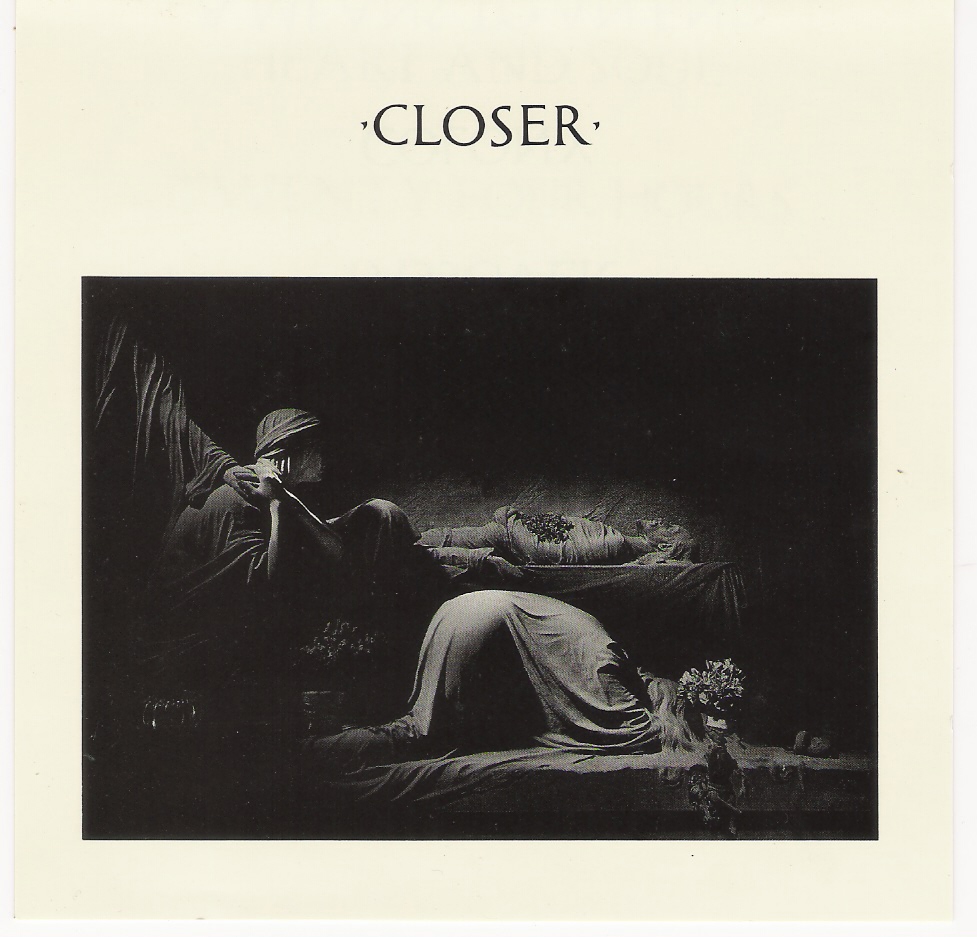
Closer/Joy Division: Loved it from afar until I finally bought a scrathy second hand copy in 1984 and for the first time heard the entire album in proper sequence. It took me to new worlds. They were always cold and unsettling places but so truly and powerfully reported that they were irresistable. The Eraserhead of rock albums.
Colossal Youth/Young Marble Giants: This would be called Hipster now the way that The XX is but then it was a unique blend of fragility, cool sweetness and laughter in the dark. It launched a thousand increasingly tiresome imitators none of whom got beyond its surface. Got a spare 45 minutes? Put it on, be patient and you will find it with your eyes closed.
This Year's Model/Elvis Costello and the Attractions: 16, treated for cystic acne with sessions of dry ice skin burning and antibiotics. I bought this after one of them and never knew such a perfect match for my spite at the world around me as I repeatedly soaked my entire face into a bowl of salt water. Someone wrote into RAM magazine ridiculing the album, citing the number of times the phrase "I don't want to" appears in the lyrics. It's even most of one title. It's the very first phrase intoned. "I don't wanna kiss you. I don't wanna tooooouch." And BAM! goes the band coming in as the exclamation mark. From there it's hooks melodic and pugilistic as Elvis and the Attractions tell you what they don't wanna. Got me through a few Fridays.
Mezzanine/Massive Attack: Big spooky and cinematic, Mezzanine was the apotheosis of trip hop, taking it from the scary addictive noir of Portishead to scenes of huge movies that could only ever play behind the eyelids of the listener. Giant bass and insistent beats and swirling trips of midrange brewed cauldrons of atmosphere and over them the aching tenor of Horace Andy, the whispered rapping of 3D and the fragile luminous beauty of Elizabeth Fraser's cooling melismas. "Teardrop on the fi-i-i-ire." It warmed and chilled and you floated feeling both.
Una Stravaganza di Medici: A friend of mine and I were chattin' o'er some beers a few summers ago and he cmoplained that he was tired of most of the music he was listening to. I put this on. He rose from his seat and fell to his knees in front of the speakers covering his heart with both hands. This music has such an intense beauty that it makes you feel ashamed to be listening but it's too compelling to stop. Yes, I know what that also describes. So would the bride and groom for whom the music was written and performed. Hell of a plateau stage for a nuptial night.
Criminally out of print at time of writing. My cd has a fault. >:(
Art of Fugue/Musical Offering/Neville Marriner: This giant of invention holds its unworldly power with such dignified confidence it's easy to forget the maelstrom of genius that is happening as it enters your brain the hard way: through your heart.
Subscribe to:
Posts (Atom)