Tuesday, November 19, 2013

Top 10 Albums 191113

Lee Ranaldo's copy of the White Album


White Album/Beatles: There's a big article about this one already so all I'll say here is that this album pushed all the innovation and scope of anything the fabs had already done and probably should have been their last one. I can live without Let it Be and even though Abbey Road has wonders on it perhaps they might have better served to fill the depression of the initial solo material. Then again, the solo material is so poor by comparison that the notion that the internal competition was the thing that created the greatness is inescapable. This album for me at the very local level is August holidays 1976, playing along with an old nylon string guitar to get as far as I could into the inner chambers of the songwriting. In one sliver of memory, I'm doing this in the rumpus room while Mum is outside watering the lawn and the dry pre-rain fragrance of the wet cement in the sun rises. For that moment, this is the best place in the world in history.

Best track: Helter Skelter.

Piper at the Gates of Dawn/Pink Floyd: Late in 1978 I borrowed a copy from one of my sister's uni friends. Between the sweet and airy Scarecrows and hippy lilting there were great expansive space scapes and crunching journeys and everything still sounded like it wore double breasted paisley. This was quite a secretive pleasure for me. All the psychedelia I encountered during those years pointed away from hippy and also away from punk. It felt like unfinished business and I felt like finishing it.
Best track: Lucifer Sam.


Ágætis byrjun/Sigur Ros: The most convincing claim for the title of post-rock is this world breaking album from those krazy Ijslaenders Sigur Ros. The textures range from tiny, intimate DI-ed guitar, through beergarden oompahpah to mighty tides of sound that don't have to be guitars because they don't sound like them. Over this is a male voice that often sounds so androgynous that it might best be described merely as human. Cries in giant landscapes encased in the weather of sagas. I never tire of this one.
Best track: There are tracks?


Baroque Concertos/Various: Four brash pieces that conquer everything from hubris to pathos over two sides of an LP. The cover Art was a kind of popped-up contemporary print of Venice with the footpaths buzzing with commerce of wildly varying legality. It's a kind of Physical Graffiti of the eighteenth century.
Best track: All.


Physical Graffiti/Led Zeppelin: David Hunter hated Led Zeppelin because I loved them. He reported with a sneer that he heard a recent LZ track on the radio the night before. It was slow and heavy but ... he'd forgotten the name. Oh, the pain, the pain! I think that it must have been Kashmir from this album. That song is the centrepiece of this half new half archive-raid double disc, having the dambusting power of the first few albums and the exploratory exotica of the later ones. It's a kind of White Album and like that it probably should have been their last. Also, though the increasingly elaborate cover art of the bigger league bands had reached unintentional self-parody by this stage, the brownstone with the changable window views is still fun.
Best track: Kashmir.

The Doors: I first heard The End during the titleless opening of Apocalypse Now. It rained lightly at the drive-in in the tropical swelter. I recognised the gluey heat-distorted shoreline palms as the lazy eastern flavoured guitar line rose through the waves and the choppers stuttered by in slow motion. Then as Morrison groans "This is the end, beautiful friend..." the entire line of trees flashes orange with napalm. From that moment I needed to hear what else they'd done apart from that and Light My Fire and the very few others I'd already heard. When I finally bought a rerelease I found a fair bit of R&B bravado which I winced at but also some ice on a summer day creepiness with things like The End of the Night and Crystal Ship. Further investigations into later albums made sense of the bravado but nothing felt quite like the young brash men who yet housed darkness in each hedonistic thought. Still love this album.
Best track: The End.

Maxinquaye/Tricky: Trip Hop was old by the time I heard this all the way through so I didn't judge it as a Trip Hop piece as much as a constantly refreshing approach to mood and colour, from laze to action to horror to sunshine to the darkness on the edge of the cosmos. It's all here. To my mind everything Brian Wilson is celebrated for is done more convincingly here.
Best track: Overcome.


Funeral Music for Queen Mary/Purcell/Marriner: The version I picked up at the second hand section of the Record Market in Brisbane was a repackaged World Record Club release with a groovy portrait of Purcell under a red tint.  Complete tack. (The cover art here is for the original EMI release.) But put the thing on the platter and the opening march and canzona stripped of much of its baroque embellisment called out from across the waters of Lethe. I almost wanted someone to mourn while listening to it. The choral sections that followed were tides of great light. We're still here, let's try to keep warm, they seemed to be saying. Elliot Garnder's later more period-correct recording is also a favourite but this is the one I go to phase out sadness.
Best track: March and Canzona.

Their Satanic Majesties Request/The Rolling Stones: Oddly, more psychedelic than Sgt Pepper with tales of New York groupies storming citadels, mass searches, Bhuddist temple ceremonies, girls who don't just look like but are rainbows, eight minute jams with Les Pauls and wine glasses, trips trips and more trips and journeys thousands of light years from home. It's a mess but everyone's on form, especially Brian with a selection of anything he could find at the bottom of the fairy garden and I think the junk shop from Blow-Up. Not quite as cruelly dismissed as Between the Buttons but still unfairly treated by the fan base for being UnStoneslike. Well, this is a record of the Stones at the 6a.m. end of the Swinging London trip, wandering the streets of the rain grey town seeing nothing but ghosted Dr Seuss landscapes. I love this album.
Best track: Citadel.

Evol/Sonic Youth: As dark and complex as anything from the heights of psychedelia, this early masterwork from the last innovators that rock music has known is cinematic and literary. I first heard it as an unmarked cassette given to a flatmate. We listened to it for a week before we knew who'd done it. This is still the best mix of traditional guitar rock and noise I know of without one side ever needing to surrender to the other.
Best track: Marylin Moore.


Jeunehomme Piano Concerto/Mozart/?: Sorry, don't remember the performer or even the label. I don't have this LP anymore but can recommend the hi-def flac download of the recording with Alfred Brendel on the ivories. Unusual for a piano concerto we hear the piano itself in the first few bars rather than a swathe of orchestral protocol to introduce and announce the soloist. A big bamming chord from the strings, a cheeky statement of the first theme in the reeds and then there's the piano answering. From then on it's a blend of bragging rights fiddle and sheer heavenly mastery of major key material. After the brashness of the opening, the second movement is a glacial trek through a sadness more profoundly felt than Mozart usually admitted to. Its power is such that it's hard to decide whether to be swallowed by its gravity or marvel at its sheer beauty. After an earth heavy sigh we pause before falling into the largest glass of aural champagne we are likely to experience in concerto form as the sprightly sparkle of the closing rondo springs into the light, delighting us with the first sip but going on to tease and hold us at breaking point before everything comes together in a big final woosh. Music written for performance by a young woman whose name means young man. I'm sure Mozzer had a few things in mind on that head.

Monday, November 11, 2013

Top 10 Albums 121113


In my film blog there is an infrequent series of top tens that serve to illustrate the difficulty of ever coming up with anything so definitive and to question the need for such. They change each time but for one title. I don't even have that one title here and might well see if one emerges. I'm going to pick ten just from what I'm feeling as I write this post. I'll try one next week and compare. Only one rule is that for classical choices it's that recording/performance rather than the piece of music which fits in with choosing by the effect of the music first. Oh, and not numbered or ordered in any way more than how they occur. So let's begin..

Never Mind the Bollocks Here's the Sex Pistols: This album changed my life as it reached out with an offer to leave the ordinary world for exploration and creation. Justa buncha rock songs, innit? No, for me, much much more.

The Kinks Are The Village Green Preservation Society: Discovered decades after its release. I had always just thought of The Kinks as one of the best singles bands ever, each one an essay on the tempora and mores or just a burst of sheer youthful brilliance. Village Green is like that but instead of listening to a string of them over a timeline it's a concentration within a small time frame and the effect is of great depth. Oh, and great tunes, lyrics that sting with sadness or tickle (Do You Remember Walter does both at once). I can't imagine this is ever going to be far from these lists.

Revolver/The Beatles: One journalist in the 70s put it well: Before it it was fun and after it things got too serious but Revolver gets everything right and can easily illustrate by itself why the fabs deserve their reputation. At the height of their fame when they could do no wrong they tried to do just that. Songs about tax, loneliness, depression, bad trips, speed doctors, discovering cannibis, eastern flavoured dirges about loveless hedonism and finally here are a few words from the Tibetan Book of the Dead to the sounds of backwards guitars and feedback loops.

Do you remember the reaction to Radiohead's Kid A and Amnesiac in the noughties and folk saying that they were virtually attacking their fans by not coming up with more OK Computers? Well, multipy that by ten for this one. The stakes were a lot higher.

Mozart Requiem/Colin Davis: First album I bought after finishing Uni. Summer day. Turned on the ABC and this came out. Couldn't believe the power. Needed to know who it was. Really? Little Mozart? Took a bus into town and got it that afternoon. Brought it home and lay back as the swelter of Brisbane in January faded and I fell into a delicious cold darkness. Played the grooves out of it (well partly because my player was such a crudmonster) and then got it on cd. If it appears as a hi-res flac I'll get that, too.

This goes against my advice to anyone who starts listening to classical music to avoid clinging to the first performance of a given piece. The music was almost enitrely intended to be performed live and so inevitably change in some way each time it met the air. Pianist and conductor Daniel Barenboim famously said that classical recordings should be destroyed after a single listen. That's what he meant. We are guided as consumers to court the apex or at least the standard and reject all else but music for performance cannot meet this expectation unless the first encountered recording of a piece in considered the definitive. I remember buying a friend Pablo Casals' recording of Bach's Cello suites even though I knew of several I preffered over it because he simply considered it the ONE.

That said, while I've heard a fair few superb preformances of Mozart's Req, nothing beats this one.

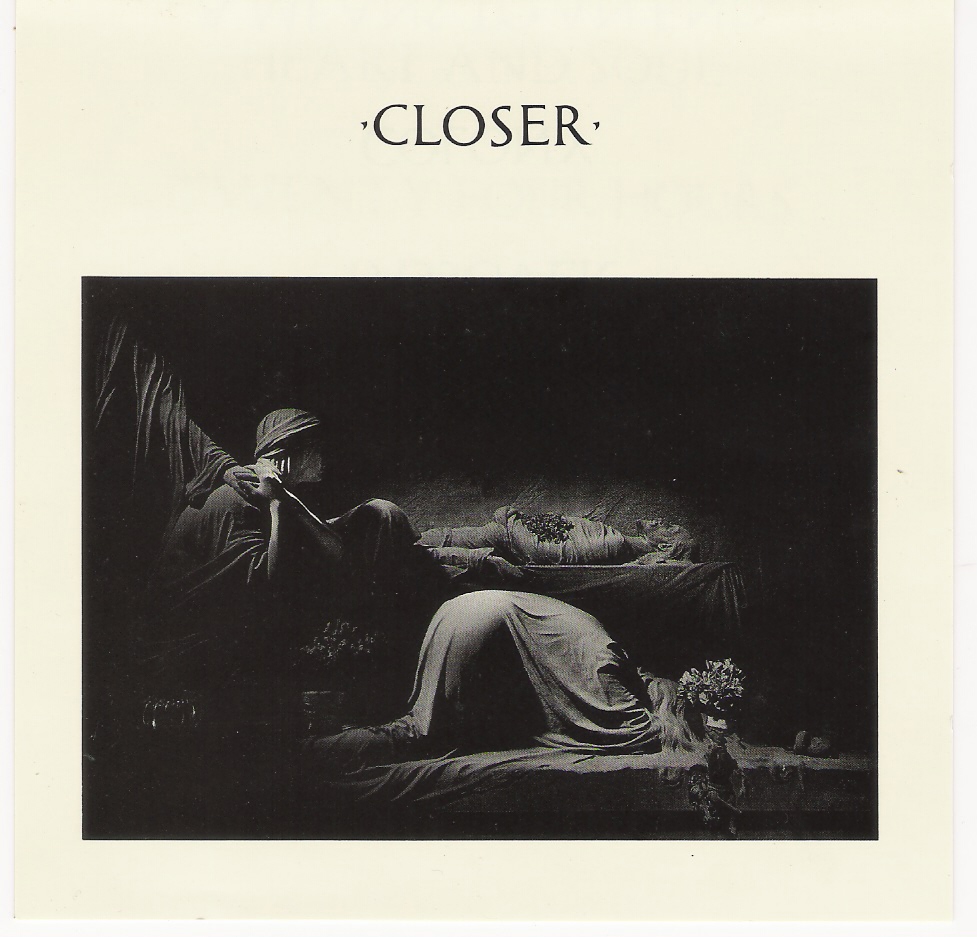
Closer/Joy Division: Loved it from afar until I finally bought a scrathy second hand copy in 1984 and for the first time heard the entire album in proper sequence. It took me to new worlds. They were always cold and unsettling places but so truly and powerfully reported that they were irresistable. The Eraserhead of rock albums.

Colossal Youth/Young Marble Giants: This would be called Hipster now the way that The XX is but then it was a unique blend of fragility, cool sweetness and laughter in the dark. It launched a thousand increasingly tiresome imitators none of whom got beyond its surface. Got a spare 45 minutes? Put it on, be patient and you will find it with your eyes closed.

This Year's Model/Elvis Costello and the Attractions: 16, treated for cystic acne with sessions of dry ice skin burning and antibiotics. I bought this after one of them and never knew such a perfect match for my spite at the world around me as I repeatedly soaked my entire face into a bowl of salt water. Someone wrote into RAM magazine ridiculing the album, citing the number of times the phrase "I don't want to" appears in the lyrics. It's even most of one title. It's the very first phrase intoned. "I don't wanna kiss you. I don't wanna tooooouch." And BAM! goes the band coming in as the exclamation mark. From there it's hooks melodic and pugilistic as Elvis and the Attractions tell you what they don't wanna. Got me through a few Fridays.

Mezzanine/Massive Attack: Big spooky and cinematic, Mezzanine was the apotheosis of trip hop, taking it from the scary addictive noir of Portishead to scenes of huge movies that could only ever play behind the eyelids of the listener. Giant bass and insistent beats and swirling trips of midrange brewed cauldrons of atmosphere and over them the aching tenor of Horace Andy, the whispered rapping of 3D and the fragile luminous beauty of Elizabeth Fraser's cooling melismas. "Teardrop on the fi-i-i-ire." It warmed and chilled and you floated feeling both.

Una Stravaganza di Medici: A friend of mine and I were chattin' o'er some beers a few summers ago and he cmoplained that he was tired of most of the music he was listening to. I put this on. He rose from his seat and fell to his knees in front of the speakers covering his heart with both hands. This music has such an intense beauty that it makes you feel ashamed to be listening but it's too compelling to stop. Yes, I know what that also describes. So would the bride and groom for whom the music was written and performed. Hell of a plateau stage for a nuptial night.

Criminally out of print at time of writing. My cd has a fault. >:(

 
Art of Fugue/Musical Offering/Neville Marriner: This giant of invention holds its unworldly power with such dignified confidence it's easy to forget the maelstrom of genius that is happening as it enters your brain the hard way: through your heart.

Monday, October 28, 2013

Childhood's End: Music for Two Harpsichords

I played a kind of dressups for a few months when I was twelve and my sister has never let me forget it. More than that, every time I've met one of her consorts he will bring it up. It wasn't drag, if that's what you were thinking, but it did have to do with style and pretence. From the nominal autumn to the tolerably named spring of 1974 I pulled the cuffs of jeans and long trousers up to the knee, wore long socks that ended in shoes with buckles (they were in the wrong place but they were still buckles). I died my brother's cadets hat black and pinned it up so that it had three corners. My favourite tv show was the afternoon re-run of  the 1950s series The Bucaneers, starring an exuberant Robert Shaw as cap'n Dan Tempest, pirate Robin Hood. My favourite music was written by Mozart and I spent hours by the stereo listening to what we had of classical and baroque. The scenes I drew were all set in Europe between 1700 and 1799. My favourite conflicts were the War of the Spanish Succession, the American War of Independence and the French Revolution. My imagination was fired by the age-appropriate novels of Leon Garfield like Smith, Jack Holborn or Devil in the Fog. At eleven and twelve (my birthday is midyear) I was hopelessly in love with the eighteenth century.

I was in Grade 7, at the top of the heap in primary school. I was in undeclared love with Veronica Hutchins who improvised on her uniform with a series of light blouses and got away with it. I had already done the male equivalent of this the year before by wearing an ex-army officer cap and in Grade 7 graduated to a blazer from another school with the pocket emblem removed. The slower kids called it a suit. Even at twelve I knew that a suit needed at least one more piece to qualify. Knowing that the naysayers were so provably ignorant made it very easy to defy them and would  throughout my twenties and early thirties when I affected a series of increasingly sadder tuxedos as normal wear.

I took a pair of jeans to Nanna who cut them just below the knee and put a seam around the edges. !8th century knee breeches with the added convenience of a zip fly. If I could have worn them every day I would have. Learning how to wash and wait taught me how to use a washing machine at the age o' eleven and a bit. Chucked the school uniform in there, too. This didn't have the slightest effect, however, on my habitual use once and leave in the shower recess policy on bath towels. They piled up until Mum realised (every single week) that I wasn't going to slug them in the washer with the rest of my stuff. Maybe she considered it a trade off. Anyway, everything was good because I could now walk around like a pirate, privateer, soldier of fortune or someone from either side of the French revolution of the American War of Independence. Soundtrack by Mozart, Corelli, JS Bach and any of the folky hippy stuff my sister listened to (particularly Pentangle whose high "trad. arr." numbers I mentally set in the 18th century or earlier).

All this stopped at the gate. Never did I emerge from the leafy bounds o' Jetnikovka in anything but school uniform or the kind of civilian wear that would render me culturally invisible to the great unwashed. But within the confines I was in Leon Garfield World. Leon Garfield was one of the few age-appropriate writers I read then. His books of boy adventurers in the world of pirates and footpads and redcoat armies were set squarely between 1700 and 1801. The first was the short story that was a hit among us at school: The Restless Ghost. Two boys plan to act out a locally famous haunting as a prank but get haunted by the real thing (oh, I always had a taste for horror and would read reams of it and wake up in the  lightless predawn in a cold sweat).  That's where I lived and when I went to school I might as well have ruled it for there were none to challenge any of us grade seveners putting the flag up if we wanted.

Everything ends. Primary school and the roll monitor job I took to get myself out of sport on Friday afternoons and all the rest. As the last weeks rolled they grew lighter by the day as we tidied the classroom of the year's mess and the schoolwork faded into board games after exams were over. It was like a camp more than school. There were some pangs knowing it was the last we'd see of it but they were swung tot he ground by the tides of relief that we'd soon be rid of it and excitement that we'd all be in high school the new year.

I'd come home early on these days, tuck into some cold lime jelly and ice cream and draw to the music. Nita borrowed the Pentangle albums then. They were easy to get lost in as I made grey aristos walk up to the guillotine on the pages of my sketchbooks. And on Christmas day 1974 her present to me was the best thing in the world. Getting past the bizarre Yellow Submarine cover art I could see a picture of two ageing men taken side on. They were playing what looked like organs but were in fact, as the record's title attested, harpsichords.

Christmas records get put on whatever else is happening and straight away. And so in the chattering micro cataclysm of joy that burst on that Christmas midmorning a stately strum of broad chords. This soon gave way to some glittering gymnastics that impressed even through the signal fogging noise of a family's Christmas fun (we were screamers at Christmas ... in a good way). I put it on again, quietly, as we settled into the massive groaning-table Christmas lunch and then again as the company dispersed to the pool to splash and scream, stroll out to take the shade of the African tulip or mango trees, or collapse beneath a ceiling fan I lingered in the rumpus room and played it yet again, on my back on the floor, headphones on, volume cranked. As the black and white hijinks of the St Trinians movie flickered in my peripheral vision and the glassy heat of December thickened and invaded I closed my eyes and drank some music.

This was not chamber music the way a string trio is, although it was mean for a room rather than a hall (harpsichords are very quiet things). Nor was it a series of student pieces that the composers dreamed would immortalise them. These were explorations in sonata form, emulations of folk music rendered high baroque or pastoral headache relief for the contemporary migraine. With the expansion of the four handed form the single timbre sound took on the colours of orchestration I hadn't thought possible. Here were worlds.

The thing about having a pair of harpsichords playing at once is that the orchestration is clear to the note and any unison chords punch with extra power. Harpsichords don't have sustain pedals or soft pedals. If you lightly touch a key or slam your fist down on it the sound will be the same. But what that also means is that the sound allows for more clarity than the brightest of grouped pianos. Here the orchestration is as plain as the details of a blueprint. This is music that shows its working.

It is music that also opens countless tiny doors of a Rococo palace. Some open on to bright spaces where tables groan with confections of all sugars. Some lead to dark places invented solely to illustrate the prescriptive horror of a total absence of light. One piece by Couperin, a kind of mock pastoral in a suite of them was intended to sound like a musette. When I heard this I thought not about the bagpipe it was evoking but of a young man in a lace cravat and brocade suit, knee breeches and buckled shoes, playing it in one of those rooms. This one was not bright as much as golden from the early evening. Out the window was more gold, fields of swaying crops glittering in the magic hour. For those few minutes I stood there and felt the security of the heir to the manor house and, being me, wondered at the oncoming revolution with its stinking city hoardes and guillotine ..... Anyway ...

Tableaux and movies generated by this album are with me still. Perhaps that's because it never made it beyond that vinyl copy that I so effectively played into flat noise. A curious nostalgia leads me into the images I conjured and dispenses with even the pleasanter of the day to day details. I recall the power chords at the start of the Mozart sonata and I'm back in one of my own daydreams.

And then there's the final piece. After the brilliance of the Rondo from Mozart and its mix of fairyland light and complex darkness of observation comes one of the most severe pieces of classical music ever. It's part two of a larger work but ditches the first movement and cuts to the fugue. Darnt darnt darnnnn darnanana darn darn DARNNN! A fifth hammers down on to the tonic, scurries up again but then hammers harder from the flattened 6th.  And .... Well, here it is in its supposed original form for strings.  Doesn't convey the desolation or the sense of mounting evil that the harpsichords do but you'll get the idea.

The fugue engendered drawings of such darkness that I used to 6B pencils down to the stubs before I was easy with it. The power it demonstrated of pure music and the great efficacy it brought to the creation of ideas through sound alone still schools my listening. Mozart, delightful Mozart who sounds like the taste of chocolate and champagne, could do this. Any music that couldn't would never get more of a hearing beyond its initial saturation phase and never has.

This was all just in time. A few months later I traded in my green primary school fatigues for the blue-trimmed grey of Pimlico High and eased myself into the ranks of the untouchables all over again. While my comfort with feeling alien to everyone else my age withstood the slings and arrows of high school I did buy into some of the culture. The first rock song I liked without the formal introduction of an older sibling was Sherbert's Life (is For Living). It's echoed opening shout gave way to a chromatic bass and guitar riff that felt like home. I never liked anything else the band ever did with any sincerity but it made me listen around with some knowing.

The knee breeches jeans found their way into the perdition at the bottom of my wardrobe, never to be worn again. I drew scenes from my own century. The attentions of a girl called Patricia stopped me in my tracks and I started wondering if feeling different couldn't have some currency after all. It wasn't all fun after that but most of it was and now that the world had opened retreating from it when needed was a relief rather than a way of life.

Sunday, September 29, 2013

Deaf Spots


I'm hungover but I shall be released. If you disagree with the below please remember it's just another dick with an opinion and if I can put up with all kinds of bullshit opined about things I love you can live with me holding my nose over some of this.

This is not a list of sacred cows for the slaughter; that's aiming at a barn door. Much of the following examples are of music that I am assumed to admire but have no trouble resisting:

Radiohead: I can appreciate the artistry and complexity. It's just that none of it does more than partially divert my attention for up to five minutes before I decide I prefer silence. It just sounds like stadium rock to me but stadium rock that wants you to know how ingenious it is, as though someone from Emerson Lake and Palmer or Yes put a swear word into a song and delivered it with a big arch grin. I was given home burns of OK Computer three times in the 90s and passed each disc along to someone who might like it better. And the melodic stock of the vocal melodies is impoverished. If I hear that descending whine once more over ascending chords, I'll start doing it myself. I was given Kid A and Amnesiac as home burns. They got a listen each and were passed on. I have not heard a bar's worth of anything by them since that has persuaded me to listen further. I don't hate them, I've just never found them enjoyable.

Nirvana: Before I or anyone around me knew who they were I heard Teen Spirit on as high a rotation as subscriber radio allowed and wondered it was Kiss doing REM or the other way around. Further listening brought rewards as some strong melodic work and interesting lyrics emerged. Polly, for example, is an impressively creepy song even before you know what it's about. I had Nevermind but it's overproduction (by Butch Vig who would oversaturate his own project Garbage not too long later) grew annoying to the ear. The video for that song was compelling, having a kind of subtle gravitas. But when songs that would sound distinct and rich unplugged all sounded the same through hamfisted production it will not touch me.

The other point of resistance I have with Nirvana has nothing to do with the band. When people turn thirty they resist the ageing for a time and start acting ten years younger, affecting the perceived fashions and tastes of people in their twenties or even teens. This usually passes but for that time the confusion between youthfulness and try-hard puerility is infuriating. In the early 90s Nirvana was the go-to band such people affected, more in protest than imagination. The same way I imagine thirty year olds in 1977 were all, "anarchy, man!" Not the best reason for dismissing a band (as it drops you off at the same address, really) but it was a powerful motivator.

Beach Boys: Sorry, but they aren't for me. A friend on Facebook erroneously recalled me pushing Pet Sounds about ten years before I heard most of it. As with Radiohead, I really can appreciate the artistry and greatness; it's just that I can't join in. Apart from moments in Good Vibrations it starts sounding like someone overthinking bright disposable pop to make it symphonic but only ending up with denser disposable pop. There are many exceptions to this but the BBs are here because their music consistently fails to interest me beyond the concept of it. I just don't enjoy the listening.

MC5: Over and Over came out of the shadows of the cassette of the High Time album that Win made for me and won me with its tremulous spookiness. Everything else annoyed me. Decades later I finally heard the Kick Out the Jams album and donated it to the op shop after a single listen. I was hearing rock cliches well after they had been rendered so by bands who could only imitate the likes of the MC5 but in a way this also exposed the elements of this kind of rock music that leave me cold. The posturing is audible. Apt for the time but not the ages. Not for me.

ACDC: Yob rock. Don't like a single song. The bagpipe bits of Long Way are great but then it just gets back to the same crunching beerchugging bullshit. Never for me.

Patti Smith: Her growling and rambling with extra intensity really fired a lot of people up and her cultural cache has endured for decades but she has only ever come across as a old hippy to me. I hate that she's held up as a figure of punk when the music she ranted over like a schizophrenic at a bus stop sounded like dull Woodstock style jamming. Can't listen to any of it. Sorry, shouldn't admit this but I still like her version of Because the Night.

The Clash: this is almost too easy as everywhere outside of America that they might have some following seems to have rejected their legacy. I'll just say at the time in the late 70s I found their sound too thin and chanting choruses too yobbish. When they diversified into all kinds of other music it sounded like the bubblegum version of dub or latin or whatever it was. They were one of the originals at the barricades and fought hard. They just never inspired me.

Cold Chisel: I actually like Khe San. It's a kind of war story as bush ballad and pub singalong but it does everything it says slickly and organically. The rest of it is sophisticated yob rock that aided the local resistance to punk and its offshoots. Maybe that's what we voted for, though.

The Smiths: There are some urgent standouts in their back catalogue like Suffer Little Children or most of side one of The Queen is Dead but over 80% of the Smiths' output is flavourless to me and most of that is down to Johnny Marr's ability to render interesting chord progressions into supermarket muzak. I always found it telling that the one who had the career afterwards was the affected singer who had nothing to do with the arrangements but wrote the words and vocal melodies. But those lyrics, those lyrics. I don't ever like music for the lyrics. If I don't like the music I don't listen to the words. I don't even know the words of most of my favourite songs. But as for The Smiths' lyrics, I'd swap the lot for any album by the Handsome Family. Now them's lyrics!

Midnight Oil: A shame. This band really had some good musical ideas but they buried them efficiently under big shouty slogans we were meant to sing along to as we punched the air. But it always felt to me like Uncle Cec at the home organ at Christmas lunch, playing White Christmas but winking and singing "Fight the Power" over it.

Big Star: Tried to get into them a few years back but cannot reconcile their reputation with the tide of mediocrity that is most of their output. There are big exceptions to this but the reason I like the third album so much is that it doesn't sound much like them.

Nick Cave: I don't know of anyone who emerged from the punk scene of anywhere who works so hard for his audience as the Nickster. He comes up with record after record and delights his fans with forays into film and novel writing. The problem for me is that his earlier solo/Bad Seeds efforts only ever feel try hard to me. The later stuff is bland but not in the way that Vegas Elvis stuff was (a lot of that came out of a weird poor little rich suffering that no one knew about until after his death) bland as later New Order or ex-Beatle records. It's like listening to the selfconsciously intense guy at the party cornering the girls with lines like, "I don't fucking care if you slap me in the face, but just for me you gotta live for tonight." Yes, it is a problem for me that that crap works.

Funk: Of any kind. The only exceptions are when other elements lift it from the aural constipation that I hear when it's on. Hate it.

Prog rock: I would swap the entire back catalogues of Genesis, Yes, ELP and anyone else under that banner for a few singles by The Ted Mulry Gang any day of the week.

Madonna and Prince: In the eighties you were meant to like her for being in control of her career and him for his astounding musicality but I never liked anything by either ever.

Frank Zappa: School stoners and older silblings liked this stuff in my day, thinking he was the big leery antidote to the conservativism of the mid 70s on. I can forgive that by recalling that part of me still thinks the Sex Pistols' Bodies is the most confronting song from the rock eon (The Beatles Revolution 9 has more of a claim but anyway).

I admire Frank Zappa for publicly taking the dirty old man out of libertarianism but have no admiration for his putting him back into his music. I get how serious he was as a composer but only the smidgiest of smidgeons have ever appealed to me. This is from someone who doesn't think you have to be into Jim Morrison to like The Doors as the music is so strong. The music of Frank Zappa has the consitution of an ox. I just can't stand it.

ELO: they were meant to be a fun mix of pure pop and classical, an extension of Jeff Lynne's old band The Move. John Lennon, when asked what the Beatles might have sounded like if they were still together in the 70s, said, "probably like ELO." Jeff Lynne took that as a compliment (even at about 14 years old I heard it as snide). Big 'n' fat 'n' overproduced and never anything else. Horrible, like prog rock in a chewy cough drop.

Fleetwood Mac: I need to take a little care with this one as this band (meaning the Stevie Nicks lineup) has been adopted by musicians in their twenties who have obviously run out of decent material to copy without modification. Don't want ot appear like a Gen X stick in the mud. Fuck it, I will. This was a ghastly band who rivalled only The Eagles for justifiable homicide by punk. Yes, I know, they won and punk lost but they are hovering still over our precious young and should be lost to even the memory of those who had to suffer them. I HATE this music. See also, The Eagles.

Black Sabbath: Did far more than Led Zepellin to forge heavy metal as a genre. That's my point. Cannot listen to this. See also Slayer, Metallica, Anthrax and any other metal. I know you have to be into the culture of it but even when young and gothic minded I thought it sounded like loud panto.

90s + copyists: Yeah yeah yeah, all rock is regurgitation but in generations before mine folk thrilled to the fabs trying to copy the Everlys and getting it wrong but making it right by sounding like themselves (eg. Love Me Do). A co-vintaged friend of mine tried to sell me the talents of Blur, pointing out how authentically Syd Barrett-sounding one of the tracks was. It was. The point? None. The limping excuse that it's all just a rolypoly of good songs doesn't cut it for me when it just sounds like an impoverished imagination. Don't care about po-mo or irony or any other smokescreen for creative laziness they are, for the most part, bullshit arguments.

I was at a party in the mid 90s and suggested we have a touch of trip hop (still very fresh then) and was pushed back by the host who thought the stale cranking posing of Oasis was newer than Massive Attack or Tricky or Portishead because the album had been recorded more recently (we're talking about a year or two, here). Unbelievable bullshit!

To his credit, Jarvis Cocker admitted to being saddened that his career was part of a revival rather than a wave of revolution. Gets worse, though. My Bloody Valentine, who were among the final practitioners of innovation in rock recently released a decades-delayed new album which sounded like their last one only less inspired. Rock started copying itself without improvement after the early 90s and has never recovered, like a jogger who runs out of breath and panics that he will never regain it. The sole innovation from that time to this was electronica. The trip hops, the technos the dubsteps the anything but guitar band treadmills that roll hour after hour on the stages of the endless festivals and clog the airwaves with crud that begs nostalgia as soon as it's released.

Me? I go to the back catalogue or find things in the margins. I would rather listen to drones. No really, I'm serious, any music that cares more about exploration of sound and its relation to us actually feels better to listen to. It's like diving into a cool stream on a hot day and luxuriating in the life affirming chill of the water.

Am I a hyprocrite for continuing to make music with guitars and chord progressions etc? Maybe. Only last July I finished a project to record or re-record songs I wrote that had been poorly recorded first time around or not even finished enough to record at all. Every single one of them was from a base of early 80s sounding 60s. But folks, there's not a smidge of a claim that any of it was new. I even describe it as a nostalgic effort. Also, it's just not all I do. I'm not alone in this but it's getting more claustrophic in the corridors with the erosion of the difference between mainstream rock and the socalled indie version (a term itself copied from a previous generation).

Epilogue: Well, that was better than codeine. Time for a nap.

Friday, September 20, 2013

The Sex Pistols' Never Mind the Bollocks Here's the Sex Pistols: Part 3: The Wake

December 1977. Without knowing it, I had just gone to the last alcohol free party of my life. Strolling home through the dark humidity, my step lightened and I walked the suburb's distance back home and poured myself a coke from the fridge and pinched some rum from the liquor cabinet. That felt right. I went to bed and waited for Christmas.

Gough Whitlam lost and crawled back home, found a dark corner and stayed there. Malcolm Fraser continued. Decades later he would emerge as this country's most improved public figure ever. Back then he was all tax and spending cuts. We got our Thatcher early. Joh, the avuncular gangster, still ran his thug herds down in Brisbane.

First maths class of the year. Before Mr Pehrson arrived I swung around to the tall, sexy and preternaturally cool Deidre Nevis and sang the first verse of Bodies: "She was a girl from BirmingHUM she juss hadn ab or SHUN..." Deidre's ice gaze met my headlight stare. She left a shrivelling few seconds of silence to hang between us and then said: "Now do Submission."

I did. Gentle reader, know you the sunshine rush of the purest natural ecstasy? I did. I did.

The NME's review was a pisstake dialogue. Rollingstone reviewed it like a silvery old hippy on Haight Ashbury. RAM ended its half broadsheet take with an ultimatum: You need to decide NOW! Or something else shouty and point missing. There were no barricades. This wasn't a revolution ... yet. When that came it was quiet and quietly decisive (it's now called post punk). From Christmas 1977 to getting the plane to Brisbane in 1980, Bollocks was my most played album. I lost count of the cassettes of it I made for others.

Eldest brother Greg, who'd scorned the band the year before when they were on Weekend Magazine, taped it off me.  His parties rang with it. We started jamming more and I remember recording a version of Anarchy with just me and his Maton Sapphire put through the Companion fuzz box that Win had given me. Greg dismissed most punk he heard but loved the Stranglers. He would have. He was a cynic. They were dirty old men who'd jumped a bandwagon. They had only one good song (Grip) but the over-twenties felt they could trust a band that dressed like The Clash but sounded like Emerson Lake and Palmer.

I remember his dismissal because I felt the same way about the herd of US bands in the early 90s getting drenched in admiration when to me they sounded like punk had never happened. All long hair, denim and waily guitar solos. Anyway....

Grade 11. Everything was better. We moved across the road to the old university campus. I started smoking because everyone else I knew who mattered smoked and drew it in under the trees in the breaks. As driver's licences were acquired the leafy car park filled up and stuff happened there. Party almost every weekend. We talked about whatever buzzed around us along with the mossies which we thought we were intoxicating with our smoke (that's bees). The schoolwork got harder but left less of an impression. Party almost every weekend.

Pink or punk was a type I hated. I'm still not fond of costume dos but this was like buying into using the word punk as a cartoon character. I didn't call it punk. I didn't call myself punk. My hair did get shorter with each successive haircut but never had Airfix glue in it. I didn't pierce my nostrils or earlobes with safety pins or paperclips. Those things were uniforms and may as well have been school kit. I went to those parties dressed as I would have anyway. Mind you when Rosanna Marsden turned up to one with a leopard print top and a black garbage bag skirt I ogled with wonder and an absence of opprobium.

School parties took off with all the sophistication that groups of sixteen year olds can muster. After the first tot of Bundy (or bourbon which I usually brought: hey it was exotic and sophisticated then!) none of that mattered. But it wasn't just the girls who threw those parties (no boy ever threw a pink or punk shebang), all you had to do was look up.

The Angels were a self confessed ex-jug band from Adelaide with a singer who looked like a cleaned up Keith Richards. They had a few mild hits but did well enough for themselves to star in a rock movie called ROCKA. I only ever saw a small clip of the Help-like movie on Flashez where the band in high bumbling clownish fashion mounted bikes and rode off somewhere while their big one, Am I Ever Going to See Your Face Again, played on the soundtrack. Watching two of them explain the plot (which involved a gang of girl villains called NICKA) was as bad as watching Molly Meldrum fail to control his nerves when he interviewed Prince Charles.

But that was all back in the terrible winter of '76. In 1978 The Angels cut their hair and tightened their stage gear (leather wherever denim had been) and released a song about Joh Bjelke Petersen's government called Take a Long Line which started with a thumbling bass over which a spiky two note guitar riff played: rant ranant rant ranant. It was less than a metre away from the pub rock they'd done ok with but now was playing dressups.

Skyhooks had been one of the most original sounding conventional bands in Australia who'd had real hits with inventive and genuinely witty songs like Ego is Not a Dirty Word and Living in the 70s. Their first dressup was called Women in Uniform which rocked hard but was all innuendo and saucy pun as though Benny Hill had written it. Even the horrible old Stranglers were upfront about their yobbo misogyny but this was either inexplicable or just a sign that the previous generation weren't invited. The singer left and they had another go with a song about the Joh Bjelke Petersen government (sigh) called Over the Border which had a slightly more arch laddishness about it but ... but no, fuck it, it was horrible. They split, they quit, not even middle-aged.

But the direction to look was not up. The people who had really got something from punk were forming their own bands or at least thinking about it. I tried. We even played in the drummer's garage once and some girls sat on the footpath listening. If we'd only had some real songs!

We didn't because I didn't. All I had was a few tunes ripped off from the Kinks and the Small Faces (then again, what's good enough for the Pistols...) which even I was too embarrassed to present. So we just jammed until everyone lost interest. And that's the closest I got in Townsville to having my own band. I had friends in bands but they were in their own bands or liked bad music.

The Sex Pistols toured America early in the year. They didn't break it but the other way round. McClaren emerged as a clueless narcissist and by the end of the year he had invented western civilisation as well as its nemesis. He outed himself as the kind of wanker that everyone who gets involved in creative partnerships will meet: the one who does none of the work but claims to have influenced all of it; the one whose only talents are schmoozing and lying. He was making a movie ... well, he was getting someone to make a movie.

The year came to a close with a massive implosion which knocked the life out of every face that heard of it as a religious leader convinced his bleating flock to poison their children and then themselves: almost one thousand of them. Where was Hieronymous Bosch to do the photo essay on this? Wasn't this the seventies? The NINETEEN seventies? Hadn't we erased that bronze age bullshit long ago? Hadn't the hippies lifted the veil on the conservative dream and weren't the punks making the question of it irrelevant? No. No. No. Some fights will never be won. Ever.

There didn't need to be a Sex Pistols for anyone to get angry. It's just that their anger felt as keenly there at the buttocks of the old Empire as it did around its rotting teeth in London. That's what mattered to me then and now. When I listen now (and I do, quite often) it's not hard to brush the nostalgia aside and just enjoy the force of it, the panzer division rhythm and serrated vocals. That's all I needed to touch if temporarily defeated or deflated. That anger felt the same as mine. But it could also pep the already hyper mood. I could set up an ignition for a weekend with Holidays or God Save the Queen.

But it was more than localised function or anaesthetic. If I ever felt self-isolated by the spite I had for the world of normal teenagers (and if that ever got to me) by early 1978 I felt invited. There was a world beyond the glare of the oval and it did not echo with the yells of boofheads or Mark Hillman (whose aaanaaarcheeee schtick amused him years beyond its fade into irrelevance for me). If the school parties were where I could now offer my difference rather than try to mask it they were nothing on the glowing warm wilderness of the parties thrown by uni students. Greg knew them and my sister went to tutes with them. I went to their celebrations and felt at home and attractively young. I drank less at these as they didn't make me nervous. And girls didn't go there; women did. That's what I found when I stepped through the door that punk opened and it opened widest with this long awaited album that outstripped its own promises and pushed me out the other end to freedom. Yes, freedom. Dangerous and often no more than a fucking bloody mess, but freedom all the same.

I'll end with the line from the record favoured by the wonderfully weird Judy Broome whose unsettling constant up-mood caused her head to swing side to side when she walked:

Eat your heart out on a plastic tray!

Tuesday, September 17, 2013

The Sex Pistols' Never Mind the Bollocks Here's the Sex Pistols: Part 2: The Spinning

The great big G-chord is being hammered like an engine bursting to life, descends through F E D and C and rests, growling on a lower G as a pure London voice yells RIGHT ... NOW. Then it's on. That voice like sheer blinding anger and Old Man Steptoe grabbed me by the throat and didn't let go. Iiiiiiiii am an antichrist, I am an anarchyste! The band below this voice which seemed to soar above any human body it might have belonged to chugs and slashes like an invasion force. Again, with every good song ever, it's only minutes long but it feels like I'm swimming around in it for hours. This is not as good as I remembered, it is impossibly better.

Dissssstroooy!

Ok, track 1. Seventeen. The tracks on the back are jumbled so I have to look at the label (not on Virgin, disappointingly, but Wizard, must have been a local licencing thing). A stutter on the drums and then a crashing big bent note. Johnny comes in aiming at someone. "You're only twenty nine!" A constant sneer at some middle class fat head who's a lazy sod which is the chorus: "I'm a lazy sod, I'm a lazy sod, I'm a lazy sod. I'm so laaaaazeeeey!" The anger is so unsmiling it's funny. Then Anarchy again. G-g-g-g-g-g-g-g-geeeeeeee!

Then BAM! Weirdly, a distant falsetto whoop like an opera singer in a jungle. It rings out over a clutch of raspberries before the grinding minor chord progression starts cutting in. 60s garage rock riff C Bb Eb C. A mission in a submarine but also watery love (with a huge sudden gush of overdriven guitar) and a great big chorus: Submiiiiiiiiision! It's also the only time Rotten does anything other than his spitting diction Cockney when he pronounces can't as cairnt, like an American. When he does it it doesn't sound like he's joining the convention as it's too sarcastic. Any few seconds of interview footage (which I'd seen in fair abundance by that time) told you that his sarcasm could cut reinforced concrete. I get the cunnilingus ref (fifteen year old schoolboy) but didn't get what it was donig in an album that gobbed so constantly at the culture around it. Oh ....

Pretty Vacant. Already knew it from tv. It was a mimed performance clip (Rotten misses a line at one point or the shot of him was put it regardless of its contradiction) but it felt like watching my team win. This loud through the stereo it's like being in a winning army. The menacing string skipping intro drones. The drums kick in but they're toms not snare hits. It's a gallop. The bass comes in with the first power chord and then there's Johnny snarling out the big fuck you to his detractors. We're so pretty we're so pretty va-cunt. Slam! And we don't caaaaaaaaaaaaaare! If Anarchy was an ecstasy this is another bite. It thrills through me.

New York still feels like a filler and I didn't get it until I read about it later in an interview.  Big and powerful but I pass through it. Still not a favourite.

EMI is powerful and bloody funny. A huge charging football stadium chant of searing spite. "...stupid fools who stand in line LIKE! EMI" Goooodbyyyyyyye, A&M raspberry. That was the end of the album but to me it's still just the end of side one. FLIP!

Jackboots on gravel. Guitar chords slice through before the band kicks in with the riff that sounds both heavy and jolly. I dowanna holiday inna sun! I wanna go to the new Belsun (I thought it was the Nouvelle Sun)! I wanna see some H-history now I gotta reason a bad economy! Now I gotta reason now I gotta reason now I gotta reason and I'm still waiting now I gotta reason to be waiteeeng The Berlin Wall!.... I didn't ask for sunshine and I got world war three. I'm lookin' over the wall AND THEY'RE LOOKING AT MEEEE! Now I gotta reason ..... Under the refrain about the reason the word Reason sounds like a herd of pissed yobbos goading ... another herd of pissed yobbos. After a blazing one note solo Rotten comes back "claustrophobiaaah there's too much paranoia". It's a big screaming nightmare with some distrubing order under the chaos and in its own way, while I'm throwing my fifteen year old self around the room, it's quite chilling. But wait...

A chromatic punch and growl that could be from a Sabbath song, slow and violent. And then suddenly it's going at a million kph. "She was a girl from Birmingham. She just had an abortion. She was a case of insanity. Her name was Pauline (I heard "Polly" for years) and she lived in a tree." Woah! Even as an embryonic leftie at that age I was pro-choice (and wasn't everyone under twenty-five?). The sheer violence of this one stopped me funning about and sit down with my eyes wide. "Bodyyyyyyy I'm not an animal!" A messy solo bit where Rotten is snarling about not being a loss of protein while the football crowd chant that they're not animals and I'm plastered to the back of the seat. Then there's a pause which just explodes into the kind of bludgeoning swearing I've never heard in music before. "FUCK THIS AND FUCK THAT FUCK IT ALL AND FUCK THE LITTLE BRRRRRATTTTT!" It's as though I've just seen someone have their arms hacked off. All they need to do for the rest of the song is gibber and power chord; the noise of it says more than a single further line. I'm sweating. I know it's summer in Townsville but I'm sweating from this. I've just been shocked by a rock song, a form already ageing by my first birthday. But here's the thing: I like it. Well, like... As I was being pushed around by it I felt a real thrill, a sick mix of anger and surrender. There had been no music at all before this moment that had approached that kind of power over me. I had to hear it again but I had to be ready.

A very thin distorted guitar crunches through an ascending barre chord riff and we're straight into No Feelings. The contempt is so childishly angry it's funny and in any case after what I've just been through it may as well be ABBA.

Liar begins with a mighty chugging on guitar and bass and climbs to a sawtooth vibrato: "Yoooooooou're in sus-pen-sion ... you're a liar" There are too many riffs already familiar that this just sounds like offcuts. It's easy to live through but I still don't care if I miss out on it today. Same with New York. I wonder now if they were both late in the recording or writing as they have more dynamics and arrangement about them. Hmm.

God Save the Queen. This one I missed on the few occasions it was played on tv. It wasn't played on the radio. So this was the first time for me. An oversized Eddie Cochrane riff settles to a chug as Rotten gleefully tears strips off Her Maj. As with abortion I was anti-monarchy and assumed everyone else my age thought the same. So all the stuff about all crimes are paid and potential H bomb sounded good to me but then the outro came up which finally sealed the deal for me. I didn't care about White Riots or anything happening at the Hammersmith Odeon or Down in the Tube Station at Midnight but before the song was over at first hearing I was shouting along with the football crowd in the coda: "NOOOOOOOO FUTURE NOOOOOOO FUTURE NOOOOOOO FUTURE NO FUTURE for you ......!"  Yep, where do I sign?

Problems is like No Feelings after that but still thrillingly angry with the deliciously intentional irritation of the repeated "problem problem problem" that extends beyond the backing. That was it, the end of what I thought was side two. I'd just spent about forty-five minutes with some of the most intense and shocking musical violence I'd ever known and I was shaking from shock and pleasure.

Yes, I was in. "And me only fifteen"... ;)


Tuesday, September 10, 2013

The Sex Pistols' Never Mind the Bollocks Here's the Sex Pistols: Part 1: The Turning

Mark Hillman was a dick. He was a dick at high school when I knew him and though I have been spared all contact him since I have every conviction that he is still a dick and so shall a dick remain until the fall of his last sigh. I typed this not in anger but in description.

Mark Hillman was of clearly demonstrable intelligence. There is no requirement for a dick to be dullwitted. Many dicks rest on their intelligence to express their essential dickness. Really, what makes a dick a dick is the compulsion to attack anyone outside of the cushioned norm that has been prepared for them. They ridicule rather than examine. Now when you talking digs at breatharianiswm, astrology or creationism it's a matter of rational compulsion. Ridicule of The Sex Pistols, on the other hand, when it's happening back in 1977 by someone who at 16 sounds like he's fifty, is a saddening old-before-time unwitting confession.

Mark Hillman not only considered it sufficiently witty to pack all of his ridicule of the Sex Pistols by singing the word anarchy like a country cousin who'd downed too many Bundy and cokes: airnaaarcheee. He finished that with a smirk of sincere self-congratulation. That's all he had and he would drone it out and aim it at me whenever he thought of something unconventional or even just from current youth culture. To him my frame held all sourgrapes-subversion and horse-frightening quackery imaginable and his attack on the topic of punk rock was that: annnnnaaaaaarcheeee. There was no comeback to this that would reach its target with any effect, so tight was his grip on the lifeline of conformity.

While at first this angered me it didn't take long for me to feel saddened by it. I couldn't imagine him, lodged within his grey and sexless padding ever receiving a surprising cultural experience with pleasure. Not too long after that, as my confidence of my conviction that punk was the only legit alignment for anyone of my age and dissatisfaction with the mainstream, I wore Mark Hillman's jibes as a pinless badge of honour. There was a reason it took some time.

At the beginning of the Christmas holidays 1976 I sat in front of Weekend Magazine after the Sunday ABC news. Weekend Magazine was a kind of soft news showcase of curios from around the world. Something visually poetic about saffron gathering or the last steam trains in sugar cane farming were typical. My brother Stephen was watching with me and our eldest, Greg, wandered in. If there were any other stories on that edition of the show I have forgotten them because what I saw didn't so much change my life as make me aware of what it should be.

The story included a few firsts and each of them had the three of us reacting differently. Stephen and Greg guffawed at the concepts (though Greg did like the music). I was rapt. Punk rock. Sex Pistols. Johnny Rotten. All of that threw switches in my brain that had never been thrown before. The term sounded as good as a mammoth Jimmy Page riff chopped and replayed like fists hitting a wall (didn't know what sampling was then). Calling your band The Sex Pistols was beautifully childish and angry in a way that a fourteen year old could not just understand but instantly identify with. Johnny Rotten (at that stage both brothers were guffawing almost louder than the commentary) was more of that, like giving the forks to a statue of Captain Cook. And the outlandish audience looked as deliciously threatening as the sound playing under the story.

A clip from the video for Anarchy in the UK was featured unhampered by commentary was the last hook. The music was as good as everything else. In those five or so minutes I had been set free from mainstream culture and even the slightly exploratory diversion from it that Greg could provide. What I was seeing was the dimension I would seek to live in from that point on. While that became ever more figurative as time wore on the start it gave me away from the main track is a point that has never left me: if you don't like the big game make your own.

I spent the rest of the evening wondering how I could get that record. The full clip was played on the 1976 Top 50 hosted by Molly Meldrum and an assortment of local popsters. As with every song that captivates this one felt like I was living in it and though it only went for a few minutes it felt like I was playing around in it for hours. When I surfaced I barely heard Molly advise his electorate to buy the single as the band had been dropped from the label and would soon disappear from the shops. It had disappeared from Townsville shops but that's because it never entered them. I was reading RAM every fortnight and knew about mail order. I'd even taped some of the cruddy Led Zeppelin bootlegs that Win had bought that way but it never occured to me to buy a copy that way. In the 80s I saw a copy at a shop going for $40. I'd snap it up now for that price but not then. So what I had to do if I wanted to hear it again was wait for the album.

It was almost a year later that Never Mind the Bollocks came out and it was a tough wait. Some things helped like the debuts of the Damned, Clash and Jam. It felt exciting reading the interviews with Johnny Rotten in the NME. The photo of the Pistols signing the A&M contract outside Buckingham Palace with Sid giving the forks to someone out of shot was a thrill, a real one. There were sharp looking barbarians at the gates  and I wanted them to smash through the solid vinyl weatherboard portals of the big boring empire where I lived. There was shouting through the walls and torchlight glowing over them. The  mighty flavourless architectural monoliths of of-of-of prog rock and the lardy California drone would fall with a deafening crash, cut down by the searing noise of us.

I felt, really felt, that I had been granted a kind of cultural liberty by this, that school, its uniforms and uniformity, the great grey ridicule of the old-at-heart Mark Hillmans were just earthly constraints. I didn't smear my hair with Airfix glue or pierce my nose with a safety pin because by the time those things got to me they were uniform, too. Almost in reaction to this (I'm stretching the point here but not too far) my look if look I had grew more 60s except that every time I cut my hair it got shorter. Airnaaarchaay! Fuck you, Mark Hillman, you belong to yesterday where you probably still are .... I will admit, here, that yesterday is still winning. Anyway ...

God Save the Queen came out with its thrilling pub yobbo coda of noooooooooo fewchuh! and the tide just rose. By Pretty Vacant I was bursting. We needed that album. Now!

And then towards the end of the year my brother Michael gave me a lift into town. He was going to vote in what was to be the last election involving great reformer Gough Whitlam. I told him to do the right thing (he frowned in acknowledgement) and, clutching eight of my Nanna's dollars went off to buy her Christmas present from me, a copy of Never Mind the Bollocks Here's the Sex Pistols. I had wanted it to be under the counter or at least in plain wrap but it was there at Palings, loud pink and yellow cover blaring, under S.

Michael wasn't impressed with this as he drove us back home. He got on the phone and went somewhere. I went to the rumpus room, lifted the lid on the turntable bay, unsheathed the record, checked the track listing on each side, and dropped it on to the platter.

To this day I still think of Side 2 as Side 1 because the song I wanted to start with was the second track on Side 2. It had been a year since I heard it last and that had been on tv. Was it anywhere near as good as that here in the rumpus room with its ear pummeling stereo? I lifted the needle and aimed it at the gap between tracks one and two and turned the volume up.